There’s a popular fantasy about the distant past. That men hunted, women gathered, and everyone stayed safely nestled within their proper gender roles. Unfortunately for people who believe that stuff, archaeological evidence keeps proving them wrong, even in graves.
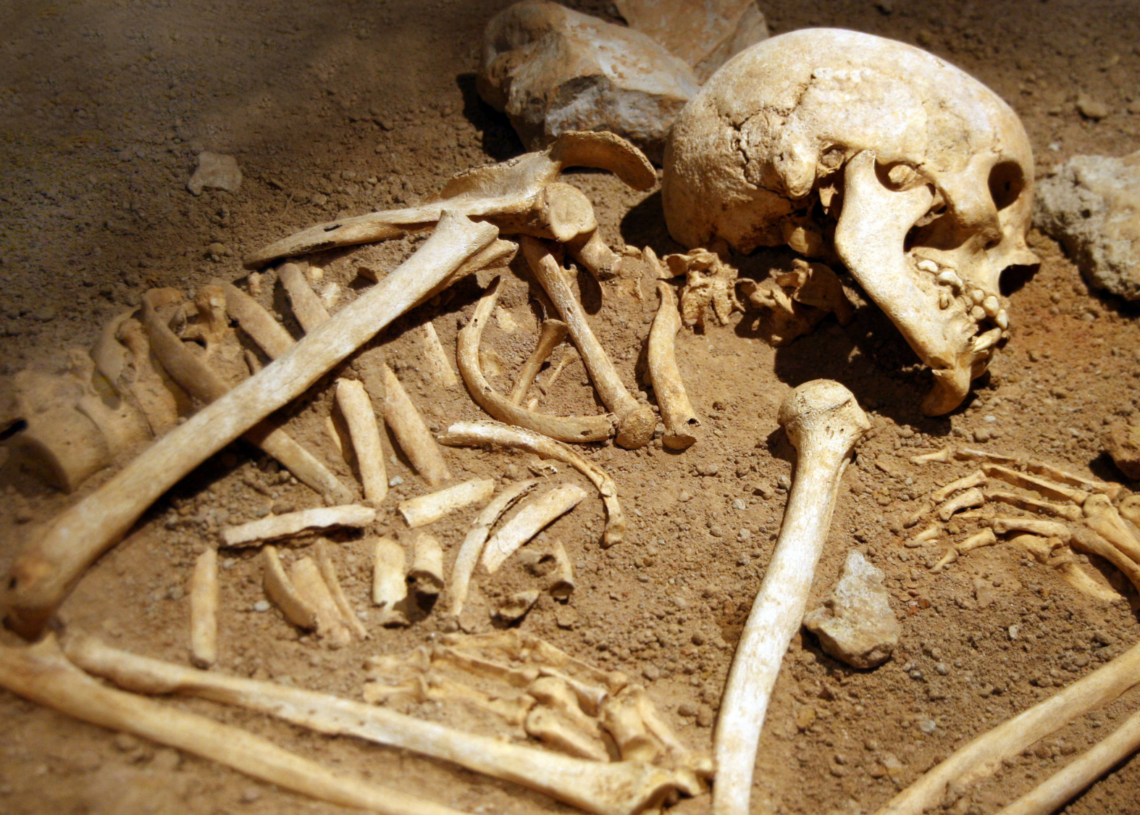
A new study in American Journal of Biological Anthropology examined 125 skeletons from two Neolithic burial sites in what is now Hungary. The research was led by Sébastien Villotte of the French National Center for Scientific Research, and it looked at remains from a pair of sites: Polgár-Ferenci-hát and Polgár-Csőszhalom, both dating back roughly 7,000 years.
The team uses a variety of analytical techniques, from skeletal analysis to examining burial objects, and studying evidence of physical strain on bones to reconstruct how people may have lived. At the older site, Polgár-Ferenci-hát, there wasn’t a whole lot to report. The 94 adults buried there didn’t really have much in the way of precious objects buried with them, particularly none that delineated between men and women. The skeletal markers tied to physical activity didn’t show that physical labor was delineated by gender, as markers like spinal stress from lifting or upper arm wear from repeated motion were found consistently across the remains.
Women Can Be Hunters Too
Things changed a little a few centuries later. At the second site, Polgár-Csőszhalom, burials started to show signs of symbolism. A lot of the women were buried with belts made from Spondylus shell beads, and men were often found buried with polished stone tools. Bodies were also placed in position specific to gender, with men typically on the right side and women on their left.
Some semblance of confined gender roles was appearing, but even then, the rules weren’t consistently applied. Some people were buried on the “wrong” side, and one woman was buried with a stone tool instead of the shell belt. On top of that, skeletal evidence at that site also showed overlap in the kinds of physical labor people were performing.
Altogether, the findings suggest that some gendered traditions emerged over time, but there was nothing close to the highly structured, super-rigid boundaries some like to imagine that dominated the ancient past. Women sometimes took on roles associated with men, and those roles were acknowledged and honored in both life and death.
Another way to phrase it is that there are men around today who have a more primitive view of gender roles than people from 7,000 years ago.
The post Rigid Gender Roles Are a Lie. Just Ask These 7,000-Year-Old Skeletons. appeared first on VICE.