President Donald Trump’s installation of a close Capitol Hill ally atop the Department of Homeland Security is his most dramatic step yet to remake the troubled agency as public support for his deportation campaign has fallen after federal immigration officers killed two U.S. citizens in Minneapolis.
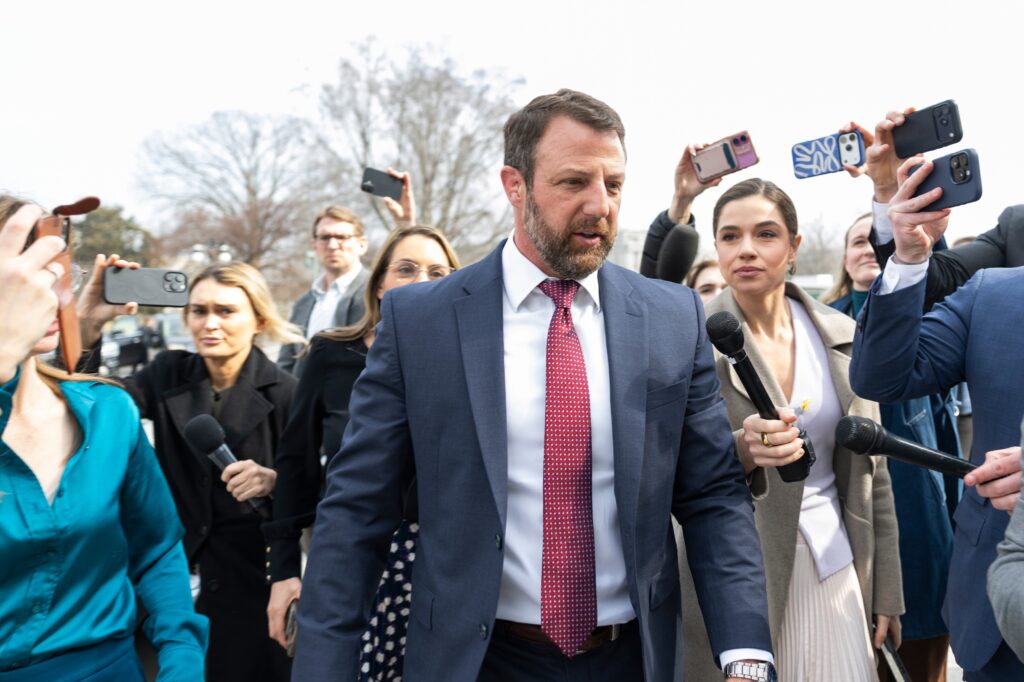
GOP lawmakers said they hope Sen. Markwayne Mullin (R-Oklahoma) will bring a steadier hand to the job and help restore public confidence in the president’s immigration agenda if he is confirmed by the Senate in coming weeks to replace Kristi L. Noem, who will depart March 31.
Mullin, 48, enjoys a close relationship with Trump and is viewed as less eager for the spotlight than Noem, though he built an aggressive reputation in the Senate that Trump is said to admire. Senate Republicans are expected to rally around his nomination, and at least one Democrat, Sen. John Fetterman of Pennsylvania, has signaled he intends to support Mullin.
But, once confirmed, his challenges would be numerous: Mullin would be taking over the agency at a time when recent polls show that a majority of Americans think the administration’s campaign to deport immigrants has gone too far. Democrats have refused to support a bill to fund DHS, which has been forced to shut down some services, unless the administration adopts accountability measures to rein in the aggressive tactics of immigration officers.
Some Republicans have also been angered by Noem’s attempts to dismantle the Federal Emergency Management Agency, which has slowed disaster aid, amid major flooding in Texas last summer and widespread ice storms this winter.
“The Department of Homeland Security has a very broad jurisdiction, and I think there’s a lot of work that we need to do, and I’m excited about it,” Mullin told reporters this week.
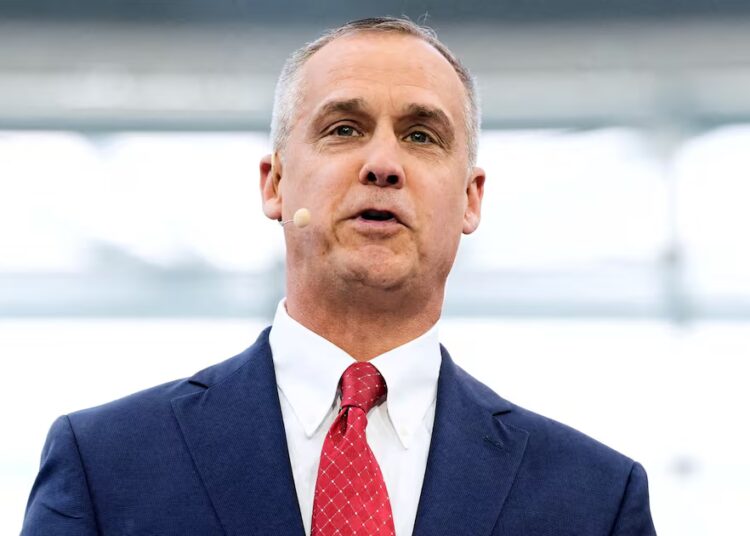
Noem’s departure after a rocky 13-month tenure comes days after her top spokeswoman, Tricia McLaughlin, stepped down. Another senior official, Madison Sheahan, the deputy director for Immigration and Customs Enforcement, left in January, and Corey Lewandowski, a special government employee who served as Noem’s top adviser, is expected to depart along with her at the end of the month, an administration official said.
Mullin is not, at least initially, expected to do a major housecleaning, according to a DHS official familiar with the coming transition. This person, who like other administration officials in this story spoke on the condition of anonymity to discuss internal planning, said the senator is expected to bring fewer than 10 aides with him and to keep most DHS officials in place.
Senior Trump administration officials have announced no changes to DHS policy, and the White House has instructed those overseeing the administration’s immigration enforcement efforts to proceed with their work. White House press secretary Karoline Leavitt told reporters Thursday that Trump’s immigration agenda would “continue without interruption.”
A different DHS official said many inside the agency are happy to see Noem leave. But this person, who also spoke on the condition of anonymity, said it was likely that the White House would continue to drive immigration policy — a view shared by many Republicans.
In particular, White House Deputy Chief of Staff Stephen Miller will play the same role and continue to coordinate across the administration on the development and implementation of higher-level immigration policy, while remaining less involved in daily operational decisions at DHS, according to the administration official.
“It’s not going to change the policy significantly because immigration policy comes from Stephen and the White House,” said Marc Short, who served as White House legislative affairs director during Trump’s first term.
Critics, including Democrats and immigrant rights groups, accused Noem of pursuing public stunts and theatrics to increase her public profile while overseeing the administration’s increasingly militarized deportation program that resulted in violent clashes with migrants, protesters and residents in major American cities.
Under Noem’s leadership, the U.S. Border Patrol took on a lead role in enforcement in Los Angeles, Chicago, Minneapolis and elsewhere, employing more aggressive enforcement tactics than had typically been used by ICE.
Some Republicans faulted Noem for contributing to the decline in Trump’s polling on immigration. A Washington Post-ABC News-Ipsos poll in February found that 44 percent of U.S. adults supported replacing Noem, while 23 percent opposed replacing her.
“The messaging from the administration — particularly following the shooting of two different Americans in Minneapolis — the messaging was wrong, and it did real damage,” said Sen. Ted Cruz (R-Texas) on his podcast Friday. “That rhetoric did damage to the administration, and I think it was one of the things that contributed to the decision of the president to shift from Kristi Noem as the leader of Homeland Security.”
Senate Majority Leader John Thune (R-South Dakota) said he thought Mullin’s approach atop DHS might align with the approach favored by Trump’s border czar, Tom Homan, who Noem had pushed aside in favor of Border Patrol leader Gregory Bovino. Amid the fallout over the Minneapolis shootings, Trump sidelined Bovino and put Homan — who favors focusing more enforcement resources on violent criminals — in charge in Minneapolis.
Homan announced that the surge of federal officers into Minneapolis had ended amid pledges from Minnesota state officials to cooperate in some cases with allowing ICE officers to take custody of migrants who are at state and local jails.
“I think that’s a model that can work, and I think [Homan] and Senator Mullin can work well together,” Thune told reporters.
In the Senate, Mullin has taken a hard-line approach on immigration. He defended the ICE officer who fatally shot Renée Good, a mother of three, in Minneapolis, saying days after the shooting that Good had struck the officer with her vehicle moments before the shooting.
Video footage showed that Good was attempting to veer away from the officer, who fired at least two of three shots from the side of the vehicle.
“She did hit him, and he did use lethal force,” Mullin said on CNN at the time.
Mullin referred to Alex Pretti, the intensive care nurse who was fatally shot during a scuffle with other immigration officers weeks later in Minneapolis, as a “deranged individual.” He said Gov. Tim Walz and Minneapolis Mayor Jacob Frey, both Democrats, had “blood on their hands” because of the incident.
Mullin and six Republican colleagues introduced a bill after Good’s death that would impose mandatory minimum sentences on people who injure ICE officers and other federal law enforcement officers using a vehicle.
The Trump administration had focused many of its largest immigration enforcement operations in cities and states run by Democrats. But in a telephone town hall with Oklahoma constituents last month, Mullin suggested Trump might shift to focus enforcement on areas of the country where residents are more supportive of the president’s enforcement agenda, amid the public backlash in Minneapolis and elsewhere.
“We’ll move to cities that actually want our help to restore law and order to their streets,” Mullin said during the town hall. “And that’s where the president’s almost at.”
It remains unclear how Mullin would approach FEMA. Noem sought to influence a long-awaited review council report on the agency that has yet to be released and has been the subject of internal chaos.
Nine current FEMA officials, in conversations with The Post, expressed cautious optimism — and even some joy — that Noem would soon be leaving, though they remained uncertain about whether Mullin would shift directions.
Asked whether Noem’s departure would change the Trump administration’s stance and way of running FEMA, one regional official replied “yes and no.”
The regional official, who spoke on the condition of anonymity for fear of retaliation, said even as the administration has sought to make deep changes to the agency, Trump “changed his tune” after the deadly flooding in Texas last year and the most recent ice storms that hit swaths of the United States.
“To an extent, he’s always known there’s a need for FEMA, but that reforms are needed, which most of us agree on,” the regional official said. “Many are hopeful we will take a more careful approach to those reforms.”
That official expressed hope that Mullin would end Noem’s policy of requiring FEMA officials to get her direct approval before entering into any contracts that exceeded $100,000 — a process that hampered the agency’s ability to respond quickly to disasters.
FEMA is being run on an interim basis by Karen Evans, leaving another big decision for Mullin and the White House to pick a permanent replacement. Two people familiar with the situation said that the administration’s previous picks turned down the job because of Noem’s approach and the administration’s general hostility toward FEMA.
Isaac Arnsdorf and Maria Sacchetti contributed to this report.
The post Republicans hope Mullin brings steady hand amid Trump’s shakeup at DHS appeared first on Washington Post.