Israel’s military said on Saturday that it sent special forces into Lebanon overnight to search for information on a member of the Israeli air force who has been missing for four decades.
The details of that operation remain unclear. At least 41 people were killed and dozens more wounded in overnight airstrikes and clashes in Lebanon’s Bekaa Valley, according to the Lebanese health authorities.
Israeli forces deployed by helicopter to the Bekaa Valley, a largely agricultural region in eastern Lebanon, late on Friday, and were confronted by residents and armed fighters in the town of Nabi Sheet, according to Lebanon state media.
The Lebanese military, which also detailed the Israeli deployment in a statement, said that three of its soldiers were killed amid heavy skirmishes. The Lebanese militant group Hezbollah said on Saturday that it had targeted the Israeli force with rockets.
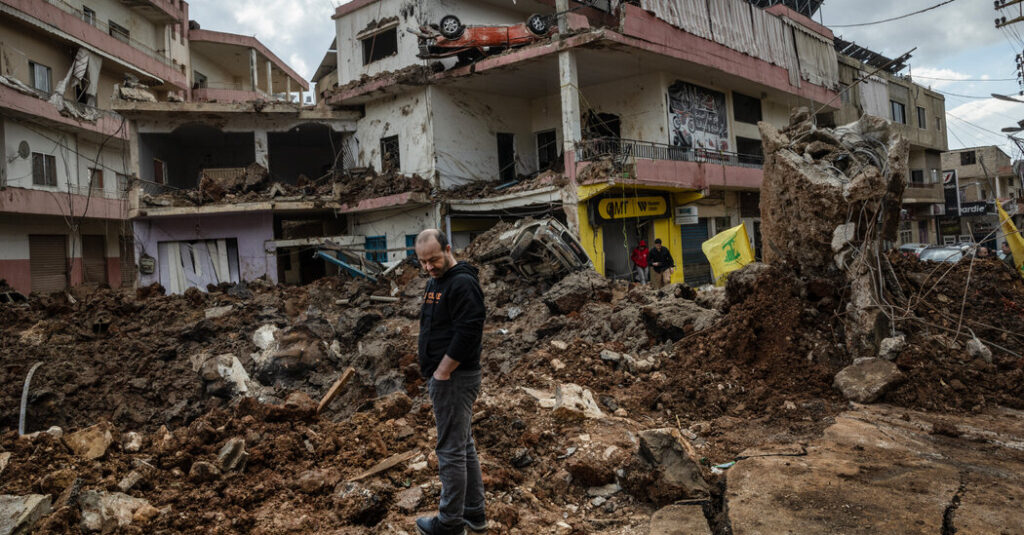
A New York Times reporter visited Nabi Sheet on Saturday. The town center was littered with debris, mangled cars and destroyed shops. Authorities worked to clear the streets, as residents grappled with the devastation.
“It was a massacre,” said Moflih Shukr, a 44-year-old electrical engineer, who said that his uncle was among those killed in the overnight clashes.
The Israeli military, when approached for comment, did not say whether it had conducted operations in Nabi Sheet, or provide details of any fighting.
In a statement about its operation overnight, the Israeli military said that there were no injuries among its forces, which were searching for information about Ron Arad, an Israeli Air Force navigator shot down over southern Lebanon in 1986.
The violence capped a week of intense Israeli strikes in Lebanon. It has rapidly intensified as a front in the expanding U.S.-Israeli war with Iran, amid renewed fighting between Israel and Hezbollah, an Iranian proxy force.
Since Monday, Hezbollah has fired rockets into northern Israel. The Israeli military has largely focused its bombardment on what it calls Hezbollah targets in southern Lebanon, and parts of Beirut and the eastern Bekaa Valley.
On Saturday, Lebanese state media also reported an Israeli strike in Shmistar, another town in the Bekaa Valley, that killed six people, including four children. The Israeli military did not immediately respond to a request for comment.
Members of Hezbollah guided journalists through Nabi Sheet to a grave that they said had a body removed from it overnight, a claim that could not be independently verified.
About 300 people have been killed in Lebanon this week, and more than 1,000 wounded, according to Lebanon’s ministry of health.
The Israeli military has ordered mass evacuations in large swathes of the south and parts of the east of Lebanon, as well as a district in south Beirut considered a Hezbollah stronghold. At least 300,000 people have been displaced, according to the Norwegian Refugee Council, with many forced to sleep in parking lots, mosques and makeshift shelters.
The Israeli special forces operation late Friday was the country’s latest attempt to locate Mr. Arad.
In 1994, Israeli forces stormed an area of the Bekaa Valley to abduct a guerrilla leader believed to have information on the airman’s whereabouts. Israeli officials have previously said they believed Mr. Arad was sold to Iranian forces or their allies, though Iranian officials have denied that he was being held on Iranian soil.
On Saturday, Mr. Arad’s wife, Tami, commented on the Israeli military’s recent efforts to locate her husband.
“For 40 years, we have lived with the fact that Ron is missing,” Ms. Arad said in a post on social media. “We want to know what happened to him, but not at any cost. The sanctity of life comes above all certainty and closure for us.”
Aaron Boxerman and Sarah Chaayto contributed reporting.
Abdi Latif Dahir is a Middle East correspondent for The Times, covering Lebanon and Syria. He is based in Beirut.
The post Israel Renews Search for Missing Airman Amid Clashes in Lebanon’s Bekaa Valley appeared first on New York Times.