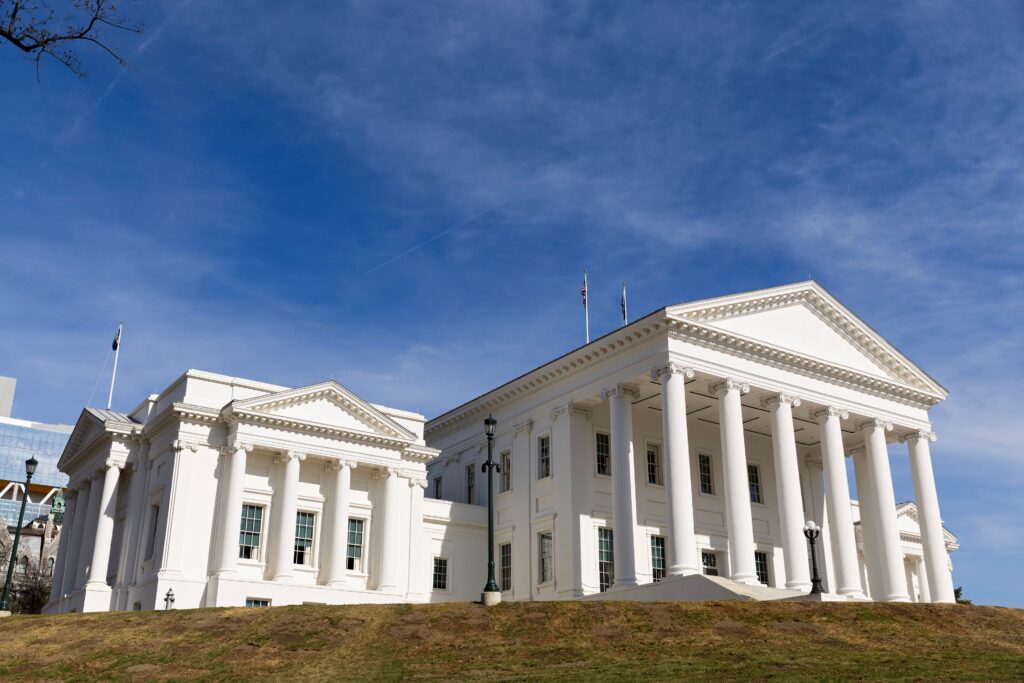
RICHMOND — Virginia Democrats wield total control over state government, but leaders of the state Senate and House of Delegates are heading for a showdown over a few key provisions of the biggest legislation the General Assembly will consider this year: the budget.
At the heart of the dispute is a disagreement over how to tax data centers — those high-tech facilities that provide the backbone of the internet but use enormous amounts of electricity and water.
Otherwise, both chambers tout their budgets as upholding promises to focus on affordability that drove last year’s elections and led to big wins for Democrats in the legislature and new Gov. Abigail Spanberger (D). Though Republicans have been sounding the alarm about various proposed tax increases, no major ones made it into the budgets. A few high-profile proposed tax cuts didn’t, either.
Lawmakers are working toward a March 14 deadline for reaching a deal on a new two-year spending plan to wrap up their legislative session. The House and Senate have each passed a version of the budget, and this week negotiators have begun working behind the scenes to iron out differences.
There’s much lawmakers agree on. The budget plan they’re working from was submitted by former governor Glenn Youngkin (R) before he handed over the keys to the Executive Mansion in January to Spanberger.
Youngkin’s proposal featured several components that aligned with the policies of President Donald Trump, which Democrats in Richmond were quick to discard. Some other details are more contentious.
Here are a few highlights of the plans under consideration, based on analysis by the Commonwealth Institute, a left-leaning think tank that provides detailed budget breakdowns:
Data centers
The Senate budget would do away with a sales tax exemption on the computer servers and other equipment used by data centers, which has helped turbocharge the industry in Virginia by forgoing some $1.6 billion in annual taxation. Eliminating the tax break during the coming year is estimated to generate nearly $1 billion in state revenue, though industry advocates have said the action would discourage investment.
The House budget leaves the exemption in place but includes language aimed at requiring data centers to use clean energy. Resolving the two different approaches will be a major task for budget negotiators; the Senate proposal uses that extra revenue for a host of other programs.
Income taxes
Youngkin’s proposed budget would have conformed Virginia income tax policy to many of the changes passed last year by Republicans in Congress in what Trump calls the “big, beautiful bill.” Both the state House and Senate budgets reject most of that, nixing deductions for overtime income, tips and car loan interest.
The legislative budgets also ignore some of the federal tax breaks for businesses. All told, bypassing the federal income tax changes would preserve hundreds of millions in state revenue. On the other hand, the House agreed with Youngkin that the state should make permanent an elevated standard deduction on personal income tax — at $8,750 for individuals and $17,500 for couples filing jointly — that was planned to sunset.
The Senate would go further, raising the standard deduction to $9,200 and $18,400, respectively, through 2030. That would be offset by the money raised by ending the data center tax break, as would another high-dollar Senate proposal: providing one-time tax rebates of $100 for individuals and $200 for couples filing jointly.
Pay raises
The House adopted Youngkin’s proposal for 2 percent pay raises for K-12 public school teachers and state employees, while the Senate — flush with all that data center cash — recommends 3 percent raises. Both chambers include extra money to accommodate legislation passed by the General Assembly to raise the state’s minimum wage to $15 an hour.
Social safety net
Both budget plans would shift significantly more money into social safety net programs than Youngkin proposed, such as helping to offset rising costs for health insurance premiums under the Affordable Care Act after Congress failed to renew federal subsidies. The Senate devotes $200 million to subsidies, while the House proposes a more modest $79 million cost-reduction program.
Both legislative budgets also would increase support for the state’s portion of the Supplemental Nutrition Assistance Program, sometimes called food stamps. The House proposed an increase to the tune of more than $360 million, with the Senate at a little more than $230 million.
Lawmakers also propose boosting state support for affordable housing and restoring language that Youngkin cut to allow state funding for abortions in some circumstances.
The post Virginia Democrats brace for clash over data centers, other budget choices appeared first on Washington Post.