A Tribe Called Quest’s album “The Low End Theory” stands firm as a pillar of hip-hop 35 years after its release. It’s the album that elevated Q-Tip and Phife Dawg to stardom, created a sonic blueprint in bridging jazz and hip-hop and influenced genre-defining artists and producers like Dr. Dre, Andre 3000 and Kendrick Lamar.
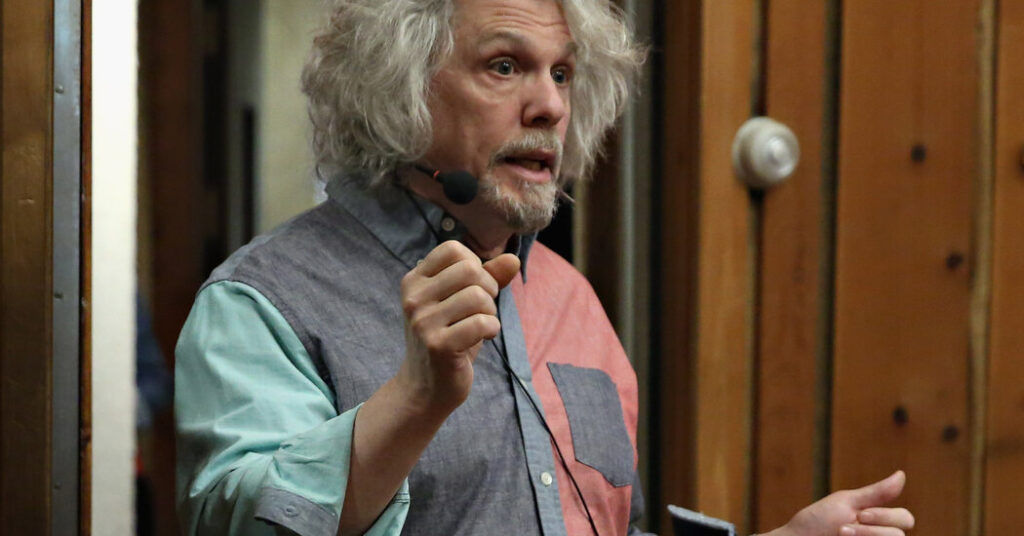
Bob Power, who died on Sunday at 73 years old, is not a name that resonates like those giants. But his painstaking work and attention to detail as an engineer and mixer on “The Low End Theory” makes him an unlikely and unsung hero on one of hip-hop’s defining documents.
Power was a white guy in his mid-30s and still a working musician when he began collaborating with hip-hop groups. “At that point I was still leaving sessions at six o’clock on Saturday nights in my tuxedo to go play a Mafia wedding for $75,” he told me in 2020.
He had worked previously with the early ’80s Brooklyn hip-hop group Stetsasonic inside Calliope Studios, where Tribe recorded much of its debut album, “People’s Instinctive Travels and the Paths of Rhythm.” Power, who did not dismiss sampling in hip-hop like many established engineers at the time, clicked instantly with the group.
Tribe, its members all still under 21, began working on its sophomore album in 1990, recording most of the sessions at New York’s Battery Studios.
The group was part of the Native Tongues, a collective known for Afrocentric lyrics and positivity. “It was transcendent and I thought that was really, really fascinating,” Power said in 2020. He added that Q-Tip, the group’s de facto leader, “was really far-reaching and very broad in his vision.”
The music, with its mash-up of genres he had never heard anyone try to put together before, “was almost free association, but it had the structure of a rhyme,” Power said.
Usually, the group members relayed what track they wanted to work on during a particular session. Power followed up with questions: Do you have to lay down some samples? Do we have to lay any instruments down to tape? Do you want to do rhymes?
“It was pretty much procedural,” he said. “I didn’t ask them questions about why they were doing what they were doing or where they were coming from. I took it through the music.”
The group’s ideas were ahead of their time. The technology to achieve those goals was not. That’s where Power excelled. He enjoyed the meticulousness of painstakingly isolating and blending the sounds and samples.
On “Verses From the Abstract,” the group enlisted the legendary jazz musician Ron Carter to contribute a bass line. Power melded and layered the live bass with a snippet of percussion from the Joe Farrell track “Upon This Rock,” from 1974, to create a flowing, rhythmic backbone to the song.
“The technology and how that interacted with the tape machines and synchronizing all those things was so primitive at that point,” he said. “You would buy expensive metal boxes that were supposed to synchronize the sampler to the tape machine, but they didn’t really work all the time. So, you had to figure out workarounds.”
Power had a long career in music, working both inside and outside of hip-hop, with artists such as the Roots, D’Angelo and Meshell Ndegeocello. He knew of the longstanding impact of “The Low End Theory,” but never basked in it.
“Bob was the KING of the Low End,” Questlove of the Roots wrote on Instagram after Power’s death. “Hip Hop was chaotic & muddy,” he said about the genre before Power. “But man — when Bob entered our sonic sphere? Jesus.”
Jonathan Abrams is a Times reporter who writes about the intersections of sports and culture and the changing cultural scenes in the South.
The post The Unlikely Pairing That Pushed Hip-Hop Forward appeared first on New York Times.