The U.S. economy has been on unsteady footing for a while now, but the catalyst to tip it over the edge could be an event playing out on the other side of the world.
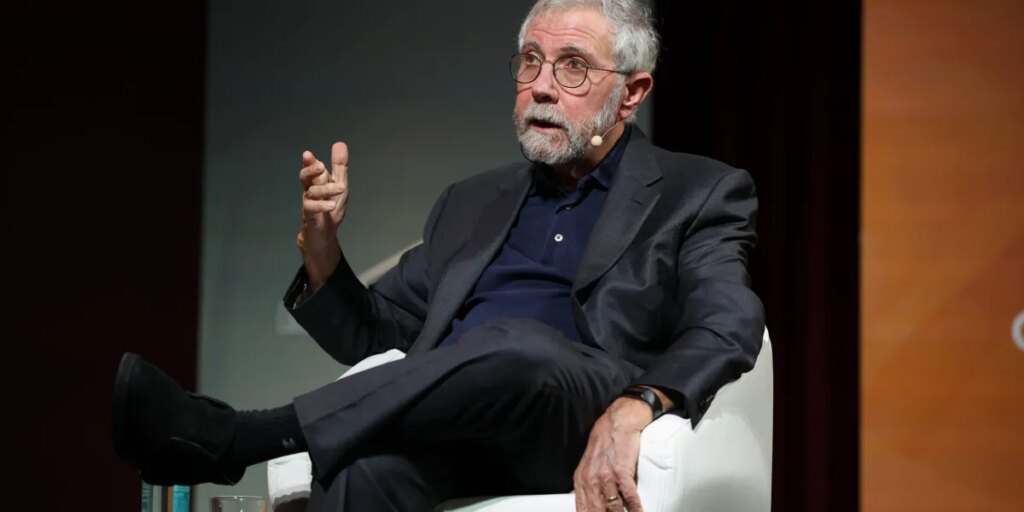
The conflict in Iran is not even a week old, but observers are already seeing ways the war could cascade and contribute to a broader economic downturn on U.S. soil. If the war goes on for much longer, and if belligerents begin to target energy infrastructure important to the global oil and gas trade, the U.S. is likely to feel the economic pinch, according to Nobel Prize-winning economist Paul Krugman.
With initial hopes for a swift, decisive victory in Iran rapidly fading, the U.S. has entered a delicate “war of whim” with no clear endgame and a rising daily price tag, Krugman wrote in a Substack post Wednesday. It’s a potential shock the U.S. might be able to deal with in isolation, he added, but combined with an increasingly fragile and uncertain outlook back home, America’s latest foray in the Middle East could end up coming at an enormous cost.
“It isn’t occurring in isolation,” Krugman wrote. “There are many stresses on our economy, and this could be the straw that breaks the camel’s back—a straw that becomes heavier the longer the war goes on.”
The primary economic risk stemming from the conflict has to do with energy—specifically oil and gas. The Strait of Hormuz—a narrow waterway connecting the Persian Gulf to global trade routes—has been effectively closed since the war’s onset, cutting off the approximate 20% of both liquified natural gas and petroleum products that ordinarily transit through the strait.
This has already caused energy and fuel prices to rise in the U.S., Krugman noted. Brent crude—a global benchmark for oil prices—has jumped more than 10% since the conflict began. Average U.S. prices for a gallon of gasoline have also risen by around $0.20. The longer the conflict goes on and the longer global oil and gas supply is restricted, the more painful price pressures will become. The other risk, Krugman pointed out, is that infrastructure used to produce and refine gas and petroleum products is damaged in an attack. Some key facilities have already been targeted by missile fire, including a reported Iranian attack Thursday directed at an oil refinery in Bahrain.
The war could already be incurring a price tag of around $1 billion a day, according to Rep. Joe Morelle (D-N.Y.), who told CNN Thursday the Pentagon has so far been “unresponsive” as to the conflict’s costs. This week, administration officials were also reportedly preparing a $50 billion request to Congress to finance its campaign in the Middle East.
All told, the conflict in Iran could end up costing U.S. taxpayers up to $210 billion, Kent Smetters, director of the Penn Wharton Budget Model, told Fortune this week. That projection includes any eventual disruptions to trade and energy supply, as well as the financial consequences of a long-lasting war.
While the economic impact of a protracted war would certainly be felt, it will likely not be as painful in isolation as previous intense flare-ups in the Middle East. Some commentators have likened the potential effect of the current conflict to the 1970s oil embargo implemented by oil-producing nations, mostly in North Africa and the Middle East, which plunged the U.S. and other countries into years of low growth and high inflation. But as Krugman and others have pointed out, the world is much less reliant on oil than it used to be. Disrupted Middle Eastern supply would be inflationary, but not to the paralyzing extent it was 50 years ago, Krugman wrote.
The real risk for the U.S., he continued, is any pressures from the war in Iran would have to be dealt with alongside multiple other economic aggravators. Krugman mentioned how tariffs—recently revived by Trump after a Supreme Court ruling struck most down—continue to dampen growth prospects and inject uncertainty into the business world.
Another concerning scenario, according to Krugman, would be a long war paired with the projected economic hit from the Trump administration’s immigration policies, which the Congressional Budget Office recently predicted will take more than 2 million people out of the labor pool during the next decade.
More imminently, Krugman wrote war costs could collide with fears of artificial intelligence eradicating jobs—or eventually suffering a reversal in fortunes on the market, taking asset prices and business confidence down with it.
“The key point is that this latest economic shock isn’t happening on its own,” he wrote. “Now, we’ve added a fresh level of massive uncertainty.”
The post The Iran conflict will be the ‘straw that breaks the camel’s back’ of the U.S. economy if it goes on much longer, Nobel laureate Paul Krugman warns appeared first on Fortune.