Two years ago, Brittany Graham would pull into her local Chipotle in Chico, Calif., once a month and order her favorite entree, a steak bowl.
But as prices climbed, Ms. Graham, a 36-year-old customer-service manager at a furniture company, cut back on her visits.
Last year, she went twice and purchased only a less expensive kid’s meal.
“Honestly, it just became cheaper to make it at home or buy it from a smaller, local business,” Ms. Graham said.
Not that long ago, restaurant chains like Cava, Chipotle and Sweetgreen had lines streaming out of their doors at lunchtime. But last year, traffic and sales at many of them softened considerably and their stock prices plunged.
Still, don’t look for this restaurant segment to slash menu prices anytime soon. It’s simply not part of its DNA, say some restaurant analysts. Instead, some chains are looking to add limited, cheaper options to their menus — a $3.50 chicken taco at Chipotle, introduced last year — to entice lower-income consumers, while highlighting premium proteins — think pomegranate-glazed salmon, sold at Cava — for more affluent customers.
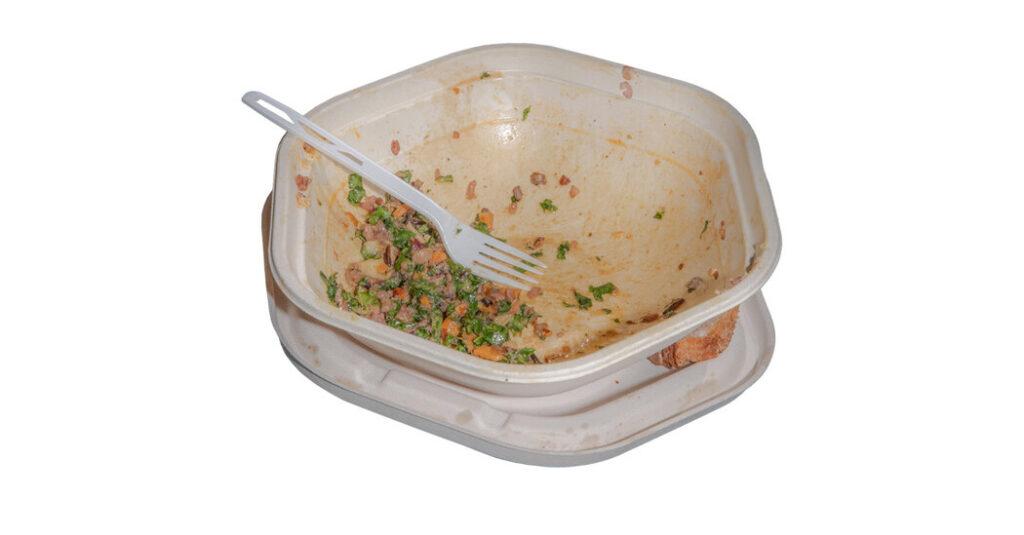
In recent months, a debate has been brewing around the end of “slop bowls,” social-media slang for healthy-but-kinda-mushy bowls of grilled chicken, quinoa, kale and the like. Customers are either weary of them or, more likely, balking at paying $14 for a burrito bowl or $16 for a salad.
The restaurant industry is battling for its share of shrinking consumer wallets. Last year, most chains raised menu prices, and lower-income consumers were the first to cut back on eating out. By midyear, middle-income households and people ages 25 to 35 — who tend to frequent places like Sweetgreen or Chipotle — also pulled back, said Sara Senatore, a restaurant research analyst at Bank of America.
And there are signs that consumers remain cautious. In February, the average weekly spend at restaurants dropped to about $90, down $25 from last summer, according to a survey of 1,000 U.S. consumers by Popmenu, a restaurant technology company.
Restaurant prices have risen at a much sharper rate than those of groceries. The cost of food at restaurants has climbed 22 percent since 2022, according to the Bureau of Labor Statistics, while the cost of groceries have risen 17 percent.
Over the past four years, Chipotle has raised prices nearly 25 percent, and Sweetgreen’s prices have climbed almost 20 percent, according to Jeff Farmer, a restaurant analyst at Gordon Haskett Research Advisors.
Early last year, when visits from customers, particularly from lower-income households, began to fall off, fast-food giants like McDonald’s, Taco Bell and Burger King dusted off their playbooks and began rolling out less expensive snacks and value-menu deals.
For a few months, chains like Chipotle, Sweetgreen and Cava appeared to be insulated from declines in restaurant visits, in part because they tend to have more higher-income consumers. Chipotle, for instance, said 60 percent of its customers made $100,000 or more. But as the year progressed, they, too, saw a decline in customers. Sweetgreen’s same-store sales fell 11.5 percent in the fourth quarter, thanks to a steep drop in traffic.
These chains have rarely offered discounts or value-meal deals like their fast-food cousins. Chipotle tested a lower-priced menu in some locations during the Great Recession in 2009, noted Sharon Zackfia, a restaurant analyst with the investment bank William Blair.
“And it turned out people don’t love that from Chipotle,” she said. “So you also have to be true to what your customers want.”
Most fast-food locations are franchises, Ms. Zackfia noted, and individual owners bear food and labor expenses. But Sweetgreen, Chipotle and Cava outlets are company-owned.
“They actually care about the margins of their restaurants, and they can’t just discount away,” she said.
Sweetgreen, which is testing a line of high-protein wraps under $15, is examining a new “pricing architecture” for its make-your-own bowls, Jonathan Neman, its chief executive and a co-founder, told investors and Wall Street analysts on an earnings call last month.
Sweetgreen, whose stock has plunged 76 percent in the past year, is looking at “where we have our opportunities for more entry-level pricing,” Mr. Neman said on the call. “Of course, we want to be very careful not to dilute our margins as we do this.”
Brett Schulman, chief executive and a co-founder of Cava, said the group wouldn’t try to compete with fast-food chains on price.
“I just don’t believe it’s in our interest to get into a race to the bottom with freezer-to-fryer food,” he said last month, after the company reported stronger-than-expected fourth-quarter earnings. Although Cava’s stock rebounded on the news, it is down 9 percent over the past year, lagging the 16 percent gain in the broader market.
It’s also not easy for restaurants making fresh burritos and salad bowls to offer bargain entrees, because beef and other proteins are difficult to discount, said Varchasvi Singh, a food service analyst at the market research firm Mintel.
Beef prices are at record-high levels because droughts have decimated the nation’s cattle inventory. The price of lettuce has spiked because of supply chain bottlenecks. Over the last five months, restaurants around New York have been paying up to $40 for a carton of two dozen heads of California iceberg lettuce, according to the Department of Agriculture, up from as little as $22 in September.
Like other bowl chains, Cava is treading carefully on pricing.
In January, Cava raised menu prices 1.4 percent, which Mr. Schulman said would be the only increase this year. He said it was not likely to cover rising food and other expenses, so the company’s profit margins will be squeezed.
And while the chain promotes premium-priced toppings, it did not boost prices on basic chicken, falafel and roasted vegetable bowls. In Midtown Manhattan, a basic chicken bowl is $12.95, while a steak bowl costs $16.90.
So far, Mr. Schulman said, the strategy seems to be working. Neighborhoods with the lowest household incomes are its strongest performers right now.
“That gives us the belief that we’re able to kind of bridge this gap,” he said. “That we can deliver a premium experience for folks at the higher end of the spectrum, and we can deliver real value” for lower-income customers.
He recoiled at the term “slop bowls”: “It’s a pejorative term,” he said. “A bit of a reflection of this nihilism we’ve seen post-Covid.”
Kevin Draper contributed reporting.
Julie Creswell is a business reporter covering the food industry for The Times, writing about all aspects of food, including farming, food inflation, supply-chain disruptions and climate change.
The post The Allure of ‘Slop Bowls’ Fades as Consumers Tighten Spending appeared first on New York Times.