I’ve always been repulsed by flags. I’ve never sung along to a national anthem. I speak Catalan, one of Spain’s minority languages. And in the next World Cup I’ll be rooting for Holland, not Spain, because I’m a fan of their beautiful history of losses. No one would accuse me of being a patriot.
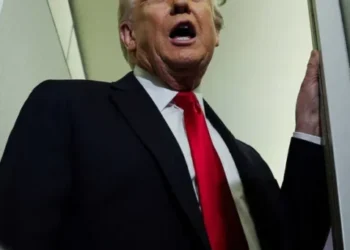
Nevertheless this week, when I heard President Trump say that Spain is a terrible ally and has nothing that the United States needs, when I saw that the leader of the so-called free world was threatening to cut off all trade with Spain, I felt an unusual pride in being Spanish. There is something epic about being on the receiving end of the fury of a tyrant, especially when that fury is brought about by a refusal to be his vassal.
The Spanish government triggered Mr. Trump’s ire after our prime minister, Pedro Sánchez, announced he would not allow the United States to use jointly operated military bases in the war against Iran. Those bases have been America’s to use since 1953, a time when Spain was isolated from the world, living under the dictatorship of Gen. Francisco Franco. In that era a shameful pact between our countries was sealed: Spain agreed to allow the United States to use military bases on its territory in exchange for money and what was essentially diplomatic recognition of a bloody, repressive regime.
Consider what that meant to the Spanish living under Franco: The United States helped liberate part of Europe from the chains of fascism in 1945, but liberation ended at the Pyrenees. Just eight years after the end of World War II in Europe, the country that espoused universal suffrage, freedom and rights embraced Spain’s fascist dictator (he was anti-Communist, after all). President Dwight Eisenhower thus gave cover to the Francoist dictatorship and Spain accepted being an American pawn. Some of us have not forgotten that Cold War moral failure.
Now, nearly three-quarters of a century later, those same military bases that legitimized a Spanish tyrant have put us in the cross hairs of a grotesque bully who demands that the rest of the world genuflect before his throne.
This time Spain said no.
I am not naïve. It is very possible Mr. Sánchez had considerations that went beyond values, legality and humanism when he took this brave position. As his domestic political position has grown weaker, he is also surely currying the favor of the electorate.
But I keep returning to the fact that Spain said no. No to war, and no to that contagious, paralyzing and sycophantic fear that Mr. Trump tries — so often successfully — to instill, both in his own country and abroad.
We Europeans, so adept at killing one another in the years of our grandparents, are obliged to show moral strength in the face of Mr. Trump’s attempts to destroy the multilateral order. Without fear of extortion. Without the indignity of selling out our values in exchange for more advantageous trade. It is obscene to submit to that equation.
Recently, I was reading the history of the American volunteers who arrived in my country to serve on the side of the Republicans against Fascism during the Spanish Civil War. I keep thinking of one moving letter I came across. It was written from Spain by a 23-year-old Jewish New Yorker, Hyman (Chaim) Katz, to his mother. Mr. Katz was a volunteer with the Abraham Lincoln Brigade.
“I came to Spain because I felt I had to” he wrote in late 1937. He went on to list the problems of Europe — the rise of Benito Mussolini in Italy and Adolf Hitler in Germany, the creep of fascism and antisemitism across the continent. He wrote that he was in Spain because he felt drawn to the fight, to the need to stand up against these forces while he could, because he could. “Would I even deserve help from others when the trouble comes upon me, if I were to refuse help to those who need it today?”
A little more than three months later, on March 3, 1938, Mr. Katz died on the Belchite battlefield, an arid stretch of Spain near the city of Zaragoza. The battlefield on which he fell remains as a ruin, and a monument. You can still see it today, a physical reminder of the scars of our Civil War.
I have seen a photograph of Mr. Katz, and in it I see the true face of war, so often hidden by flags and fury. I see in his young features the faces of all those dead sons and daughters, young and old, and, behind them, their devastated mothers, the faces that haunt every war. I see also the horror of girls crushed beneath a school in what was once Persia, of all those civilians who lose their lives to the decisions of tyrants, in wars throughout history.
There are moments worth facing one’s fear. There are moments where heroism is found in saying no. As Mr. Katz wrote to his mother: sometimes it is what you have to do.
Paco Cerdà is a journalist and writer based in Valencia, Spain. His book “The Pawn,” a nonfiction novel about anti-Francoism and the Cold War, was published in English in June. This article was translated from the Spanish by Mara Faye Lethem.
The Times is committed to publishing a diversity of letters to the editor. We’d like to hear what you think about this or any of our articles. Here are some tips. And here’s our email: [email protected].
Follow the New York Times Opinion section on Facebook, Instagram, TikTok, Bluesky, WhatsApp and Threads.
The post Spain’s Spurning of Trump Has Made Me a Patriot appeared first on New York Times.