For most of my two decades as a reporter in Washington, presidential clemency seemed like an arcane niche that did not fit into my beat.
I mostly cover money in politics and lobbying, which means tracking the myriad ways special interests shaped elections, policy debates and government decisions.
But at the end of the first Trump administration, clemency became among the busiest niches in the political influence sphere, with Mr. Trump using his unfettered power to grant pardons and commutations to reward embattled allies and donors who jockeyed for the privilege.
The White House justified the clemencies as rectifying harsh sentencing or rewarding atonement, and cited prominent figures who supported the grants.
Explaining the pardon of Charles Kushner, the father of Mr. Trump’s son-in-law Jared Kushner, two days before Christmas 2020, the White House said in a statement that the recipient’s post-prison “record of reform and charity overshadows Mr. Kushner’s conviction” for filing false tax returns and campaign finance reports.
But the White House’s statements sometimes omitted important details.
My colleagues and I treated each pardon or commutation like a puzzle, trying to figure out why Mr. Trump granted the request and whether anyone might have been paid to help.
Public records were often our first stop. We scoured campaign finance data, lobbying reports, tax documents and court filings for links between clemency recipients and Mr. Trump or people in his orbit.
Social media could also provide valuable clues. Who had expressed support for the clemency, and to whom were they connected? Had they appeared in photos at Mar-a-Lago posted on social media?
And we tapped our sources, one phone call after another, asking: How did this person’s clemency paperwork get to the Resolute Desk for the president’s signature?
It was a lot of work because of the deluge of pardons and commutations issued by Mr. Trump, requiring the help of reporters across The Times.
Following his failed 2020 re-election campaign, Mr. Trump increasingly flouted Justice Department procedures for identifying and vetting worthy clemency applicants. Most of the recipients had not been recommended by the department and some had not served a day in prison. Others had not been sentenced yet.
Our sleuthing led to stories revealing how Mr. Trump’s lame-duck pardons and commutations benefited a major fund-raiser and people supported by lawyers, lobbyists and nonprofit groups allied with Mr. Trump. We detailed the roles played by his daughter Ivanka and her husband, the defense attorney Alan M. Dershowitz and the reality television star Kim Kardashian.
Our reporting revealed how some less affluent inmates were left waiting for mercy that never came, while some with money or connections skipped to the front of the line.
And we followed up when some of those freed by Mr. Trump later found themselves back in legal trouble.
In his final weeks as president, Joseph R. Biden Jr. pre-emptively pardoned family members and other high-profile figures in an extraordinary effort to protect them from Mr. Trump’s pledged “retribution” when he returned to the Oval Office. Most controversially, Mr. Biden also pardoned his son Hunter Biden, who was likely facing prison time for tax and gun convictions, a move that troubled experts and shattered a pledge he had made not to use the clemency power to spare his son.
Once Mr. Trump returned to power, the pardon beat got even busier.
On his first day back in office, he issued a sweeping grant of clemency to nearly 1,600 people charged in connection with the Jan. 6, 2021, attack by his supporters on the U.S. Capitol.
In the next few days, another 27 pardons followed.
While past presidents had given clemency to supporters — Bill Clinton issued grants to people who paid six-figure sums to his family and associates — Mr. Trump was taking it to a new level, and starting earlier in his term than his predecessors.
And unlike in his first term, the White House mostly dispensed with public announcements justifying the clemencies.
The puzzle pieces were piling up faster and higher than before.
In April of last year, a former nursing home executive was pardoned for tax crimes just 12 days after he had been sentenced to 18 months in prison and ordered to pay nearly $4.4 million in restitution by a judge who had declared that there “is not a get-out-of-jail-free card” for the rich. After receiving a tip from one source and a copy of an invitation to a fund-raiser from another, we revealed that the executive’s mother had donated $1 million to the super PAC MAGA Inc. in connection with an intimate candlelight dinner at Mar-a-Lago, where she had the chance to lobby Mr. Trump on her son’s behalf.
In another instance, my colleague Karen Yourish, while combing through campaign finance filings, discovered a $2.5 million donation to MAGA Inc. from the daughter of a Venezuelan-Italian banker who was being prosecuted by the Justice Department for trying to bribe the governor of Puerto Rico.
Months after the donation, the Justice Department, in an unusually lenient deal, agreed to settle the case. A couple months after that, the banker’s daughter donated another $1 million to MAGA Inc. Then, this January, Mr. Trump pardoned the banker and his co-conspirators. We had been ahead of the story, partly because we had been following the money.
The Times has also tried to spotlight ripple effects of Mr. Trump’s use of clemency, including the undermining of white-collar prosecutions and the additional hurt felt by victims.
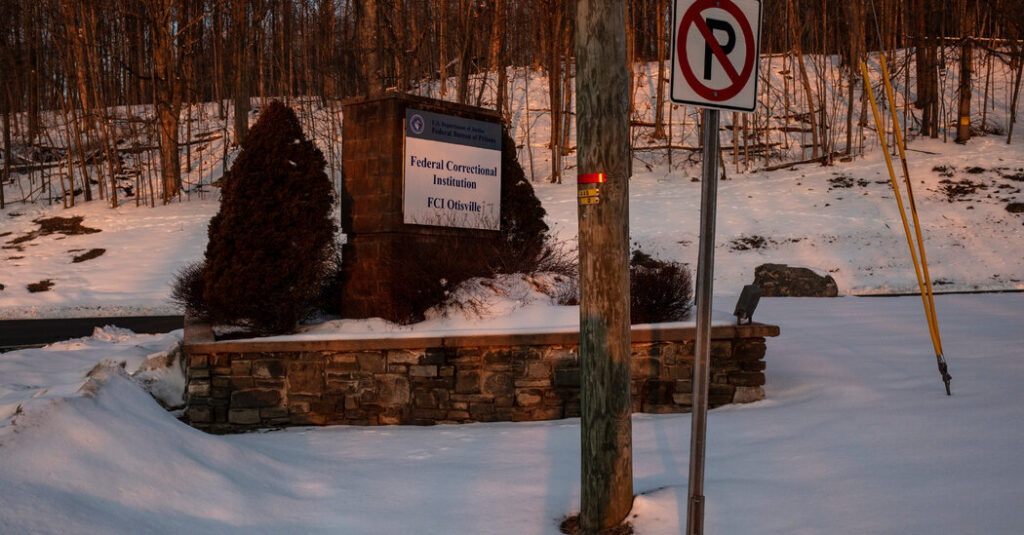
For a story about the growth of the clemency industry that has emerged around Mr. Trump, I traveled to the minimum-security federal prison camp in Otisville, N.Y., from which three inmates were recently freed by Trump clemency grants.
One of them had served only three months of a three-year sentence for tax crimes related to a nursing-home empire that had collapsed amid allegations of endangering the residents and defrauding his employees.
Kenneth P. Vogel is based in Washington and investigates the intersection of money, politics and influence.
The post How The Times Tracks Down the Connections Behind Trump’s Pardons appeared first on New York Times.