Jacqueline Onassis once gave me some wise advice: She told me that while tabloids, magazines and newspapers often sold ridiculous lies, they were nothing more than bird cage liner by the next day. At the time, I found great comfort and consolation in those words.
But today they no longer hold true.
In the digital age, stories do not disappear, yesterday’s news isn’t tossed out with the morning paper, and lies live online forever. They are archived, streamed, clipped, memed and resurfaced endlessly. A dramatized portrayal can become, for millions of viewers, the definitive version of a real person’s life.
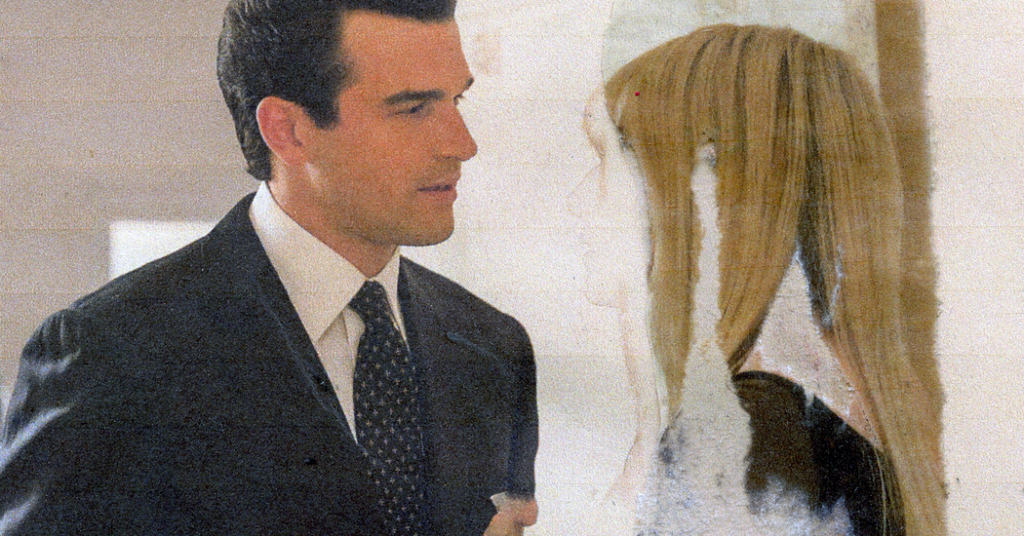
I have generally chosen not to respond to media coverage of me. I have long believed that engaging with distortion often amplifies it. But a recent tragedy-exploiting television series about John F. Kennedy Jr. and Carolyn Bessette features a character using my name and presents her as me. The choice to portray her as irritating, self-absorbed, whiny and inappropriate was no accident.
In discussing the show, “Love Story,” one of its producers explained: “Given how much we’re rooting for John and Carolyn, Daryl Hannah occupies a space where she’s an adversary to what you want narratively in the story.”
Storytelling requires tension. It often requires an obstacle. But a real, living person is not a narrative device. There is also a gendered dimension to this thinking. Popular culture has long elevated certain women by portraying others as rivals, obstacles or villains. Isn’t it textbook misogyny to tear down one woman in order to build up another?
The character “Daryl Hannah” portrayed in the series is not even a remotely accurate representation of my life, my conduct or my relationship with John. The actions and behaviors attributed to me are untrue. I have never used cocaine in my life or hosted cocaine-fueled parties. I have never pressured anyone into marriage. I have never desecrated any family heirloom or intruded upon anyone’s private memorial. I have never planted any story in the press. I never compared Jacqueline Onassis’ death to a dog’s. It’s appalling to me that I even have to defend myself against a television show. These are not creative embellishments of personality. They are assertions about conduct — and they are false.
When so many people watch a dramatization that uses a real name, real-life consequences follow. In the weeks since the series aired, I have received many hostile and even threatening messages from viewers who seem to believe the portrayal is factual. When entertainment borrows a real person’s name, it can permanently impact her reputation.
I know that as an actress I will be in the public eye. I’ve endured a number of outrageous lies, crappy stories and unflattering characterizations before. I chose not to battle them but to focus on my work and respect my loved ones by keeping my private life private. But my silence should not be mistaken for agreement with lies. Apparently, my discretion makes me a target.
For decades, my work has focused on environmental advocacy, documentary filmmaking and animal-assisted therapy for seniors living with dementia and Alzheimer’s. My professional life is built on compassion and responsibility. Reputation is not about ego; it is about the ability to continue doing the meaningful work I love. Like any career, doing good work requires an intact reputation. This is why I am choosing to stand up for myself now.
The Kennedy family is also notoriously private, and I have always honored their right to privacy. Know that most (if not all) of those claiming to have any intimate knowledge of our personal lives are self-serving sensationalists trading in gossip, innuendo and speculation.
Many people believe what they see on TV and do not distinguish between dramatization and documented fact — and the impact is not abstract. In a digital era, entertainment often becomes collective memory. Real names are not fictional tools. They belong to real lives.
Bird cage liners biodegrade. Online lies endure. May love and truth prevail.
Daryl Hannah is an actress, filmmaker and philanthropist.
The Times is committed to publishing a diversity of letters to the editor. We’d like to hear what you think about this or any of our articles. Here are some tips. And here’s our email: [email protected].
Follow The New York Times Opinion section on Facebook, Instagram, TikTok, Bluesky, WhatsApp and Threads.
The post Daryl Hannah: How Can ‘Love Story’ Get Away With This? appeared first on New York Times.