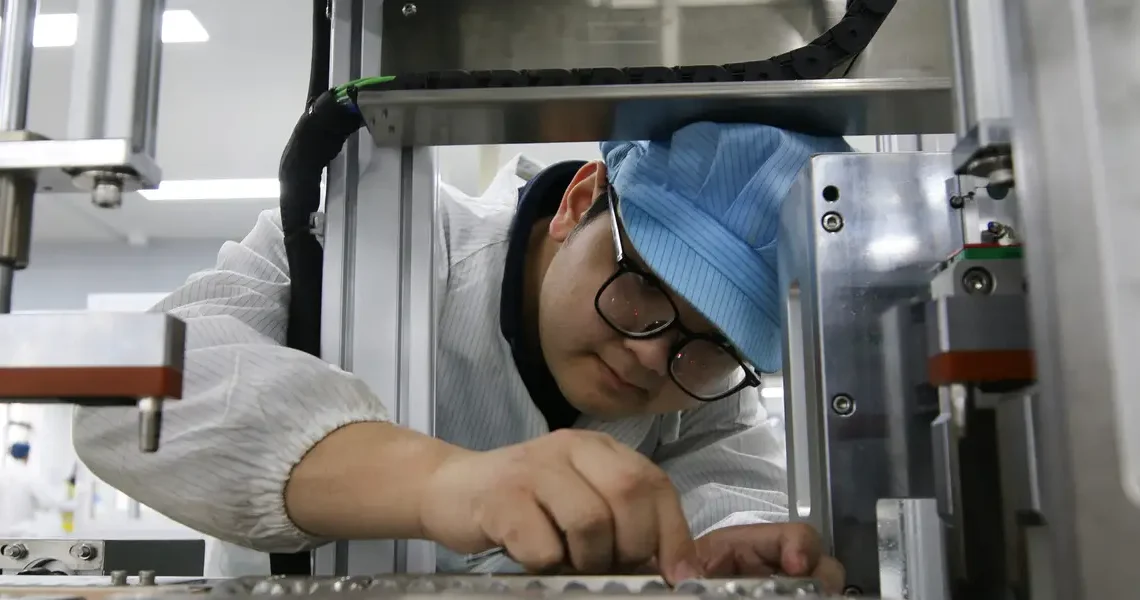
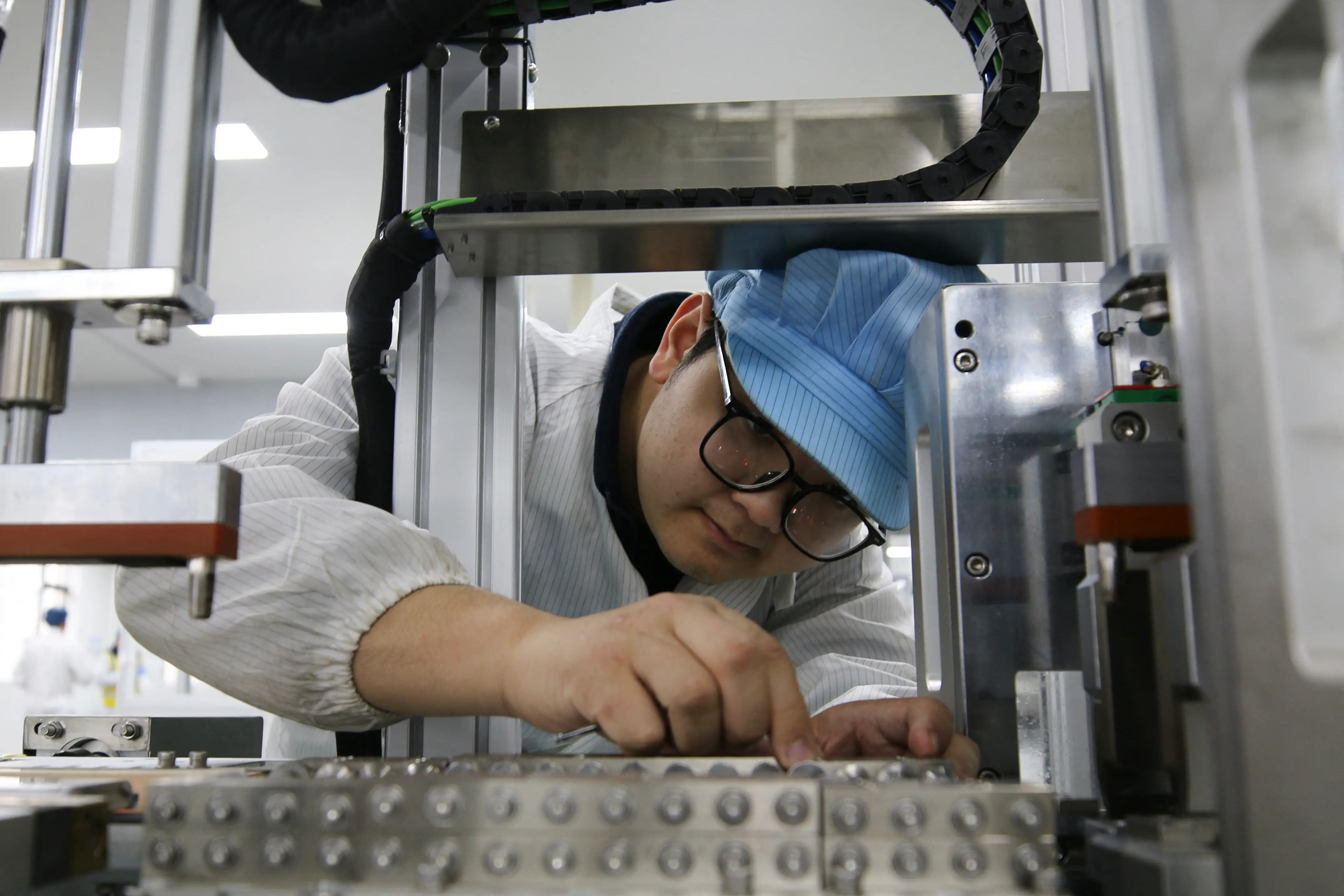
For years, China’s top graduates chased jobs in finance and tech. Now, many are heading into manufacturing and energy instead.
Employment data from Tsinghua University — one of China’s top tertiary institutions — published on its website on Tuesday shows the number of graduates entering the manufacturing and energy sectors rose 19.1% year over year for the class of 2025.
Top employers for this year’s Tsinghua graduates include Huawei, BYD, State Grid Corporation of China, and China National Nuclear Corporation, the university said.
Huawei is a global telecom equipment giant, while BYD is one of the world’s biggest electric-vehicle makers. State Grid runs China’s power grid, and China National Nuclear Corporation leads its nuclear industry.
The share of Tsinghua graduates entering the manufacturing and energy sectors has grown for six consecutive years, according to the university. Tsinghua said last year that the number of Class of 2024 graduates joining those sectors rose 11% year on year.
Often compared with MIT or Stanford, Tsinghua is widely viewed as China’s top engineering university and a key pipeline for talent entering the country’s tech and industrial giants.
The trend is not limited to China’s most elite university. At Huazhong University of Science and Technology, 2025 graduate employment statistics published in January showed about 2,000 graduates entering the information-technology sector and about 1,500 moving into manufacturing, compared with just around 300 entering finance and 240 joining construction.
The share of Chinese graduates entering manufacturing rose from 17.9% in 2020 to 22.5% in 2024, according to South China Morning Post, citing a report by MyCOS Institute, a consultancy focused on China’s education.
China’s advanced manufacturing sector gains prestige
Experts told Business Insider that several factors are driving more graduates toward manufacturing and energy jobs.
China’s industrial sectors, especially semiconductors, electric vehicles, batteries, and renewable energy, have become “highly technology-intensive and now demand top engineering talent,” said Fu Fangjian, associate professor of finance at Singapore Management University.
Many young graduates now see them as “opportunities to work on cutting-edge technologies rather than traditional factory work,” he said, adding that these jobs can offer “very competitive” salaries.
Experts say the nature of manufacturing jobs has evolved as China upgrades its industrial base.
Sectors such as electric vehicles, power equipment, and nuclear energy now require expertise in engineering, data science, and systems integration, said Zhao Litao, a senior research fellow with the East Asian Institute at the National University of Singapore.
“‘Hardware’ and advanced manufacturing are no longer seen as low-skill industries but as high-tech innovation sectors involving robotics, semiconductors, advanced materials, and industrial AI,” Fu said.
As a result, advanced manufacturing is increasingly viewed as a frontier technology sector rather than a blue-collar industry, said Zhao, who researches China’s social policy.
Highly technical engineering or research roles in this sector “carry considerable prestige among engineering students,” he added.
Tech and finance jobs lose their shine
For years, many of China’s top graduates gravitated toward internet platforms and finance, drawn by rapid growth and high pay.
But hiring in the platform economy has slowed, while tighter regulation has added more uncertainty, said Fu.
“At the same time, investment attention has shifted toward HALO sectors —hardware, industrial technology, and energy— redirecting both capital and talent,” he added.
China’s job market has long been challenging for young graduates entering the workforce.
In December, the unemployment rate for people aged 16 to 24 — excluding students — stood at 16.5%, according to data released by the National Bureau of Statistics in January. By comparison, unemployment was 6.9% for those aged 25 to 29 and 3.9% for workers aged 30 to 59.
The Chinese tech sector has been trimming headcount in recent years as companies focus on cutting costs and improving efficiency.
Alibaba’s workforce has shrunk by more than half, from about 250,000 full-time employees in March 2022 to about 124,000 in March 2025, according to a report by Chinese financial news outlet Caixin.
Baidu’s workforce stood at 35,900 at the end of 2024, down 21.1% from its peak in 2021, the report in August added.
Meanwhile, demand in manufacturing remains strong. A government manufacturing talent development plan projected that nearly 30 million skilled manufacturing jobs could go unfilled by 2025.
“China is the world’s largest producer of electric vehicles, batteries, and solar equipment, and these sectors require a large technical workforce,” said Zhao.
Government policy has also helped reshape the job landscape, experts said.
Over the past decade, China has prioritised strategic sectors such as electric vehicles, renewable energy, power equipment, and advanced materials through industrial policies, research programmes, and large-scale investment, said Zhao.
“These sectors have therefore become major employers of engineering graduates,” he added.
Universities, research institutes, and state-supported firms are aligned with these national priorities, which encourages more talented graduates to enter these fields, Fu said.
Read the original article on Business Insider
The post China’s smartest students used to chase tech and finance jobs. Now, they’re choosing manufacturing. appeared first on Business Insider.