Erin Morrow Hawley is chair of Lex Politica’s Supreme Court and appellate practice and counsel at Alliance Defending Freedom.
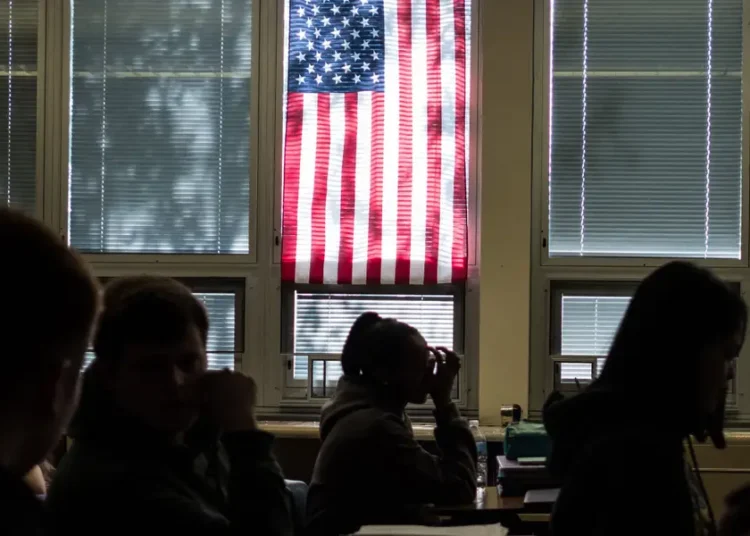
There is a word for what California was doing to parents in its public schools: deception. When a California child begins assuming a different name, pronouns or identity at school, state policy requires teachers to hide that information from parents unless the child consented to disclosure.
The state has effectively deputized itself as the primary keeper of children’s mental and physical health, intentionally displacing parents as their primary guardians. But this week, the Supreme Court put a stop to it.
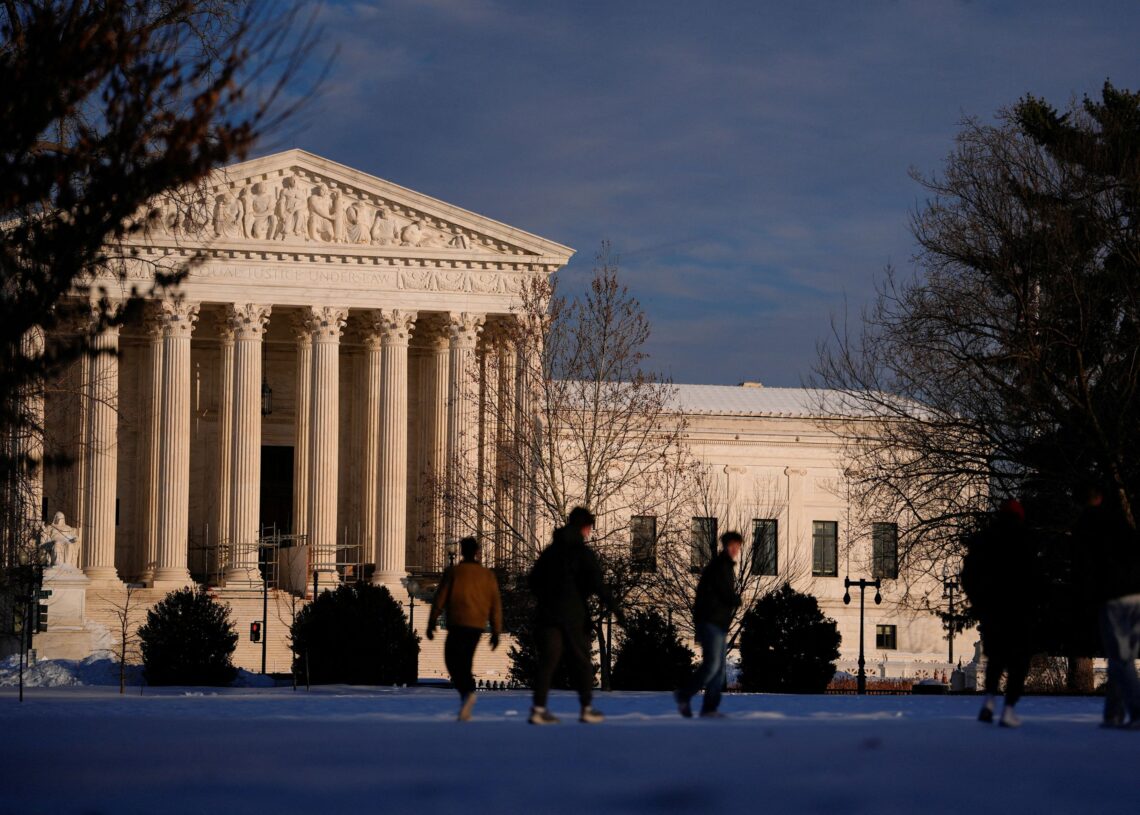
In an unsigned ruling in Mirabelli v. Bonta, a 6-3 majority reinstated a lower court injunction blocking the policy. The ruling is a significant and welcome victory, not merely for the parents and teachers who brought the case but also for the principle that government authority is always secondary to parental rights.
“California’s policies … substantially interfere with the ‘right of parents to guide the religious development of their children,’” the court said in the opinion.
The ruling builds on the court’s 2025 decision in Mahmoud v. Taylor, which held that the introduction of LGBTQ+ storybooks to elementary students intruded on the free exercise rights of parents if advanced notice or an opt out was not provided. In Mirabelli, the court explained that parents with sincere religious beliefs about sex and gender feel that they have a religious obligation to raise their children in accordance with those beliefs. As such, California’s policies imposed an “unacceptable” burden on this religious exercise and could not be justified on student safety grounds because they “cut out the primary protectors of children’s best interests: their parents.”
The court also extended relief to other parents who raised claims under the Fourteenth Amendment’s due process clause. The majority found that long-established precedent dictated that “parents—not the State—have primary authority with respect to ‘the upbringing and education of children.’” Yet under California policy, when a child shows signs of gender dysphoria, “a condition that has an important bearing on a child’s mental health” — California intentionally conceals that information from parents. In finding this likely crossed a constitutional line, the court reaffirmed that parents are not optional participants in their children’s upbringing. They are the foundation.
Indeed, even Justice Elena Kagan in her dissent, recognized that “parents have rights, even though unenumerated, concerning their children and the life choices they make.” She acknowledged that “California’s policy, in depriving all parents of information critical to their children’s health and well-being, could have crossed the constitutional line.”
Kagan’s objections to the majority ruling were procedural. She criticized the majority for issuing its opinion on the emergency docket rather than agreeing to fully hear one of the pending cases that address the issue, such as Alliance Defending Freedom’s pending petition in Foote v. Ludlow School Committee.
But as Justice Amy Coney Barrett pointed out, the irreparable harm to families whose constitutional rights are suspended while litigation drags on through the U.S. Court of Appeals for the 9th Circuit is precisely the kind of harm emergency relief exists to address. Were California’s policy to continue, “parents will be excluded—perhaps for years—from participating in consequential decisions about their child’s mental health and wellbeing.”
It is worth reflecting on the stakes. One set of parents, John and Jane Poe, said they were not told when their daughter began presenting as a boy and using a male name and pronouns during seventh grade. This information was concealed from them during parent-teacher meetings. It was not until their daughter attempted suicide and was hospitalized in eighth grade that the Poes learned she had been presenting at school as a boy. In other words, the state inserted itself between parent and child and acted as a gatekeeper of information about the child’s mental health. That is not tolerance. That is the state substituting its judgment for that of parents.
The Mirabelli ruling sends a message that will echo beyond California. School districts across the country have adopted similar policies. In fact, nearly 40 cases challenging such policies are winding their way through the court system. Mirabelli makes clear that policies that direct teachers to deceive parents are almost certainly unconstitutional. Even more importantly, Mirabelli reaffirms the foundational principle that parents who send their children to public schools do not surrender their parental rights at the schoolhouse door.
For now, the children of California will return to schools where their parents can be told the truth. That is not a partisan outcome. It is a common-sense one. The family is the foundational unit of civil society, and government institutions exist to serve families, not supersede them. In Mirabelli, the court reminded California — and any state that might be tempted to follow its example — of that foundational truth.
The post The Supreme Court makes a common-sense decision on parental rights in California appeared first on Washington Post.