
Maybe, in his Princeton days, Defense Secretary Pete Hegseth read the ancient historian Thucydides’ famous contention that might makes right.
But, as he demonstrated in his pumped-up Pentagon briefing on Wednesday morning, Hegseth simply seems jazzed by delivering maximum violence, death, and destruction.
“Decisively, devastatingly and without mercy,” he said of the ongoing attacks against Iran.
And he was not about to let the deaths of a few Americans dim his bloodlust.
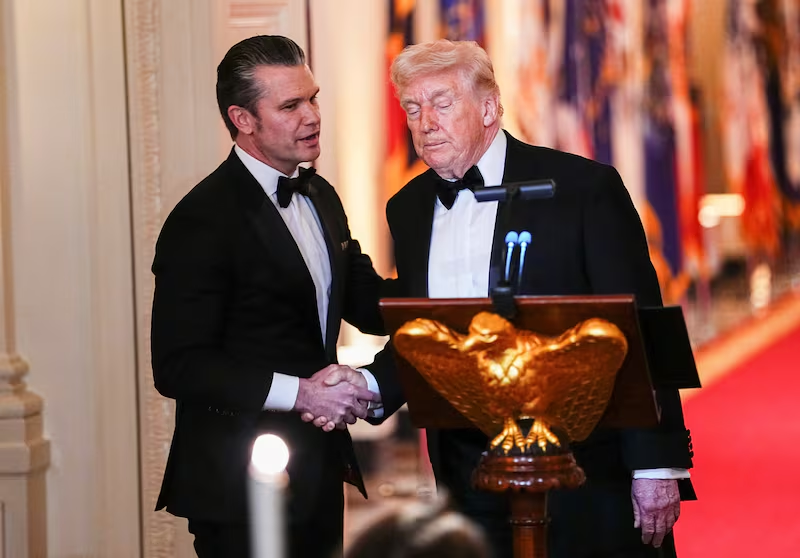
“When a few drones get through, or tragic things happen, it’s front page news,” he said. “I get it. The press only wants to make the president look bad.”
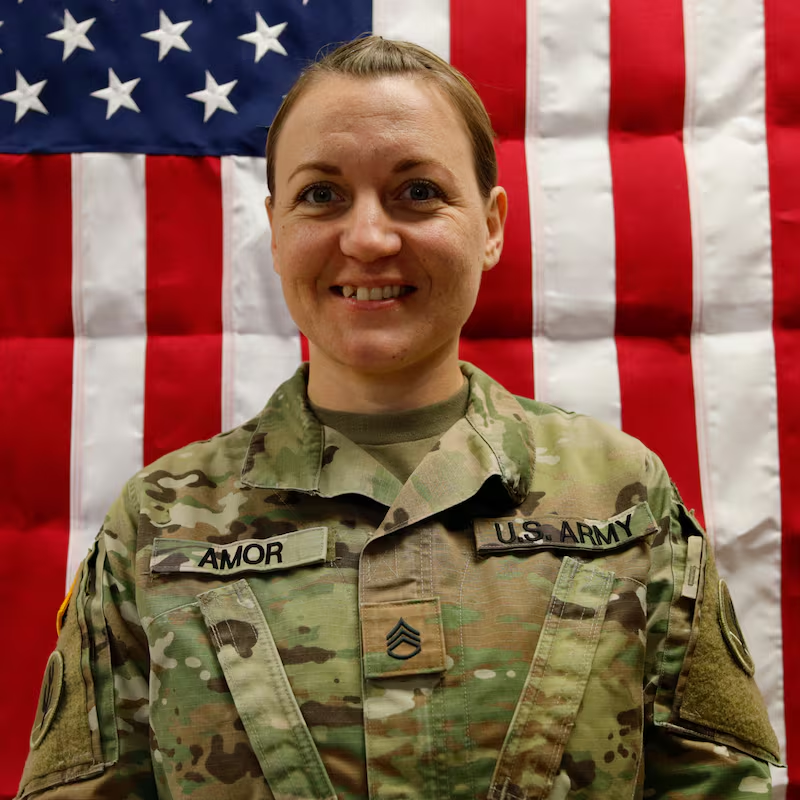
No, Pete, the press was not trying to make President Trump look bad when it widely reported that Sgt. 1st Class Nicole Amor was a 39-year-old mother of two just days from returning home to her family in White Bear Lake, Minnesota. And that Amor liked to pick tomatoes and peppers to make salsa with her 18-year-old son. That she would have been back to rollerblading with her 9-year-old daughter.
And that she had been contemplating retirement after 21 years in the military, which included a 2019 deployment to Iraq, because Amor had not wanted to miss as much of her daughter’s childhood as she had with her son.
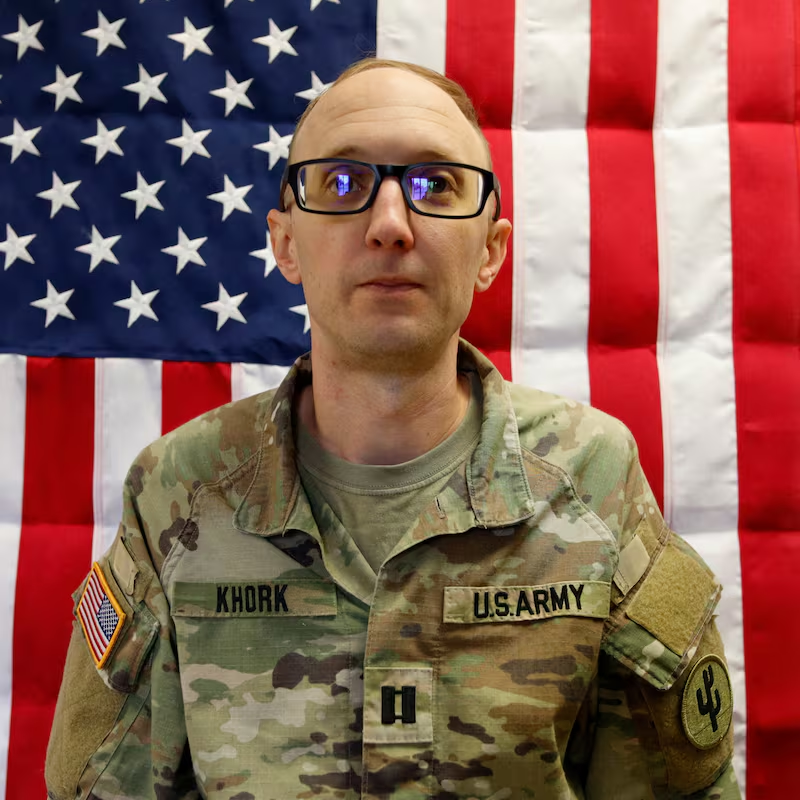
The press was not trying to make the president look bad when 35-year-old Capt. Cody Khork of Winter Haven, Florida, was remembered in a statement by his family as someone who “was deeply patriotic and took great pride in serving something greater than himself.”
And when it was reported that Khork joined the ROTC program at Florida Southern College and signed up with the Army Reserve. And that he deployed to Saudi Arabia in 2018, Guantánamo Bay, Cuba, in 2021, and Poland in 2024. That he had a degree in political science and a passion for history.
And that he was described in a statement by his family as also being “the life of the party, known for his infectious spirit, generous heart, and deep care for those who served alongside him and for everyone blessed to know him.”
They added, “He lived with purpose, loved deeply, and served honorably.”
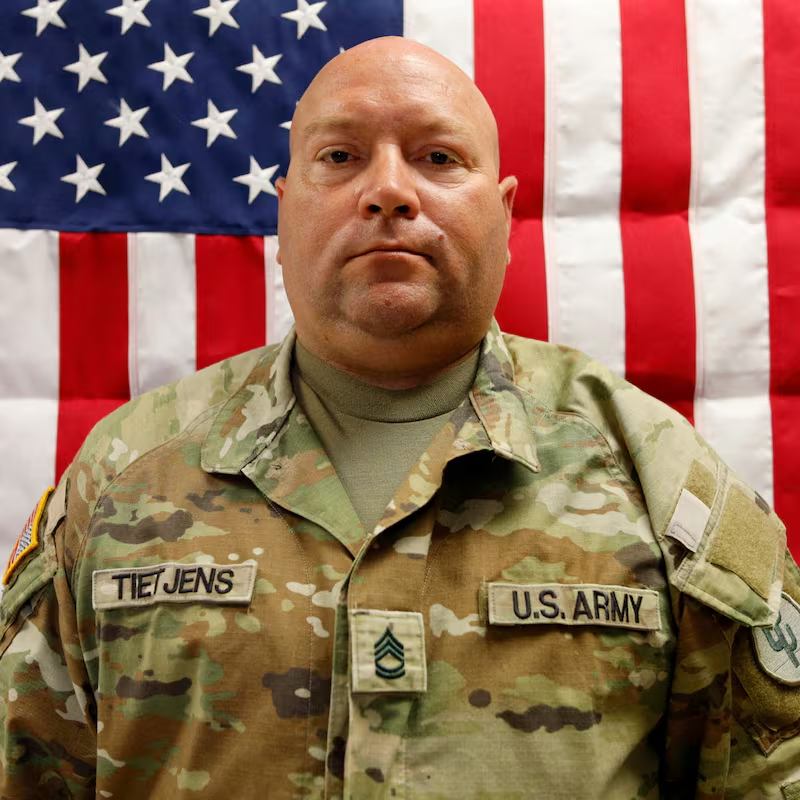
And when it was reported that Sgt. 1st Class Noah Tietjens, 42, of Bellevue, Nebraska, had a wife and a teenage son named Dylan.
And that The Philippine Martial Arts Alliance described him on Facebook as “a devoted husband and father, a respected Black Belt in Philippine Combatives and Taekwondo.” The alliance added, “On the mat, he trained as a martial artist. In uniform, he served as a soldier. In both roles, he carried the same values: honor, discipline, service, and commitment to others.”
And that he had been on multiple previous deployments, including to Iraq.
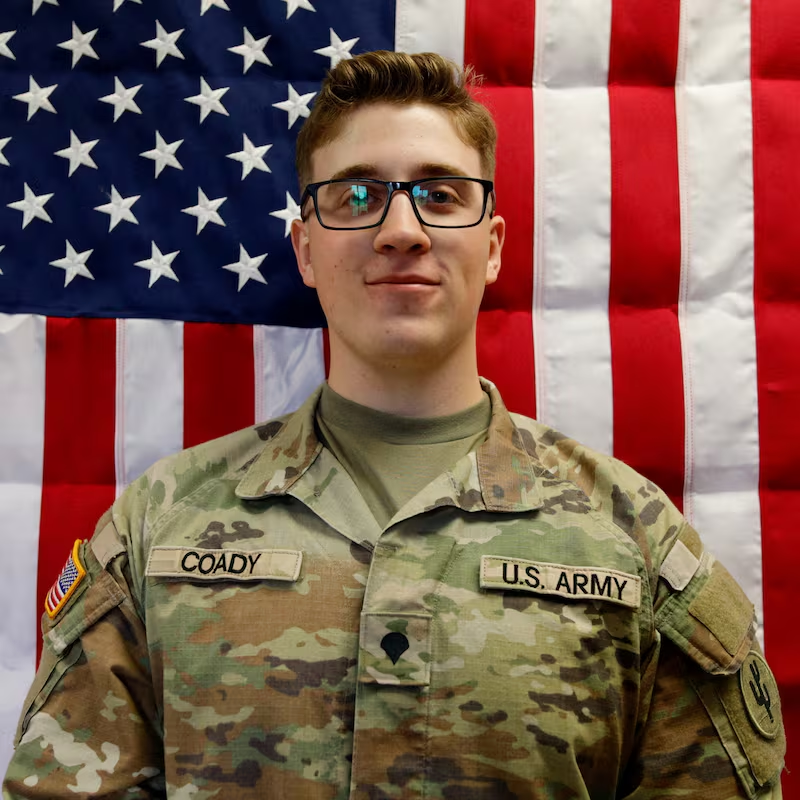
And that 20-year-old Sgt. Declan Coady of West Des Moines, Iowa, had become an information technology specialist in the Army Reserves while also studying cybersecurity at Drake University in Des Moines.
That Coady had been taking online classes in Kuwait with the hope of becoming an officer. It was not the intention to embarrass the president when Drake University said in a statement that Coady “had an incredibly bright future ahead of him.”
Nor when his sister, Keira Coady, remarked that the loss did not seem real and “I just remember all of our conversations about what he was going to do when he came back.”
These facts about the fallen four were widely reported in the Military Times, The New York Times, MS NOW, and elsewhere to honor what they had, and what they were willing to risk, and what they lost.
The details were offered by family and friends as what was best in each one, what made them not at all ordinary to those who loved them. They emerge from the reporting as citizen soldiers who felt a duty to serve their country.
What Khork’s family said of him applies equally to the others and no doubt to two fellow soldiers who died with them on Saturday, but have not yet been identified.
“His legacy will endure in the lives he touched, the example he set, and the love of country and family that defined him.”

Those whose names we know were not warfighters obsessed with lethality and bent on being examples of power. They instead lived and died demonstrating the power of example.
Something Hegseth may have missed at Princeton was the text of President Abraham Lincoln’s speech at the Cooper Union in 1860. Lincoln flipped Thucydides around.
”Let us have faith that right makes might.”
That, Pete, is the principle that made America great in the first place.
The post Opinion: How Sneering Hegseth Proved His Contempt for What Truly Makes America Great appeared first on The Daily Beast.