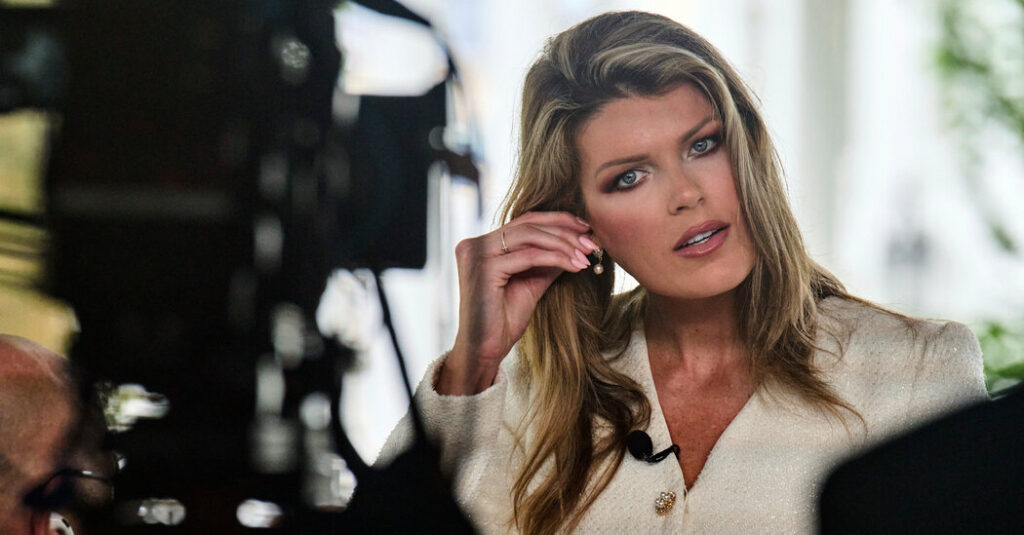
Lindsey Halligan, the former U.S. attorney in the Eastern District of Virginia who brought criminal cases against President Trump’s enemies over the objections of career prosecutors, is under investigation by Florida’s bar association, according to a letter the organization sent last month.
The letter was addressed to the executive director of the nonprofit organization Campaign for Accountability, which had filed complaints in Florida and Virginia about Ms. Halligan’s actions. It noted that it had been closely monitoring reprimands Ms. Halligan had received from judges.
“We already have an investigation pending,” the bar association said in its letter to the group. Ms. Halligan, who left the U.S. attorney’s office in January, was included on the letter, indicating that she was aware of the investigation.
Reached by phone, Ms. Halligan asked to see a copy of the letter, but did not offer any additional comment. A Justice Department spokeswoman declined to comment.
An investigation by Florida’s bar association could lead to disbarment, but the process is rigorous and often takes years. Though the bar can open investigations and act as a fact-finder, its recommendations go to an organization called a grievance committee, which has to determine whether there is probable cause to believe an attorney is guilty of misconduct. That recommendation then goes to the state’s courts, which have the power to disbar lawyers.
Still, the prospect of Ms. Halligan losing her license could serve as a check on administration lawyers who have been accused by judges of pushing the boundaries of the law or intentionally misleading the courts, which has happened frequently in recent months. It could also deter attorneys considering working for the Justice Department, which is eagerly looking to hire to replace the many employees who quit or were fired last year.
On Wednesday, the administration posted a notice in the Federal Register that suggested it was seeking to intervene in state bar associations’ disciplinary proceedings.
The Justice Department has no apparent legal authority over state bar disciplinary organizations, and its proposal suggested that it would request that a state bar association “suspend any parallel investigations” until the department completes its own review. But legal experts said that even a request like that by the administration could be interpreted by bar associations as a threat.
In at least one other instance, the Justice Department has taken the opposite tack. Court papers show that it has sought the disbarment of a former Justice Department lawyer, Roger Alford, who had served as a senior attorney in the antitrust division. Mr. Alford publicly criticized some senior Justice Department officials last year as corrupt after he was fired over his opposition to a corporate merger settlement involving Hewlett-Packard Enterprise and a rival, Juniper Networks.
The Florida bar’s investigation into Ms. Halligan centers on her conduct as the interim U.S. attorney for the Eastern District of Virginia, when she went before grand juries to seek indictments against two of Mr. Trump’s longtime targets. Her predecessor was forced out after he determined that there was not enough evidence to bring criminal charges against those targets, the former F.B.I. director James B. Comey and New York’s attorney general, Letitia James.
Upon her appointment last September, Ms. Halligan, who had never worked as a prosecutor, quickly obtained two grand jury indictments against Mr. Comey and Ms. James. But a judge later dismissed those cases after concluding that she had not been lawfully appointed as U.S. attorney.
Federal judges in the district raised concerns about Ms. Halligan’s actions with the grand jury, and those concerns are now the basis of the bar investigation.
Last November, a magistrate judge, William E. Fitzpatrick, said that it appeared Ms. Halligan had made “fundamental misstatements of the law that could compromise the integrity of the grand jury process” during the Comey case. Several judges in the district also raised concerns that even after a federal judge ruled that Ms. Halligan had not been lawfully appointed the U.S. attorney, she continued to sign court documents claiming that title, a possible violation of the judge’s order.
The Campaign for Accountability has asserted that such conduct violates a number of ethical rules for lawyers, including prohibitions on false statements, misleading communications, dishonest conduct and knowingly disobeying a ruling.
Devlin Barrett covers the Justice Department and the F.B.I. for The Times.
The post Lindsey Halligan Is Under Investigation by the Florida Bar appeared first on New York Times.