Azerbaijan said on Thursday that it had been struck by two drones fired from Iranian territory, injuring two people and damaging a local airport, as the conflict that began last week with U.S.-Israeli strikes on Iran spreads farther beyond the Middle East.
The Azerbaijani Defense Ministry said the attack on Nakhchivan, an Azerbaijani exclave wedged between Armenia and Iran, was conducted by the Iranian armed forces. The ministry said that Azerbaijan was preparing “necessary retaliatory measures to defend the country’s territorial integrity and sovereignty.”
“These acts of aggression will not remain unanswered,” the ministry said.
Iran denied responsibility for the attack. It accused Israel of launching the drones to “disrupt relations among Muslim countries,” in a statement released by the Iranian state news agency, IRNA. It gave no evidence.
Ilham Aliyev, Azerbaijan’s strongman president, was unconvinced. Speaking with his top officials hours after the attack, Mr. Aliyev said Iran had committed “an act of terror” against his country.
“Those who committed it must be immediately held accountable,” Mr. Aliyev said. “Iranian officials must provide an explanation to the Azerbaijani side, an apology must be offered, and those who committed this terrorist act must be held criminally liable.”
Azerbaijan, an oil-rich former Soviet republic strategically situated on the eastern flank of the South Caucasus, shares a more than 400-mile border with Iran. Millions of ethnic Azerbaijanis reside in Iran, a demographic reality that has caused tensions between the two countries. Azerbaijan’s strong ties to Israel have also strained its relations with Iran, as has the neighbors’ competition for influence in the South Caucasus.
Azerbaijan’s Foreign Ministry said the attack constituted “a violation of the norms and principles of international law and serves to increase tensions in the region.” The ministry said it had summoned the Iranian ambassador to Azerbaijan.
Pictures and a video published by Azerbaijan’s state news agency, Azertac, showed scattered debris in the terminal building at the airport in Nakhchivan after the attack. The images also showed what the agency said were the remains of a drone on the airport’s tarmac. Another drone hit the village next to the airport, the Foreign Ministry said.
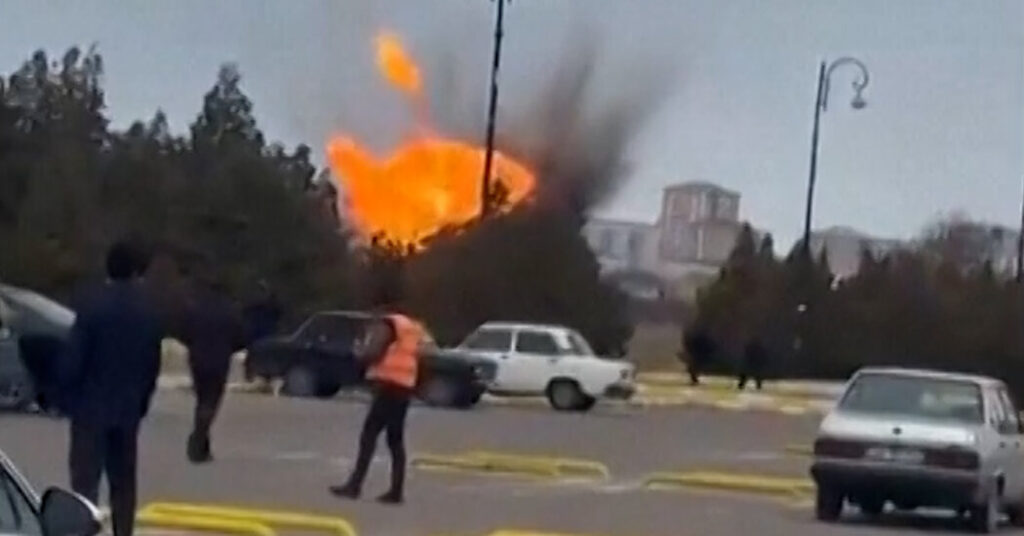
Videos circulating on social media, including the Telegram channel of the Azerbaijani armed forces, and verified by The New York Times showed a drone striking the village, Shekarabad. People can be seen standing in the airport’s parking lot and watching as the drone dives and causes a fiery explosion.
Other footage verified by The Times shows damage at the Nakhchivan airport itself. Broken glass can be seen hanging from the ceiling of the terminal hall in one of the videos.
Nakhchivan has been a source of tensions between Azerbaijan and Iran. In recent years, Tehran has opposed Azerbaijan’s plan to build a corridor through Armenia near the border with Iran that would link the Azerbaijani mainland with the Nakhchivan exclave. The project has been backed by President Trump.
Shortly after United States and Israel attacked Iran last week, Azerbaijan took steps to head off new tensions. Its foreign minister pledged that Azerbaijani territory would not be used to attack what he called a “friendly” Iran.
On Wednesday, Mr. Aliyev visited Iran’s embassy in the Azerbaijani capital, Baku, to offer his condolences on the death of Ayatollah Ali Khamenei, the Iranian supreme leader, who was killed in an Israeli attack, and Iranian civilians who have died during the conflict.
But on Thursday, after the attack, Mr. Aliyev sentiment was different.
“No other head of state has visited any Iranian embassy,” Mr. Aliyev said during his meeting with officials. “Not appreciating this, downplaying it, and acting like vile and ungrateful people does not bring honor to anyone.”
Ivan Nechepurenko covers Russia, Ukraine, Belarus, the countries of the Caucasus, and Central Asia.
The post Iranian Drones Fall in Azerbaijan as Conflict Spreads Beyond Mideast appeared first on New York Times.