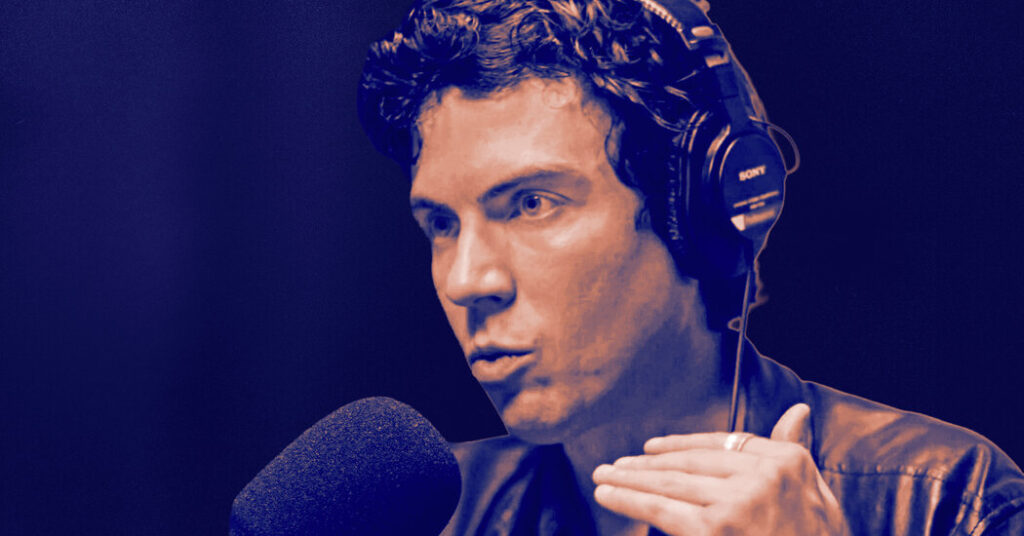
Whatever happened to America First? It doesn’t feel like a war with Iran was quite what Donald Trump campaigned on in 2024. And my guest this week thinks it’s a big betrayal of the voters who put him in the White House.
Curt Mills is the executive director of The American Conservative, a magazine that champions foreign policy restraint. He argues the Iran war isn’t just a foreign policy blunder — but a move that could shatter the president’s domestic coalition.
Below is an edited transcript of an episode of “Interesting Times.” We recommend listening to it in its original form for the full effect. You can do so using the player above or on the NYTimes app, Apple, Spotify, Amazon Music, YouTube, iHeartRadio or wherever you get your podcasts.
Ross Douthat: Curt Mills, welcome to “Interesting Times.”
Curt Mills: Thanks for having me.
Douthat: So, I’m going to do some stage-setting here, for anyone in the audience who doesn’t follow all of the ins and outs of right-wing foreign policy debates.
But you are in charge of The American Conservative magazine, which is a magazine founded by Pat Buchanan, among other people, in opposition to the looming Iraq war. And for a long time, The American Conservative was a pretty lonely voice for foreign policy restraint, a kind of antiwar, anti-imperial conservatism.
But throughout the Donald Trump era, it’s been seen as much more influential — maybe closer to what Trump himself believes. But here we are. The U.S. is at war, and it is a war. It’s not a large-scale combat operation.
We’re at war with Iran. We’re still backing Ukraine in its ongoing war with Russia. We’ve intervened in Venezuela, we’ve intervened in Nigeria. There’s a long list. So, whatever this looks like, I would not describe it as a dovish or restraint-oriented administration. And however you would describe your faction on the right — antiwar MAGA, America First, whatever else — it seems like your faction is losing. So give me a big picture account of why that’s happened. Why, in the broadest sense, has the second Trump administration turned out to be much more hawkish than a lot of people expected?
Mills: It seems pretty clear to me that the ultimate deciding factor is the president’s personality and his own determinations. There are a number of people in this administration — there are real cadres — that believe in non-interventionism. They were put into personnel, throughout the administration, in a much more pronounced way than in his first term.
This generation is younger, very notably at the cabinet level, but also at the sub-cabinet level. There was every indication that when Trump came in, the first day, the first month of his second term, that they really wanted to get the ball rolling on a number of these endeavors. In fact, they tried before he was even in power.
The president’s special envoy, Steve Witkoff — if you remember the transition in mid-January 2025 — imposed a cease-fire on the Israelis that was very unpopular among the Israeli right. Trump opened up negotiations and announced it, side by side with Benjamin Netanyahu, with Iran in April of 2025. Vice President JD Vance led a caustic showdown with Zelensky [President Volodymyr Zelensky of Ukraine] in February of 2025, indicating the administration was going to take a hard line in getting out of the war.
Even on pet projects of people like the Secretary of State, Marco Rubio, there was every indication that there were competing factions to try to do diplomacy in Latin America.
This may well just be stuff that is written in history books and not remembered actively, but the opening thrust of Trump’s second term was extremely in this direction. And I think it’s worth noting. I also think it had been building for years.
There was every indication that it was going to look very different.
Douthat: So, then what changed?
Mills: The president is impatient. The president does not have the patience for diplomacy. I think this is clear. The president does not have the detail-oriented mind-set to overwhelm the various factions in his coalition.
And the president is ultimately, fundamentally, an underratedly agreeable personality. And so, a major part of President Trump’s Boss Tweed-style of management are people who want to drive the U.S. into war. There are Latin America hawks, there are Iran hawks, there are even conservative hawks remaining on the Hill, and in the military industrial complex, for Ukraine.
And fundamentally, he has not shown the determination and courage to tell them “no.” And I think you’ve seen this on the right, but you’ve also seen it on the world stage. He likes Prime Minister Keir Starmer [of Britain]. Yeah, I know he assailed him yesterday with the German chancellor, Friedrich Merz, but, generally speaking, there’s been a reasonable relationship.
He likes Emmanuel Macron [president of France]. Of course, he likes Xi Jinping, and he likes Vladimir Putin [presidents of China and Russia]. But that’s a status quo dynamic, if you can’t say “no” to anybody. And the status quo is America as an escalatory interventionist power.
Douthat: So, that’s a status quo embodied by not just forces within his administration, but by NATO, the Western Alliance. What gets pejoratively called the foreign policy blob.
Mills: People are intimidated by foreign policy. I don’t think it’s actually that complex. Friedrich Merz flew to D.C. immediately when the Iran war started, because he sniffed, I think correctly, a grand opportunity for Europe here, or European internationalists — which is, support Trump on Iran. Lump it. I don’t think they would’ve chosen this, but they don’t really care. I mean, the Europeans have been, you know, contra 10 years ago, when they were all in on the Iran diplomacy. They’ve been very frosty throughout this process. They don’t care about the Iranians. Easy to dump them and try to get Trump back in, all in, on NATO and Ukraine.
And he said it, in the first 20 seconds of his response, in his meeting with Trump, he said: Yep, yep. We support the end of this regime. But I’m really here to talk about Ukraine.
Douthat: How much do you think Trump likes being a hawk though? I mean, it’s impatience with diplomacy, it’s agreeableness.
But, you know, when I look back at his first term, it was a first term that had, in a way, a kind of establishment Republican foreign policy. In other ways he very conspicuously resisted figures like John Bolton arguing for escalation against Iran. But there were various moments, the assassination of Gen. Qassim Suleimani, most notably, where it seemed like Trump took real pleasure in using the U.S. military arsenal.
And not in being the guy who put boots on the ground and occupied countries, but in being a dynamic actor on the world stage. And that, when I look at sort of the pattern from Venezuela to Iran, that’s sort of what I see.
Mills: I linked it to impatience, though. I mean, there’s disputes, there’s negotiations, it’s complex, it’s hard.
He feels like he’s getting run over by foreign actors potentially. He said it yesterday: “Israel didn’t make this decision. If anything, I forced their hand.” He’s very competitive and jockish and macho about that, so to speak. But I think you’re right that he’s attracted, fundamentally, to the glamour of these strikes.
So, there is this element to him. But until perhaps this month — or until Feb. 28, when we launched the war with Iran — Trump has shown a pretty clear hesitancy to get involved in these grand ways, à la the neocons, à la the 2000s.
Douthat: So, what is the alternative to the kind of internationalist and interventionist consensus that you’re arguing that he’s sort of accepted? What is the right-wing foreign policy, the conservative foreign policy, that you were hoping for?
Mills: Our magazine was founded by Buchanan, and he, in a lot of ways, was the Tucker Carlson of his age and also ran for president — which, you know, may be forthcoming one day from Mr. Carlson. And Trump and Buchanan had a very bad relationship because they both comically competed over the 2000 reform party nomination, and Trump said horrible things about Pat. And I’m only aware of two people that Trump has ever personally apologized to. One is his wife, Melania Trump, after the leak of “Access Hollywood,” and the second is Pat.
So, even if you think Trump believes in nothing and is a nihilist, which I don’t, but if you believe that, he is aware of the ideology that he trafficked in the 2016 primary — and has continued to the last 10 years — and that is, fundamentally, a conservative anti-globalism. It is skeptical of our massive empire overseas, that it serves the Americans, that it serves the national interest.
It is skeptical of unending immigration and it is skeptical of free trade. That is what Trump ran on. That is why the conservative establishment lost its mind when he first rose to power. And that is, when his back has been against the wall, what he has really reached for. I mean, remember, someone called Ron DeSantis was once favored to beat him in the 2024 primary.
And he leaned in hard on the antiwar messaging, he leaned hard on the trade hawkish messaging, hard on the immigration. He reached for it again and again and again. And, at the same time, of course, a rising young senator, called JD Vance, endorsed President Trump early in that primary, when that was not voguish, that was not considered the safe play. And then he backed a withdrawal and skepticism of Ukraine when that was not at all considered the conventional wisdom, even on the right, or at least within the establishment, right?
He made those bets and that was an early alliance between the two of them. And, I think it tells you that this ideology was always twinned and linked.
Douthat: Do you think of this ideology as isolationist?
Mills: No. But I mean, what is “isolationism”?
Douthat: Well, that’s part of my question —
Mills: I mean, it’s just like a catch-all slur, right?
Douthat: Well, there’s a thread that runs through Republican foreign policy —
Mills: Who has ever called themselves an isolationist? People actually called themselves “neocons,” right? Like, so that was like a real movement. They called it, they advanced policies. It helped ruin the country, but that was an actual ideology, I think —
Douthat: Although, by the time it became controversial, in the early 2000s, you had lots of neoconservatives who would say, “well, what is a neoconservative anyway”?
I guess what I’m getting at is this: there’s a strand of Republican foreign policy that is extremely hawkish, aggressive and interventionist.
Mills: Yeah.
Douthat: And sometimes for the sake of democracy, sometimes just in general —
Mills: It’s a de facto ideology. I mean, you see it, it’s on autopilot on Capitol Hill. I mean, the older generation just marinated in it. It’s this — it’s the central nervous system.
Douthat: But there’s also a thread, a strong thread, that runs through actual Republican presidents — from Dwight Eisenhower through Richard Nixon, and, to some extent, Ronald Reagan — that is internationalist, but skeptical of military intervention.
But then there’s also a fuller kind of anti-imperial, antiwar right that says, “No, we need to dismantle bases, bring troops home,” and so on. And I’m curious where in that divide you sit. Do you think that Eisenhower, Nixon and Reagan offer a valuable tradition, or do you think they were too imperial themselves?
Mills: First, the magazine represents a range, but I’m happy to answer for myself.
Douthat: For yourself. But it’s also relevant to Vance, to Trump, to these figures. What are they trying to build? Are they trying to change the way the American Empire works? Or are they trying to retreat and dismantle it?
Mills: For myself, I am far more the latter, I think basically the critics of where America went, particularly post World War II, lost the battle, but they were right. And I don’t think this is actually an ancient battle, because the empire is still going on, and America is increasingly stretched thin in my assessment.
And I think their arguments are still alive and well and relevant going into the 21st century. So, I prefer Nixon’s foreign policy to Reagan’s. I prefer Eisenhower’s foreign policy to the John Birch Society. But I prefer Robert Taft to Eisenhower.
That’s where I come from. And Reagan, I think, is similar enough to Obama on the left, which is — it’s a sort of deity figure where it just doesn’t really behoove one to mess with him. But I think we drew the wrong lessons from the Reagan years, and I think Reagan is fundamentally an overrated conservative figure and overrated president. And potentially, in many ways, a damaging one.
Douthat: When you talk about, then, the shift that you saw happening on the younger right, in appointees to the Trump administration, do you think that a lot of those people agreed with you? Or do you think that they saw themselves more as saying: “We’re still internationalists, but we’re in the Nixon school.”
Mills: I think the people who are in the government are probably, functionally, closer to the Nixon-Eisenhower school, which I still think would be a vast improvement over the default mode of where we have been in the 1990s, 2000s, 2010s.
Douthat: OK. Do you think there’s actual public support for any kind of anti-imperialist, antiwar turn?
Mills: Absolutely. But I think that foreign policy is complex. I think it needs leadership. I think it would need a president to explain why we are doing this to the American people.
But I think the people who lose their minds when the president pursues a new type of foreign policy, whether this be Donald Trump or even Barack Obama — it is an elite-driven game. It is a D.C. and New York thing. That is who’s actually opposing it most vociferously. It is not protests in the streets to keep our bases in Bahrain. It is not protests in the streets to make sure that we Borat-bag Nicolás Maduro. It is a D.C.-New York intelligentsia thing, fundamentally.
Douthat: Let me make a counterargument and see what you think. If you look at polling on the Iran war so far — and again, four or five days in, and obviously it can change dramatically — but right now, initially, overwhelming numbers of Republican voters support the war.
It’s not popular nationally, but then Donald Trump himself is not popular nationally. But within the Republican coalition, there’s plenty of support for the war in polls. It doesn’t seem just elite-driven. I think if you looked at polls for the Venezuelan operation, you would probably see something similar.
And over time, I think, in polling, if you do it on the basis of philosophy, you find a lot of default hawkishness among Republican conservative and right-wing voters.
And there’s people who look at the antiwar right, or the war-skeptical right that you represent — but that’s also associated with really prominent figures like Tucker Carlson, who you already mentioned, Steve Bannon, all the way now through figures like Megyn Kelly, and others — and people say, well, that’s actually the elite-driven phenomenon.
That’s a group of people who found a way — this is an attention economy — to monetize. A lot of people who are really intensely focused on foreign policy or, you know, sometimes really hostile to Israel — we’ll talk more about Israel in a minute. But ultimately, Bannon, Carlson, others, they speak for a really sort of hyper-engaged, 10 percent of the Republican coalition.
But most people are just hawks on the right. And if you say, “We’re going to go to war and kick some ass in the Middle East,” yes, if it goes really badly, people will turn against it. But there isn’t philosophical support for restraint. What do you make of that argument?
Mills: Most voters are deferential to their party and their politicians.
I think the counterfactual to your counterfactual needs to be interrogated. What if President Trump had signed an Iran deal? I think overwhelming numbers of Republicans would’ve supported that. What if President Trump had opened up business dealings with Nicolás Maduro, like he’s doing right now with Delcy Rodríguez, or trying to. I think that would’ve been uncontroversial in the population. What if President Trump had pulled out of Ukraine, and Ukraine hadn’t collapsed, and there was an enduring deal where an armistice freezed the battle lines? I think that would’ve been very popular on the right as well. So, you see a level of partisanship in this country that is extreme. You see a level of trust on the right in President Trump, which is notable, but I’m not sure entirely unique.
I think, you know, the Democratic standard-bearer, Joe Biden, was a weird president.
Douthat: We can agree on that.
Mills: Yeah, we stipulate that. I think Barack Obama, if he was president today, would have similar dynamics on the left. And I think that was frustrating for liberals —
Douthat: Meaning that the left was notionally antiwar, but when Obama did things, they supported it.
Mills: I mean, Obama and Trump have similarities, right? Or the phenomena have similarities. There was a lot of left-wing intellectual ennui with Obama in the mid-2010s, I’m sure you recall. And it didn’t really show up in the polls.
So, I think Trump is a big deal. I think whoever leads these parties are big deals. I think presidents are big deals, but I don’t really see that as evidence for hawkishness, actually. I see that as evidence for trusting the president, or trusting who leads the party, or trusting your party.
And I’ll say this: I was not a big fan of George W. Bush certainly, but also Obama, who I think were both failed presidents. They both tried to marshal support in fairly traditional ways, which is: “This is what I believe. I’m going to do this, I’m going to spend political capital on it.” Iraq, Bush did that. Obama did it for mediocre health care reform.
Douthat: Wouldn’t you at least agree, though, that there is a strong generational division here?
Where older conservatives and Republicans — and again, I think you can see this in opinion polls — have a stronger hawkish default.
Mills: For sure.
Douthat: Going back, in part, to some of the veneration of Ronald Reagan you talked about. But again, I think just connected in a kind of profound way to how conservatives, older conservatives, think about their country.
That we’re the country that won the Cold War. And if you’re a patriotic American, you should expect us to be able to do good things abroad. That still seems like a powerful force in public opinion that can’t be just reduced to: “Trump says it, therefore people go along.”
Mills: But I think the story, ultimately, is an elite one. Because I’m still going to focus on the counterfactual.
Let’s say Trump made a deal with Vladimir Putin. Let’s say Trump made a deal with the Iranians. He said: “I solved Biden’s war, I did a better Iran deal than Obama.” Yeah, there might’ve been some people in the country, some right-wing radio shows that are like, “You know, the mullahs are still up to stuff, we got to do this or do that.”
But I don’t think there would be a revolt from the older clientele of the party if Trump had chosen diplomacy. Versus, Trump is choosing war and there is revolt.
Douthat: Is there a revolt?
Mills: I think you’re going to see, I think it’s going to be pretty bad. I mean, it stipulates how long this war goes.
Trump may still off-ramp, Trump should off-ramp. But it actually would’ve been politically more savvy for him to do the diplomacy. And the only real explanatory variable, in my view, is the elite story. That’s who was losing their mind at diplomacy.
Douthat: What about the explanatory variable of non-American actors?
Mills: I think that’s huge too. I was being diplomatic.
Douthat: I don’t mean our allies, we’ll talk about our allies in a moment. I mean our adversaries. When I look at what’s happened with Russia and Ukraine, it seems to me that the administration made a big diplomatic push.
They twisted the Ukrainian government’s arm, as you mentioned, in the famous Oval Office meeting and elsewhere, to get them to be more open to a peace deal. And for various reasons, Vladimir Putin has decided that it’s in his interests to let the war go on. And that has left the White House still negotiating —
Mills: I think it’s a hawkish summary. I think they could have come to a deal that would’ve been attractive enough for Putin to not continue the war, but that’s life. I mean, you have to offer him a deal that makes it more attractive than the status quo.
Douthat: Right. But just to take the extreme example: if Trump made a deal with Putin, and six weeks later the Russian army took Kyiv and occupied two-thirds of Ukraine, the public would turn against that, don’t you think?
Mills: I think the driving force on why they would turn against it would be hysteria driven from the media and by foreign policy elites.
So I’ll stipulate to that, and look, I don’t think that was really on offer though. I mean, we debate Ukraine all day, but let’s narrow the zone of what was actually discussed.
There wasn’t discussion of giving them Kyiv. There was discussion of giving them these four oblasts. There was discussion of security. There are discussions of security guarantees. These are the things that are actually being talked about in all these various negotiations.
If Trump did, let’s say the 28-point plan — which critics say is a Russian plan from 2025, late 2025 — I think that if that was initiated, the Ukrainians and the Europeans would complain, and liberals in the United States would complain, but that Ukraine would not collapse, that there would be a deal, and that it would solve the conflict for the short-to-medium term. And I think the public would not revolt. I think the Afghanistan scenario is what you raise, basically, which is that if the administration had incompetently allowed Ukraine to collapse à la Afghanistan. I do think Trump would’ve been blamed, but I also think the big story there is the media and foreign policy elites hammering that issue and making it, you know, everything on the airwaves.
That was the Fox News story in Afghanistan.
Douthat: I guess this is a point where we somewhat disagree, in the sense that I supported the withdrawal from Afghanistan. I wrote columns in favor of it. I defended Biden, at the time, against his critics.
Mills: So did I.
At the same time, observing the dynamics of that, how it affected perceptions of the Biden presidency, the way it was handled, as well as the policy itself — it just gave me a sense that there are limits to how anti-imperial and withdrawal-oriented an American president can be.
Because a lot of Americans are just bought in — and sometimes, I think, for good reasons, and sometimes for bad reasons — to our broadly ambitious role in the world. And that certainly the things that appear as national humiliations, it doesn’t take Fox News whipping them up for that to —
Mills: I think if Abbey Gate hadn’t happened, I think if the images in the airport had been less chaotic, I think that would’ve gone a long way.
Douthat: OK. Well, as you say, let’s stipulate that disagreement, and talk more about what you see as the other actors shaping U.S. foreign policy.
You argue that restrained-oriented, anti-imperial policy could be popular with the right leaders. We’ve both been writing about these issues for a long time. It has not found the right leaders, even in the form of Donald Trump, a partial Buchanannite. So, what is the core obstacle to elites embracing this kind of foreign policy?
Mills: I mean, the fundamental obstacle is a president who believes in it and advances it and goes for it.
We went into ancient history, you know, the early 20th century, World War II — it was not popular, getting into it, before it was. And F.D.R. cleverly marshaled public support, and world events, to get us into that war. And now that’s remembered as this sterling success of American power.
But it wasn’t popular. It was extremely unpopular, actually, in the late ’30s. And he basically had to pledge to not get us into the war when he ran for re-election in 1940. And so, I think that the idea that Americans have extremely strong convictions on any of this stuff is not true. But I also think that is an argument against their extremely strong convictions for hawkishness.
And you mentioned Bannon, Carlson, Kelly. I see this line of critique, but I also think it’s very notable that the highest information members of the party and the most engaged voters — because I think you’ve picked up on something smart — Carlson, I’ve known a while, and I think he would be doing this regardless. Bannon, pretty much the same. But if there wasn’t a market for what they were saying, they wouldn’t be doing this, probably. Ten years ago, I was always told on television that foreign policy, just didn’t track.
They could barely get me on TV, could barely get people on TV to talk about it. Even when Carlson had me on, it was like almost a favor. That’s not the way it is anymore. People are getting madder and madder, and more engaged on this subject, organically.
Douthat: I would say that the way that they’re getting madder and more engaged centers around having one very specific villain. A primary focus of Carlson, especially, but others as well, is Israeli policy — Israeli influence on the United States.
Mills: It’s true. It’s just true.
Douthat: It’s just true. Good. All right, so tell me about Israeli influence on U.S. foreign policy.
Mills: Israel’s foundation was always twinned with the United States.
I mean, this happened in the 1948 election. Harry Truman tilted the scales and it helped him win the election. But, fundamentally, since the 1990s, since the assassination of Yitzhak Rabin, Israeli politics has gone in a different direction, and it has been highly twinned with particularly center-right intellectuals and elites in the United States with a certain perspective. And it is a perspective that says that Israel can only be secure by thrashing everybody in the neighborhood and breaking them into bits until they’re weak.
It is a siege mentality. It is a garrison state. And, of course, it is very linked to the U.S., where — I believe the numbers are: 45 percent of Jews live in Israel, about 45 percent of Jews live in the United States, 10 percent live elsewhere, could be stipulated roughly correct.
And, of course, when the other half of the world’s Jewish population is here and it is a highly emotional issue, there is an attempt to say any criticism of Israel is ipso facto antisemitic. It is the kind of argument that the right is supposed to be against, which is “woke” political correctness. It’s also just fundamentally untrue. And I think it’s a silly and dulling thought technology.
Douthat: But five years ago, I would say it was fair to say that this kind of critique had a fair amount of purchase in American politics. The critique that says, if you criticize Israel too strongly, you’re antisemitic. I don’t think it has any substantial purchase right now. I think the Democratic political coalition has been fractured repeatedly, in the last few years, by debates that are profoundly about Israel and Israeli policy.
And, as we were just saying, some of the most influential voices on the right, in terms of interest and engagement, are intensely critical of Israel. So, it seems to me that this taboo is gone to a large degree. If it’s gone, then let’s actually be substantive —
Mills: You’re brushing aside the fear that Israel still engenders, especially among the establishment. And you know this, you know that people feel that their careers will be destroyed if they’re at all critical of Israel.
And that is still a controlling mechanism.
Douthat: People where?
Mills: People in media and politics and, to an extent, corporate America.
Douthat: But since we’re talking about foreign policy —
Mills: You know it’s true.
Douthat: Just focus on foreign policy — is that then the actual driver of U.S. policymaking?
Mills: For sure. Yeah. Absolutely.
Douthat: You would say that a big reason that a lot of Republican elites take a much more hawkish line in the Middle East, toward Iran especially, than you would favor or than you think most of their voters would favor, is not because they’re sincere Iran hawks, but because they’re afraid of having their careers destroyed?
Mills: I think it’s a mix. I think particularly older — as we mentioned, this age variable is huge — older people are more inclined to actually believe it.
Then additionally, I think, the clear separation between the interests of the United States and Israel wasn’t as obvious in generations past.
I think there was a view, especially in the Bush administration, that the world was Fukuyamist. So yes, this was the Israeli position, but if we knock over all these strong Muslim states, Jeffersonian democracy will actually blossom.
Look, I understand you can say that different elites in the Bush administration fundamentally said this, or disagreed on this, or Bolton wanted to go in for this reason that’s different than Paul Wolfowitz.
OK, fine. But, fundamentally, the marinade was that the only acceptable style of government and organization in society is Western liberal democracy, and other societies that organize themselves in a separate form are fundamentally illegitimate.
I think because Israel stylizes itself as a “Western liberal democracy” — I’m not sure it’s Western, liberal or a democracy at this point — they are naturally able to latch on to that cast of mind.
That cast of mind is discredited among younger people because this is a heavily indebted society and Americans don’t believe in the future, broadly speaking, anymore. But for older Americans, it is a more attractive mode of argument.
Douthat: I guess I just don’t think that’s where the pro-Iran war right is right now. I agree that that was a big part of the story of where the Right was in the Bush era. Not universally, but a sense that —
Mills: I’m not so sure we’re out of the Bush era.
Douthat: I look at the Trump era and I look at not so much even the people who always supported war with Iran, like Lindsey Graham, but people who have oscillated back and forth between being antiwar or pro-war who are shaped by loyalty to Trump in the ways you describe.
I think for a lot of those people, the story they tell themselves now is we don’t have any fond illusions about democracy and the end of history.
We think the world is a tough place. We think there’s a bunch of powers — Russia, China, Iran, most notably — that are hostile to American interests.
We think there’s a set of powers in the Middle East that is friendly to American interests, including Israel — also including Saudi Arabia, which has also played a substantial role in pushing for more hawkish foreign policy from Trump in a way that gets less attention from Tucker, Bannon, people like that.
No one is out there telling a podcast host, “You can’t criticize Saudi Arabia in the American media.” Yet there’s much more criticism of Israel in the American media than Saudi Arabia.
Mills: Yeah, but Israel is much more enmeshed in U.S. society than Saudi Arabia is.
Douthat: But is Israel more enmeshed in the decision-making patterns of U.S. foreign policy than Saudi Arabia over the last 25 to 50 years?
Mills: Yes.
Douthat: I think there’s a fundamental underestimation of the place of Saudi Arabia from the antiwar right. I think there are a bunch of Americans who support working with Arab states and Israel to fight Iran for what they think of as tough-minded, realist reasons, not just gauzy —
Mills: Americans or elites?
Douthat: I think Americans who like Trump and currently say they support this.
Mills: Yeah, sure. He has picked a side pretty clearly at this moment. I think he may flip again, honestly.
Douthat: I want to end by talking about the future.
Mills: In fact, it might be likely.
I mean, seriously, the guy flips constantly.
Douthat: Oh yeah. He could absolutely flip again.
But even in terms of foreign policy elites, when I look around the Republican Party, it just seems to me that there’s a lot of people who are like, “Israel’s tough, Saudis are allies, we’re weakening an enemy and strengthening an ally.”
Mills: I think this is a supine ideology. I think the essential incentive structure is this: You can discard the things that are unpopular. So the 2000s, the naïve democracy building — enough on Iraq, we’re not going to do that again. The essential lesson of the Iraq war was don’t invade Iraq.
But everything else that has power, Israeli influence on the United States, the large military, conservative institutions that are still bought-in on this — you keep that and you just cook up something new, slightly different, and sell it as a rejection of the 2000s. It’s not a rejection of the 2000s.
This is why the administration is so vulnerable to the criticism that this is so similar to Iraq — because it is so similar to Iraq.
Douthat: I don’t think it is a full rejection of the 2000s, but I think the people who are supportive of the war —
Mills: Again, people or elites?
Douthat: Including elites.
Mills: Well, I think it’s very different.
George W. Bush, who was a worse president — to this point, anyway — than Donald Trump. He’s the worst president by far in American history, in my opinion. He lost two wars and he crashed the economy. And when he left in January of 2009, 22 percent — low 20s — of Americans supported him.
What does that tell you? Half of Republicans supported him, even as he was leaving the White House. I think that matters. I think that will fundamentally be true no matter what Trump does. But I think it’s only so interesting.
Douthat: I’m just trying to get at: What are the actual conduits of forces that are shaping foreign policy right now? It seems like you’re telling a story where Israel, in particular, exerts this influence over people who don’t fully agree with Israeli policy, but are afraid to argue with it.
Mills: Well, that’s one argument. It’s not the complete thesis.
Douthat: Or are in the throes of early 2000s ideas about the spread of democracy. Just to be very concrete, how much power do you think Benjamin Netanyahu is exerting over U.S. foreign policy right now?
Mills: A disgusting amount. This has been going on for a while.
Benjamin Netanyahu, when he spoke to Congress under, I believe, Speaker Boehner, was greeted more warmly by the legislature than the president of the United States was at the time.
The Republicans took over Congress in 2014, and he gave an address and it was like he was the president. I think a lot of Republican congressmen want Netanyahu to be the president, frankly.
It’s obvious for everyone to see. But it just is, again, an elite thing.
Netanyahu’s not that popular in the United States.
Douthat: No, but among Republican voters —
Mills: Lawmakers and elites, he is.
Douthat: But the lawmakers and elites reflect broad opinion.
Mills: Yes and no. Most congressional races are low information.
Douthat: OK. But you know American Republicans and you know that a default support for Israel is rooted not in fear of political persecution by Zionists, but by some combination of historical affinities, religious affinities, and hostility to the Islamic Republic of Iran, which has done a lot of bad things to Americans over the years.
That’s a real core part of Republican sentiment. It may be ebbing among the younger generation.
Mills: No dispute. But it is not a majoritarian perspective in the country.
If that was true, Trump would never have been the Republican nominee.
Douthat: Right. I’m just trying to stay with Israel because it seems so central to the actual inside-the-right critique.
Mills: It is. The administration said that’s why they did it.
Douthat: Trump ran for president as more of a dove than other Republicans. But throughout his first term, he also constantly boasted about being the best friend that Israel has ever had.
He was moving the embassy, he was doing all kinds of things, and again —
Mills: He’s in bed with them. He accepted large Israel-adjacent financing for his campaign. You mentioned the Gulf before. The family is obviously in business in the Gulf, and the Gulf was far more of a driver of hawkish foreign policy in the first term.
Douthat: I’m trying to understand the future of the right and where right-wing foreign policy goes from here.
So, it makes a big difference whether we understand Israeli influence on Republican foreign policy as, one: primarily about the opinions of conservative voters who are pro-Israel for a range of reasons; two: the opinions of elites who are pro-Israel for a different set of reasons, some mixture of sincerity and fear, you’re arguing; versus three: this narrative where it’s about Trump’s business deals and deal-making in the Middle East.
Those are three quite different perspectives.
Mills: But they can all be true. They can all be part of the story. I don’t really understand the contradiction.
Douthat: Well, I’m just curious what we think is the defining force here.
Mills: We can’t say no to Israel. He’s not saying no to Israel. This will not stop unless he says no to Israel.
Douthat: And is he not saying no to Israel because he is fundamentally too agreeable or because he’s fundamentally corrupted?
Mills: He’s agreeable. He is too close to them politically and, yeah, I think he’s somewhat afraid of them.
Douthat: Why is he afraid of them?
Mills: I think they’re an intimidating society, and I think people are afraid of Mossad. I think people are afraid of Israeli influence in foreign policy. They’re afraid of what it can do to people’s careers. I think this taboo, as you were mentioning, is breaking, but I think it has a lot of explanatory power.
Douthat: For Trump?
Mills: Sure.
Douthat: You think Trump is afraid of Israel as a force that could break him, that could attack him and call him an antisemite or as a force that could expose dark secrets about him?
Mills: Yeah. I think the Epstein story is somewhat relevant.
I don’t know. We don’t know. Because the government’s not being transparent.
But I think he was in alliance fundamentally from the beginning because of campaign donations and the structure of conservative foreign policy elites with the Israeli hard line and the Israeli hard line.
They want regime change. They also want state collapse in Iran. They don’t really want Iran to exist anywhere close to its current form.
Douthat: My sense is just, from watching Republican foreign policy in this administration and previously, that these things are overdetermined and that it ends up being easy for the antiwar side to say, “Well, it’s just Israel and if we fix America’s relationship to Israel…”
Mills: It’s not just Israel. I think it’s a huge deal. Do you think this would be happening without Israel?
Douthat: I don’t think it would be happening without Israel in the sense that if an entirely different Middle East existed, the world would be entirely different.
But I can certainly tell a very straightforward story where the U.S. relationships to Saudi Arabia, Cold War issues, the Iranian Revolution, a lot of different things, lead to a longstanding U.S. rivalry with Iran without Israel being part of that story.
Yes, I can certainly tell that story.
I think that Israel matters profoundly to this, in part, for reasons related to what actual Republican voters believe, which is something that I think you think is more malleable —
Mills: I’m not arguing that we are going to be in a naturally good relationship with the Islamic Republic of Iran. I think we’re a long way from that happening, if the Islamic Republic of Iran exists in a year.
I think the story, though, is why is this a crisis? Why do we have to do this now? Why do countries have to evacuate U.S. citizens? Why do oil prices have to go up potentially a hundred dollars a barrel?
Why is the administration seemingly more interested in being defiant on this issue than its central issue — immigration?
Say what you will, and I don’t want to debate Minnesota, but the administration caved on that and they may cave because it’s too much on this. But they are really putting their back into this one in a way they didn’t do on their central issue.
Douthat: Yes. But part of that is that presidents in second terms can find foreign policy crises easier to feel like they have freedom of movement in.
And Trump himself is —
Mills: But he had a lot of freedom of movement on immigration. Congress isn’t really stopping him.
Douthat: But I think that courts and public opinion are, from his perspective, actually more difficult adversaries than foreign dictators seem to be — especially in the aftermath of Venezuela, which again, to me has more explanatory power.
Mills: I’m not discounting that at all. I think he has become besotted with these, quote, quick actions — the assassination of Soleimani, the 12-day war, the abduction of Nicolás Maduro.
I think that was a huge story and why he thought, “OK, there’s all this pressure on me, a major part of my coalition is losing its mind about Iran, we have to do everything the Israeli hard line wants, but maybe it won’t be so bad.”
And then additionally, there are a number of smart conservatives that are basically doing the anti — anti what we’re putting forward. They’re not putting forward 2002, 2003 neoconservatism. But — and I think I sense it in the tone of your voice a little bit — maybe my view is overheated. Maybe it’s too much. Maybe I drew too many lessons from the 2000s. I don’t know. This looks pretty bad.
Douthat: Let’s say it’s pretty bad, just to take your own language. You get state collapse in Iran. We don’t make any Venezuelan-style deal. I don’t think the U.S. stays at war with Iran for six months or puts 50,000 troops in.
Mills: I don’t know. The government has very tellingly moved the Overton window on that immediately. Now troops are possible. Now forever wars are sneer quoted.
Douthat: I’ll just give you a scenario where we don’t do that, but it is perceived in six months that this was a failure and Iran is a kind of festering landscape. There’s some kind of civil war inside Iran. Maybe we are backing Kurdish militias. We’ve stopped bombing. There is a more hard-line government in power in Tehran that can’t control its provinces.
Let’s say — just as a scenario that is not maybe the worst case, but is quite bad and people agree this policy has gone badly. What does that do to Republican politics and conservative politics going into 2027, 2028 and successors to Donald Trump?
Mills: I think there are probably two main views on where the party and where the movement can go, and I think this has been true throughout the Trump era.
There is view No. 1, and it is that it is a cult and it is just Trump as a celebrity. Once you get rid of Trump, once he’s off the scene, then it can go back to business as usual à la 2013, 2014, 2015 — status quo.
The other view, and these are obviously extremes, and so I think there’s truth in both perspectives. The other view is that the ideology really does matter, and additionally, the fact that the reigning ideology keeps failing will create a more and more radicalized polity that is actually going to make Trump look in some ways like a moderate.
We’ve kind of talked about it before. This is the sort of idea of President Tucker Carlson or something like that. That this is the real thing this time, that Trump will be remembered as this wobbly interregnum before we get real right-wing policy or something like that.
I think obviously both of these things are extremes, but I’m far more toward that.
Because why don’t I support the Iran war? Because it doesn’t work. And I think when it doesn’t work, it is actually going to be accelerationist.
Douthat: Do you think Republicans, conservatives, turn on Trump explicitly in that scenario? To some degree, the way they turned on Bush?
I was just looking at Tucker’s post-Iran episode. It has a title like “Israel’s War on Iran.”
He didn’t call it “Trump’s War on Iran.”
Mills: For the record, I think they’re equally culpable. I just want to be absolutely clear. I think Israel and that dynamic set the table, but I think President Trump is responsible. I think it’s 50/50.
Douthat: So a 50 percent blame.
Do we get to a point where conservatives and Republicans agree with that? Where everyone from Tucker to Meghan Kelly to Bannon and beyond is saying not the neocons have failed, but Trump has failed?
Mills: The economy sets the tone. So, it all depends what the economy looks like.
But let’s say, we’re keeping the money machine going on. We’re going into debt. We’ve basically been doing the same thing more or less since 2009.
If this war goes on for a while, or if we go into something where Iran looks like a disaster like what you described, in the autumn, I think you will see an administration that will be in the low 30s, maybe even the high 20s of approval rating.
Today, I think Trump is in the high 30s, so I’m postulating a five- to seven-point knock on his approval rating. This is just projection. I think you will see them in this scenario, if Trump hasn’t cut bait — which I think he still very well might.
Douthat: Just to pause — even if he cuts bait, if Iran is a disaster area, the policy is still a source of ongoing unpopularity.
Mills: It depends what that looks like. Is the I.R.G.C. government lobbing missiles and Shahed drones at the Gulf still? To an extent, that would imply that we can’t get out at that point and we have to get back into it to defend our assets and defend commerce and air traffic, etc.
This projection is hard to do, but I think what you’re asking is: What does it look like if this actually takes a chunk out of his approval rating, and how does the intra right dynamics go from there?
I think you will see an administration that — you’re already seeing elements of this — Vance and Rubio get all the attention, but aesthetically and spiritually, this is very Hegsethian.
It’s screaming at the media. It’s an absolute fetishization of combat and the troops. It’s leaning into the most loyal Republicans, which are often religious Republicans.
Some of the reporting and the language out of the Pentagon on why we’re doing this is pretty astonishing. I think you’ll see the White House do that. I think you will not see them denounce Trump.
Douthat: Outside critics, you mean?
Mills: Yeah. Look, the Democrats didn’t really denounce Biden until they couped him, right? So, I think it’s the equal and opposite on the Republican side.
I think you will see, and this will be criticized, would-be successors and you will see the right-wing dialogue be all but explicitly condemnatory of Trump.
There is the perspective that this is cowardice. Like “Tucker’s attacked, just denounced Trump. Why won’t you?”
Why? Because I think it’s not actually the zone of argument that will make the most impact. I think you will see the primary debate be pretty vicious and openly condemnatory of the policy, maybe not the person.
Douthat: So what happens to the vice president, JD Vance, in that scenario?
Vance as someone who is very explicitly, as we’ve said earlier in this conversation, associated with some kind of politics of restraint.
He is someone who is friends with Tucker Carlson, is broadly associated with anti-interventionist populism.
You’re telling a story where there’s a big breakdown and attack on the administration from the antiwar right. What happens to Vance?
Mills: Well, I think, No. 1: The biggest macro question is whether or not Rubio is going to run against Vance. I think it’s a weird zone where Rubio actually profits politically from the administration failing.
I think if the 2028 primary race is not attractive, he’ll just pass. And in 2032, he’ll be remembered as this grand man of state representing a Republican super state, Latino, yeah he was for the Iran stuff, but it wasn’t his thing.
Venezuela and Latin America are his thing. People thought Condi Rice could run. She had more going on than just that. It wasn’t Dick Cheney running.
I think that could be very attractive to Rubio, because the reality is: Is Rubio being V.P. with Vance all that attractive? If they win, he has to wait eight more years to run in 2036.
If they lose — not since F.D.R. has a losing vice president on the ticket become the president. So, it’s not great. I think that’s the first open question. You can imagine a Vance/Rubio duel. And then I think this stuff actually becomes extremely salient because Vance’s clear allies are the anti-interventionists, Rubio’s clearly the establishment.
Douthat: But Vance can’t make an argument that his own administration’s policies have failed.
Mills: I think he might have to. I want to be clear.
So, what was the central mistake that Kamala Harris made, among many. But the central one was the no-daylight policy with Biden.
I think Vance is going to have to innovate beyond that if he wants to be the president.
Douthat: And is there anyone besides Tucker who you imagine as a standard-bearer for a right-ring insurgent campaign?
Mills: Well, that’s the question: Is there going to be a right-wing insurgent campaign challenge to Vance? We’re talking about flanks, basically.
There’s the establishment flank — you’ve got DeSantis, Haley, Cruz, they are all going to try to flank Vance from like, “It’s just a cult. We can go back.”
Douthat: But if the Iraq war … Sorry. [Laughs.] Freudian slip right there.
Mills: Everyone who’s kind of for the war is doing it.
Douthat: So this is where we end, with the Freudian slip. If the Iran war is seen as a failure, it seems to me that the action in the party is not Ron DeSantis running against —
Mills: Tell that to Ron DeSantis.
Douthat: I’m not saying what the party elites think, I’m just saying the action is who becomes the voice of “this failed” narrative? You’re saying one: It could be Vance himself.
Mills: It’s the Sanders lane. That’s what Sanders in 2016 is — implicitly critical of the incumbent Democratic president.
Douthat: Right. But it seems, to me, incredibly difficult for Vance to do it.
Mills: Yeah, I agree.
Douthat: So, then it’s Tucker. Is there anyone else?
Mills: Well, yes. It depends how many of them run, but I think there’s clearly four potential anti-interventionist critics of Vance who could run.
It is Carlson. It is Bannon. It is Marjorie Taylor Greene. It is Thomas Massie. Those are the four I would flag.
Douthat: I struggle to imagine any of those four winning a one-on-one race.
Mills: Against who?
Douthat: Against Vance.
Mills: I don’t think it’s going to be a one-on-one race. I think it’s very clear that Vance will probably have at least one competitor within his own administration.
So, if it’s not Rubio, Hegseth, Kristi Noem. Why are you —
Douthat: Sorry, a smile tiptoed —
Mills: You’re not taking me seriously. Corey Lewandowski has managed one successful —
Douthat: Last question. If the war goes badly, does any of this conversation matter or is it just a poison chalice and no one should want to be the Republican nominee?
Mills: That’s what I’m arguing. That’s why Rubio’s incentives are so perverse. I think he’s the most untrustworthy politically in the administration.
Douthat: Because you think he benefits from an Iran failure?
Mills: I think he benefits from an Iran failure.
Douthat: OK. I’m skeptical that he thinks that way, but I think we’ve argued enough. Curt Mills, thank you so much for joining me.
Mills: Thank you.
Thoughts? Email us at [email protected].
This episode of “Interesting Times” was produced by Victoria Chamberlin, Sophia Alvarez Boyd, and Emily Holzknecht. It was edited by Jordana Hochman and Alison Bruzek. Mixing and engineering by Pat McCusker and Sophia Lanman. Cinematography by Bets Wilkins. Video editing by Arpita Aneja and Ben Wright. The supervising editor is Jan Kobal. The postproduction manager is Mike Puretz. Original music by Isaac Jones, Sonia Herrero, Pat McCusker and Aman Sahota. Fact-checking by Kate Sinclair, Mary Marge Locker and Isaac Scher. Audience strategy by Shannon Busta, Emma Kehlbeck and Andrea Betanzos. The executive producer is Jordana Hochman. The director of Opinion Video is Jonah M. Kessel. The deputy director of Opinion Shows is Alison Bruzek. The director of Opinion Shows is Annie-Rose Strasser. The head of Opinion is Kathleen Kingsbury.
The Times is committed to publishing a diversity of letters to the editor. We’d like to hear what you think about this or any of our articles. Here are some tips. And here’s our email: [email protected].
Follow the New York Times Opinion section on Facebook, Instagram, TikTok, Bluesky, WhatsApp and Threads.
The post Does the Iran War Put America First? appeared first on New York Times.