Francisco Dallmeier is founder and CEO of Nature and Sustainability Solutions. Cristina Vollmer Burelli is founder of SOSOrinoco.
Deep in the Amazon, far from Caracas and invisible to Washington, a criminal industry in Venezuela is expanding under armed protection. While policymakers debate Venezuela’s oil, a violent parallel economy that poisons rivers and finances militias is feeding high-risk minerals into opaque trading hubs — undermining U.S. efforts to build verifiable supply chains.
The Trump administration recently convened dozens of nations in Washington to launch Project Vault, a U.S.-backed strategic stockpile to blunt China’s dominance in critical minerals. Secretary of State Marco Rubio called these resources a “top priority” and urged countries to diversify supply chains and ensure access that is “secure and safe.” The State Department also announced the launch of the Forum on Resource Geostrategic Engagement to accelerate investment and mobilize support for more than $30 billion in projects to “secure critical mineral supply chains.”
That strategy is necessary. But it has a blind spot: Venezuela. A mineral security strategy depends on clean, enforceable supply chains, and Venezuela’s illicit flows are a source of contamination and sanctions evasion.
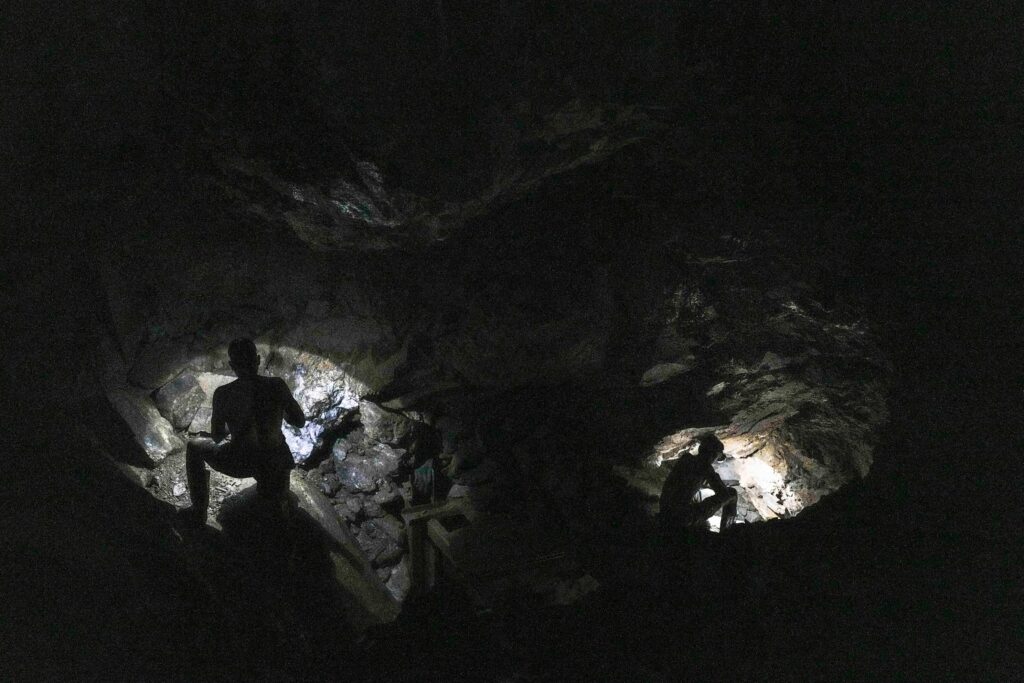
Illegal extraction of minerals in Venezuela’s Orinoco and Amazon regions has long been framed as an environmental tragedy. Poisoned rivers, stripped forests and displaced Indigenous communities attest to that truth. Yet an ecological lens misses the strategic reality. In southern Venezuela, illegal mining functions as illicit statecraft, a governance model built on territorial control, logistics and coercion.
Senior Venezuelan officials, including Washington-tolerated interim president Delcy Rodríguez, have promoted expanding output even as reports document criminal control and extreme violence in mining zones. The essential point for U.S. policymakers is the state partnership: The activity persists not because the state is too weak to stop it, but because powerful insiders and Venezuela’s own military profit from it and use it to manage alliances with guerrilla groups such as the National Liberation Army (ELN) and the Revolutionary Armed Forces of Colombia (FARC).
Those armed actors are central to these operations. The United Nations documented criminal control, violence, labor exploitation and coercion in mining zones. Mining income has become a parallel budget sustaining coercive power, corruption and links to other illicit economies.
A veneer of legality shields the system. A 2021 Organization for Economic Cooperation and Development report concluded that Venezuela’s gold flows should be treated as “high-risk,” warning that they finance serious abuses and economic crime. Today, they sustain the leak in the supply chain’s security. While the U.S. has maintained strict sanctions on the gold sector because of an executive orderfrom President Donald Trump’s first term, the illicit routes identified by the OECD allow adversaries to bypass oversight entirely. A recent report tracked Venezuelan gold through Swiss refineries back to U.S. companies such as Apple, Tesla and Nvidia. The minerals themselves heighten the stakes. Venezuela’s illicit economy extends beyond gold to coltan, tin-bearing ores and other inputs essential to defense technologies. In 1990, the U.S. Geological Survey documented niobium, tantalum and rare earth element occurrences in southern Venezuela’s Guiana Shield.
The OECD describes centralized transfers including shipments link and foreign entities in Turkey, the United Arab Emirates, Iran and elsewhere, alongside “dispersed” routes that leak across borders and benefit overtly criminal actors. The downstream products are familiar: Gold and tin are widely used in electronics, and tantalum from coltan is used in smartphones, laptops and automotive electronics — exactly the sectors U.S. mineral policy is trying to harden.
The U.S. cannot resolve Venezuela’s internal collapse by decree, but it can reduce the profitability of this illicit system by treating southern Venezuela as what it is: a conflict-ravaged minerals zone with direct national security consequences. If the administration wants to be coherent, sanctions and enforcement against Venezuelan conflict-linked minerals must be tightened. These should apply not only to parties involved with the extraction of minerals but also their enablers: regime figures, including Rodríguez, front companies, transport nodes, refiners and financial intermediaries.
The administration must also treat southern Venezuela as a mining conflict zone and impose targeted sanctions, rigorous customs enforcement and network investigations focused on the facilitators, including front companies, transport nodes, refiners and financial intermediaries.
Finally, Washington should look to build a regional disruption strategy with partners facing spillover, especially Brazil, Colombia and Guyana. This can be accomplished by targeting criminal networks and corrupt officials (including in Venezuela and Nicaragua), strengthening anti-money laundering and sanctions tools, enhancing international law enforcement cooperation, formalizing artisanal mining, and building traceable, responsibly sourced gold supply chains to cut off financing to transnational criminal and terrorist groups.
Rubio is correct that mineral security requires supply chains that are “secure and safe.” Ignoring criminal minerals pipelines in the Western Hemisphere makes that promise hollow. A supply chain that tolerates its largest breach becomes a liability — and in southern Venezuela, that liability is expanding every day.
The post A violent parallel economy in Venezuela is threatening a Trump initiative appeared first on Washington Post.