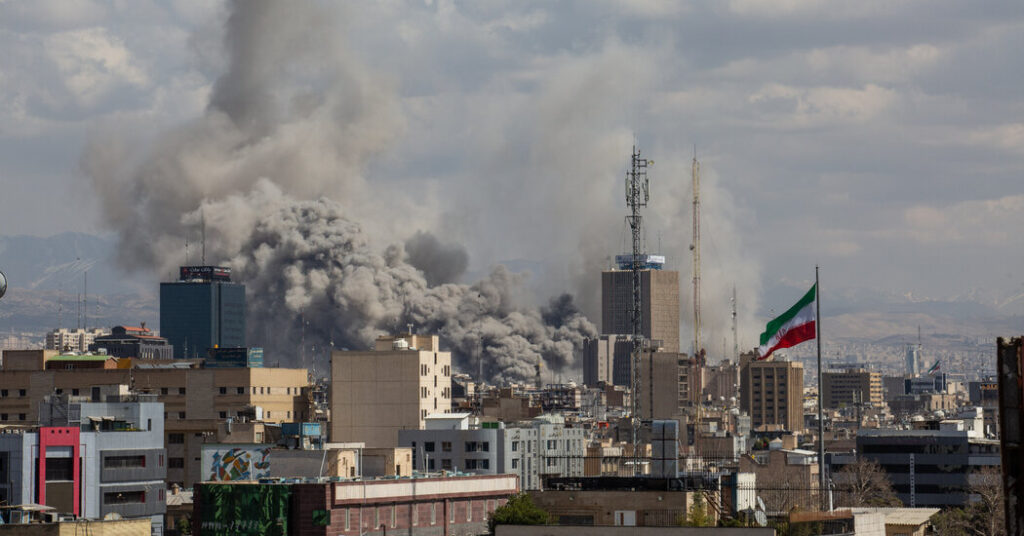
There is chaos in the Middle East and global markets have been oscillating wildly. But rather than panic about what the Iran war may be doing to your investments, try to forget about all of it.
That, in a nutshell, is the standard long-term investing playbook for times of crisis.
It’s not the most exciting approach. You may be able to profit if you behave opportunistically. Buy and sell energy and military stocks — or gold, or U.S. Treasuries, or anything else that may be the flavor of the moment — and do so at just the right time. But speculating in the markets and consistently coming out ahead is hard to do.
Academic wisdom suggests simply aiming for an average market return over the long haul is a sensible approach — and, probably, the best strategy for most people. So if you already have set up your portfolio appropriately, using cheap, diversified index funds to hold the entire stock and bond markets in a reasonable proportion, there is no reason to make abrupt changes — and plenty of reasons to avoid acting hastily.
History shows that doing nothing has generally been a fine strategy when the markets act up, whether the immediate cause of the trouble has been military conflicts, natural disasters, nuclear power plant accidents, political shocks, or nearly any other abrupt, unexpected event.
Long-term stock market returns have been fabulous, and high-quality bonds have usually — but not always — buffered portfolios in times of trouble. Avoiding adjustments in midcourse is frequently the best policy.
And Yet
The logic here is sound, but I readily admit that it’s not foolproof. Economic recessions are bad for nearly everyone, and certainly for the markets, and if the crisis in the Persian Gulf sets off a recession, it could conceivably take a long time for a full recovery.
Even more potentially troubling, the buy-and-hold, do-nothing approach is based on the assumption that the future will resemble the past, and that what is happening in the gulf will not result in an irrecoverable disaster for the entire region and the world.
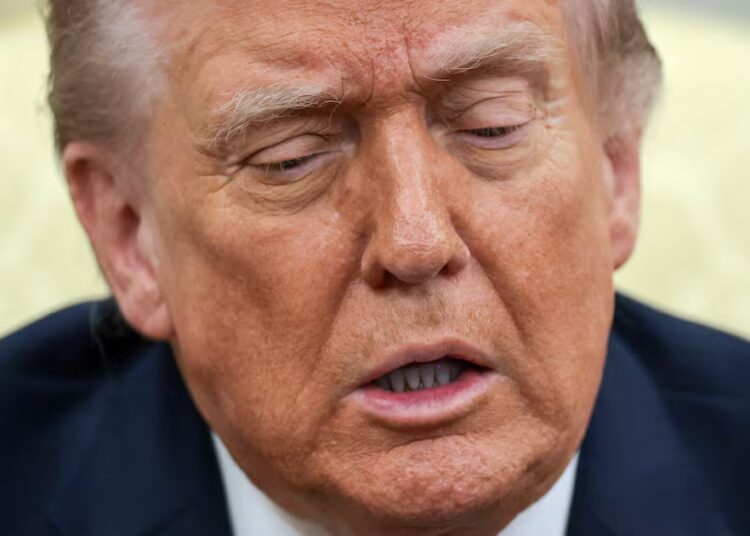
As I’ve pointed out repeatedly, the Trump administration is ignoring previous norms and is trying to change the world. In this case, the bombing of Iran and the killing of many of its top leaders have been followed by declarations from U.S. and Israeli leaders that they will continue the assault until they demolish the country’s capacity to fight back. Iranian reprisals in the gulf have already begun. They may not end there. President Trump’s decisions could have unintended consequences for the United States.
At the same time, the U.S. stock market may be particularly vulnerable to setbacks because it has become highly concentrated and highly priced, largely because of investor enthusiasm about artificial intelligence.
It’s possible that some prior assumptions about investing may not necessarily hold in this case. While I think it makes sense to follow the same basic playbook, the risks we are facing may be greater than many people understand or that market prices reflect. Try to make sure that you have put aside enough safe money to take account of these potential dangers.
The Case for Doing Nothing
If you have been following markets and world politics for a while, you will know that the U.S. stock market has trended upward, despite periodic setbacks, for the last century. That trend has sometimes been interrupted by military conflicts, but it has never been entirely broken. Riding the stock market upward — and diversifying in other markets, as well — has proved to be successful. Running scared has been a mistake.
Jeffrey Yale Rubin, the president of Birinyi Associates, an independent stock market research and investing firm in Westport, Conn., pointed out that truth in a succinct report for clients, which he expanded at my request.
Mr. Rubin examined the stock and oil market response to all of the “past U.S. attacks lasting more than one day,” starting with “Operation Desert Storm,” the U.S.-led war to drive the Iraqi forces of Saddam Hussein out of Kuwait. That war began in mid-January 1991. It was short and, by most contemporary accounts, resoundingly successful (though the U.S. decision to leave Mr. Hussein in power was later sharply critiqued).
There were seven more U.S. military campaigns of more than one day’s duration from then until the current Iran war. And they ranged geographically and in intensity and duration, including conflicts in Bosnia, Iraq, Kosovo, Afghanistan, Libya and Syria.
What Mr. Rubin found was striking. One year after the start of these conflicts, the S&P 500, on average, rose 12.5 percent. That compares with an average annualized price return (without dividends) of the S&P 500 of only 9 percent. In an email, Mr. Rubin said, “The bottom line is geopolitical events, similar to the current period, have historically delivered above average” returns one year later.
In other words, while the stock market has often, though not always, fallen in the weeks after the start of a U.S. conflict or of other geopolitical shocks, shares have usually recovered and rebounded fairly quickly. Keeping your costs low and sticking with the stock market has paid off over the long haul.
Watch Out for Wild Cards
The oil market is another matter. Oil prices have jumped in the current conflict, as they have in many past conflicts. What’s more, one year after the start of military action, Mr. Rubin found, the price of Brent crude, the benchmark for oil outside the United States, has risen, too. The average price gain has been substantial, 27 percent. That’s frequently set off higher inflation. And soaring oil prices led to recessions, especially in earlier periods, like the 1970s and early 1980s
Perhaps anticipating the current troubles in the Middle East, the energy sector of the S&P 500 rose sharply in the weeks leading up to the war. It was up more than 26 percent from the start of the year through March 2, compared with a small loss for the overall S&P 500. Exxon Mobil, the oil giant, was up more than 25 percent through Tuesday. The United States Oil Fund E.T.F., which holds futures contracts in oil, had risen about the same amount. For those holding oil stocks, the war has been a boon.
If the conflict ends soon without much damage to energy infrastructure or the natural environment, and shipping resumes through the Strait of Hormuz, then the shock of higher energy prices may abate, too. A protracted closure of the strait — through which roughly a fifth of the world’s oil and natural gas transit — could have dire consequences.
Even though the global economy, and the U.S. economy, in particular, are not nearly as dependent on oil as they were 50 years ago, a big and extended oil shock could be painful. Because the United States is now a net exporter of oil and natural gas, the U.S. energy sector could have windfall profits. But rising prices would hurt U.S. consumers and the rest of the economy. It’s not clear how the U.S. stock market would react under those circumstances. European markets are more vulnerable to energy shocks, and have underperformed U.S. markets in the early days of the crisis.
The bond market and the dollar are in play right now. Treasury yields, and the yields of sovereign bonds of many other countries, have fluctuated during the crisis. The prospect of potential energy price increases and of an upward surge in inflation raises questions about the potential for interest rate increases by major central banks this year, especially for the Federal Reserve. The dollar has risen in value, partly because of the expectation that the Iran war will keep U.S. rates higher than might otherwise be the case.
With “affordability” a major concern in the United States, higher short- and-long-term interest rates could have far-reaching political effects. President Trump has been sensitive to rising bond yields in the past, and could alter his military plans if the markets and the economy were to come unglued.
Even if these wild cards were to play out in unfortunate ways, long-term investors with deep pockets might still flourish by ignoring the war and its aftermath. As long as the economy stays strong — or rebounds, if the war leads to economic weakening — corporations are likely to find ways of generating profits, which, ultimately, flow back to investors.
Ideally, you have already put aside enough money in safe places — like federally insured bank accounts, Treasury bills and high-quality money-market funds — to ride out a storm. Within weeks or months, the markets usually rebound, and people who stay the course end up prospering.
But the world is moving into strange new places and it would be wise to prepare for further departure from past norms. Hold more bonds and cash then usual, if you are worried. Hope for peace and prosperity but prepare for the horrors of war.
Jeff Sommer writes Strategies, a weekly column on markets, finance and the economy.
The post The Best Playbook for Investing During a War Is Usually Doing Nothing appeared first on New York Times.