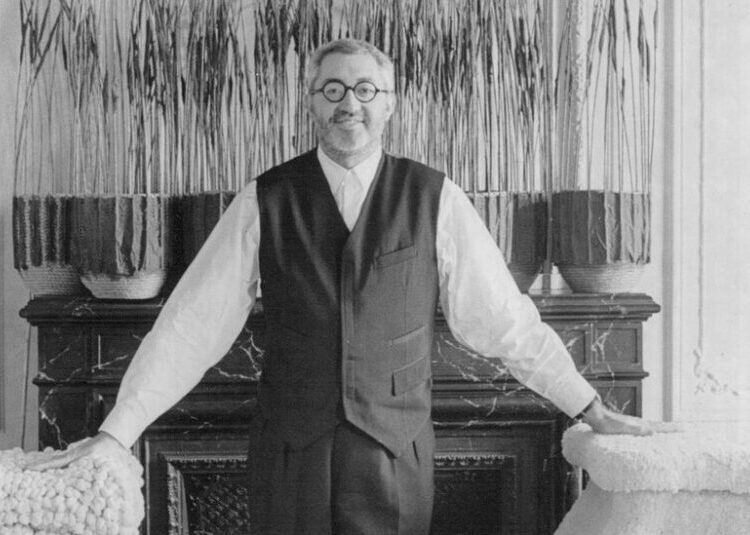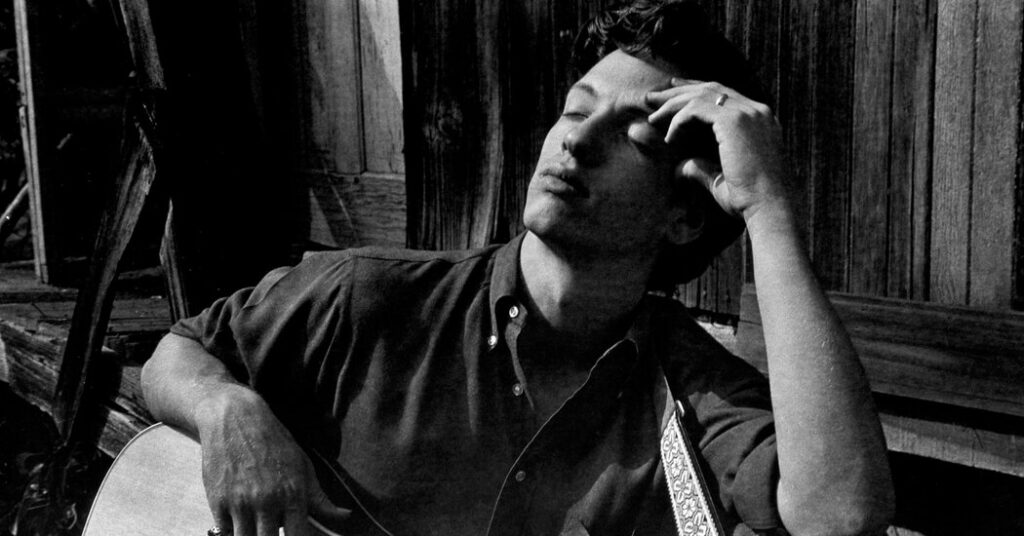
John P. Hammond, a singer and guitarist whose virtuosic performances of classic Delta blues tunes in the coffeehouses of Greenwich Village in the 1960s helped instigate a renaissance in blues music, died on Saturday in Jersey City, N.J. He was 83.
His wife, Marla Hammond, said his death, in a hospital, was from cardiac arrest.
Through his father and namesake, who had been an influential jazz, blues and folk producer, Mr. Hammond encountered a wide variety of music. Paul Robeson was his godfather, and the swing-era band leader Benny Goodman was his uncle by marriage. From a young age, he was entranced by the blues.
“When I first heard blues, I was completely turned on to it, and it became larger than life,” he told The Colorado Springs Independent in 2010. “And then it became my life.”
Soft-spoken in interviews, Mr. Hammond exploded onstage, with a rollicking barrelhouse style and an unexpectedly guttural voice that impressed veteran musicians.
“Man, I don’t know where you learned this stuff,” he remembered being told by Pops Staples of the Staples Singers, “but don’t ever stop doing it.”
To many white audiences, blues in the early 1960s was still an obscure genre, even as they embraced other forms of traditional American music, like folk and old time.
In Manhattan, Mr. Hammond became a fixture in the coffeehouses and nightclubs of Greenwich Village, playing songs by artists like Mississippi John Hurt, Skip James and Robert Johnson.
Mr. Hammond often used an acoustic steel guitar, made by the National Reso-Phonic Co., that was seven years older than he was. Sometimes, he played harmonica. Usually, he played alone.
Mr. Hammond shared a Grammy Award in 1985 for his work on the compilation album “Blues Explosion,” which also featured artists like Stevie Ray Vaughan and Koko Taylor; it received five additional nominations.
He wasn’t the only blues fan in the Village in the 1960s. Bob Dylan, who was already pushing beyond his folk roots, often sat in to hear him. When Jimi Hendrix, still an unknown guitarist from Seattle, came through town in 1966, he sought Mr. Hammond’s advice on forming a backup band.
Two years later, Mr. Hendrix and the guitarist Eric Clapton joined Mr. Hammond for shows at the Gaslight Cafe in the Village.
Mr. Hammond remained a Village mainstay for decades and, while he did not achieve the widespread fame of a Clapton or a Hendrix, he was widely admired by other musicians. His friend Tom Waits wrote a song for him, “No One Can Forgive Me but My Baby.” Mr. Hammond helped persuade Mr. Dylan to test out a band called the Hawks as his backup; they became the nucleus of the Band.
Though he began to include some of his own material on later albums, Mr. Hammond preferred to be known for preserving and interpreting blues classics, giving them his personal touch without veering too far from the original.
“Blues to me, you know, has its finger on the pulse,” he told the California newspaper The Stockton Record in 2009. “It’s like real life. It’s honest and deep as the sky is blue and the ocean is blue. With the blues, there’s depth there and phenomenal artists who have come before.
John Paul Hammond was born on Nov. 13, 1942, in Manhattan. His father, John Henry Hammond, chose his middle name to honor his friend Mr. Robeson, the singer, actor and civil rights activist.
Through his father, Mr. Hammond was a descendant of Cornelius Vanderbilt, the shipping and railroad magnate. Mr. Hammond’s parents divorced, and he was largely raised by his mother, Jemison McBride, an actress and secretary. They lived on MacDougal Street, in the heart of the West Village.
He attended Antioch College in Ohio for a year but left to pursue music.
He moved to Los Angeles — as far as he could get from his New York roots, he said — and began playing in coffeehouses and bars. Soon, he was opening for Black musicians from Mississippi, whose raw guitar playing began to attract white audiences.
Mr. Hammond returned to New York in about 1961 and released his first album, “John Hammond,” in 1963. A collection of songs by Blues masters like Blind Lemon Jefferson, Lightnin’ Hopkins and Big Bill Broonzy, it was among the first blues albums recorded by a white musician.
The first impression the album left was one of amazingly faithful mimicry, the music critic William C. Glackin wrote in The Sacramento Bee. “Rather quickly, other qualities assert themselves,” he added, “and young Hammond emerges as a singer, a musician and a personal communicator with a feeling and a way of speaking it that are his own.”
Mr. Hammond’s first two marriages, to Dana McDevitt and Peggy Spoerri, ended in divorce. He married Marla Farbstein in 1993. Besides his wife, he is survived by a son from his first marriage, Paul; a daughter from his second marriage, Amy Hammond; a brother, Jason; and a stepsister, Rosita Sarnoff.
Mr. Hammond was self-effacing about his talent and legacy. For all his musical power and bravado, he considered himself a humble steward of the blues.
“I live my life,” he told The Stockton Record. “I play my gigs as part of the tradition. I’m very fortunate to be where I am today: having the chance to play as often as I do and getting to go all over the world. I have no complaints.”
Clay Risen is a Times reporter on the Obituaries desk.
The post John P. Hammond, Pioneer in 1960s Blues Renaissance, Dies at 83 appeared first on New York Times.