Blue states have long rejected school vouchers as bad for public schools and bad for taxpayers. Now the nation’s first federal program is making an offer that Democratic governors may find hard to refuse.
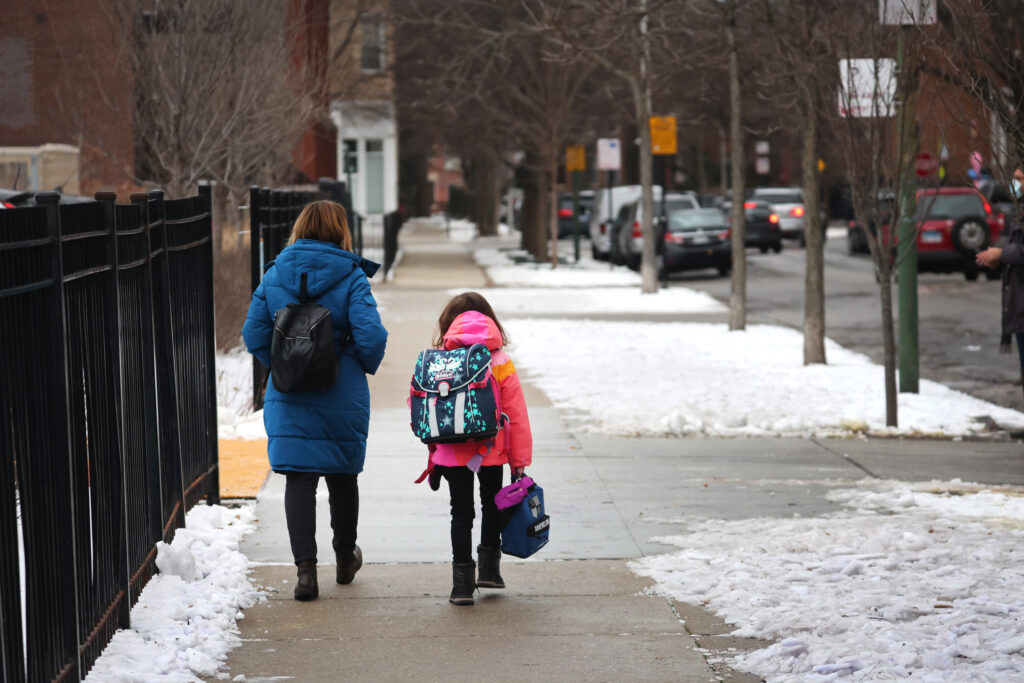
The program, created by last year’s massive Republican tax and spending bill, launches next year, and governors are under pressure to decide whether to participate. The program was conceived to help pay private school tuition, but, unlike many similar state programs, it can be used for public school expenses. That twist complicates the political calculus for Democrats.
If governors opt in to the program, tax dollars will go toward private school tuition for children in their states, something many Democrats are uncomfortable with. But if they say no, their states will lose out on a new bottomless bucket of federal cash that could help public school students, too.
Twenty-eight governors have said they will opt in, including all but one Republican (who remains undecided), according to tracking from EdWeek, a news organization that covers education. Two Democratic governors have said their states will participate, and four have said they won’t, but most have ducked the question, as pressure rises from all sides.
“What makes the program tricky is that it blurs the party lines on school choice. It’s not a traditional voucher,” said Michelle Dimino, director of education at Third Way, a centrist Democratic think tank, who is urging states to opt in. “But opposition to any school choice policy is deeply ingrained for many Democrats.”
Voucher programs take various forms but they all allow tax dollars to pay for tuition at private schools, and sometimes other expenses as well. Twenty-nine states plus the District of Columbia have their own voucher programs, including 20 that have tax credits similar to the new federal program, according to tracking from EdChoice, an advocacy group.
These tax credits, including the new federal version, incentivize taxpayers to donate money to scholarship granting organizations, or SGOs, which then give money to students.
Starting in 2027, donations up to $1,700 to SGOs will qualify for a dollar-for-dollar tax credit. That means that as long as donors owe at least $1,700 in federal taxes, they will see their tax bill reduced by the amount of their donation. In essence, taxpayers are directing money they owe in taxes to these SGOs rather than to the government. The Joint Committee on Taxation estimated that the program will cost the federal government $25.9 billion over 10 years.
Under the law, the new tax credit can help pay expenses for private or public school children including tuition, tutoring, books, supplies, computer equipment, internet access and disability services.
The Treasury Department has said it anticipates that states would not be able to pick and choose which SGOs they want to allow — meaning that states that want to opt in to taxpayer-funded donations for public school students would have to allow private school scholarships, too — and vice versa.
Traditional Democratic allies — teachers unions and most public school advocates — are pushing hard against the new federal program. Conservatives are for it, but so are some Democrats.
Josh Cowen, a Michigan State University professor, has been a leading voucher opponent but says there’s a reasonable case to be made for states participating in this program, despite concerns that vouchers undermine public schools.
“Governors are governors for all kids, not just public school kids,” he said. “I have deep skepticism about the promises (of the program). I’m not terribly worried about the perils either.”
Undecided governors say they are waiting for the Treasury Department to issue rules detailing how the program will work. Those are expected by this summer.
But already, groups on both sides are organizing to press their cases in states such as Illinois. There, Gov. J.B. Pritzker has both local and national politics to consider as he runs for reelection and considers a 2028 presidential run in the Democratic Party, where teachers unions hold significant sway.
A coalition of Illinois public school advocates is running a “no on vouchers” campaign. The state’s teachers unions are calling the program“a backdoor scheme to privatize public education” and questioning why Pritzker would even consider it. In 2023, they note, Illinois lawmakers allowed a similar program to expire.
“If the federal government doesn’t want to be involved in education, why are they pushing these vouchers on states that have already defeated the use of vouchers?” asked Cyndi Oberle-Dahm, executive vice president of the Illinois Federation of Teachers. “We need to invest more in public schools rather than give opt-outs to our public schools.”
On the other side, a conservative advocacy group called Illinois Policy has persuaded more than 30 counties to put non-binding measures on the ballot this fall, mostly in conservative counties, hoping the results will persuade the governor to opt in. State lawmakers on both sides are pushing legislation that would force Pritzker’s hand.
And some Democrats have endorsed the program, including former Education Secretary Arne Duncan,who once led the Chicago Public Schools, and Susana A. Mendoza,the state’s comptroller.
“When federal policy creates an opportunity to bring additional resources into a state’s education ecosystem, leaders would be foolish to ignore it,” Mendoza said.
The Archdiocese of Chicago, which operates 179 Catholic schools, is considering both public and private strategies to pressure Pritzker to say yes.
“We do know there are people who he listens to on both sides of this issue,” said Greg Richmond, superintendent of schools for the Archdiocese of Chicago. “He has staff on both sides of the issue, he has donors on both sides of the issue, he has political advocacy organizations that have supported him on the past on both sides of the issue.”
Pritzker declined an interview request. Spokesperson Jillian Kaehler declined to comment on the lobbying underway, saying the matter was under review.
“We will evaluate the issue through a lens focused on affordability for working families and what best supports Illinois students, families and public schools,” she said in a statement.
The new tax credit is modeled on the state versions, but differs in key respects. It won’t cost participating states anything; it runs on federal money. Donors in every state are eligible for the tax credit but only nonprofit organizations in participating states may receive and disburse the donations.
Charitable foundations that support public school districts are already thinking about how to create scholarship-granting arms to take advantage of the new federal tax credit.
“We want to make sure if this is taking place, it’s something that public school students are able to take advantage of as well,” said Mike Taylor, CEO of the National Association of Education Foundations.
Other public school advocates argue that the potential benefits are outweighed by the risk of moving closer to privatized education. Their concerns are shared by many anti-voucher Democrats, too.
“We do not believe that the theoretical possibility of public schools and public school students receiving some money from this program is enough to justify states opting in to the program,” Jessica Levin, litigation director for the Education Law Center, said on a recent webinar. “The amount that public schools and students receive is likely to be very small compared to the wide door that a state would open for private school vouchers.”
Levin argued that there could also be harms to public schools, such as loss of students to private schools and the state funding tied to them, while fixed costs remain. And she noted that the Treasury Department is not likely to allow states to exclude private schools if, for instance, they show poor academic results or exclude students based on their religion or sexual orientation.
Gov. Jared Polis (D-Colorado) is one of two Democratic governors who has agreed to participate. That would bring a school voucher program for the first time to Colorado, where voters in 2024 rejected a state constitutional amendmentto allow school choice. (The federal program would also represent the first private school choice programin at least three others states: Alaska, Nebraska and North Dakota, all of which have opted in.)
“Expanding support for students and schools is a no-brainer,” Polis said. “I think most, if not all, Democratic governors will get there as they learn about the chance to boost charitable contributions in their state,” he told The 74.
However, Polis is in his final year in office and the two Democratic candidates for governor have both expressed concern about the program. It’s possible a final decision about participation will be made by his successor.
One candidate, Attorney General Phil Weiser, has said flatly that he opposes participation. The other, Sen. Michael Bennet, wants to see the final guidance from Treasury, spokeswoman Jordan Fuja said. Bennet’s concern, she said, is that the program might wind up funding private and religious schools — primarily what it was designed for.
On the other hand, she said, rejecting the program “could be short-sighted and put millions of dollars that could help kids in Colorado at risk.”
The post Democrats weigh Trump school vouchers, with billions at stake appeared first on Washington Post.