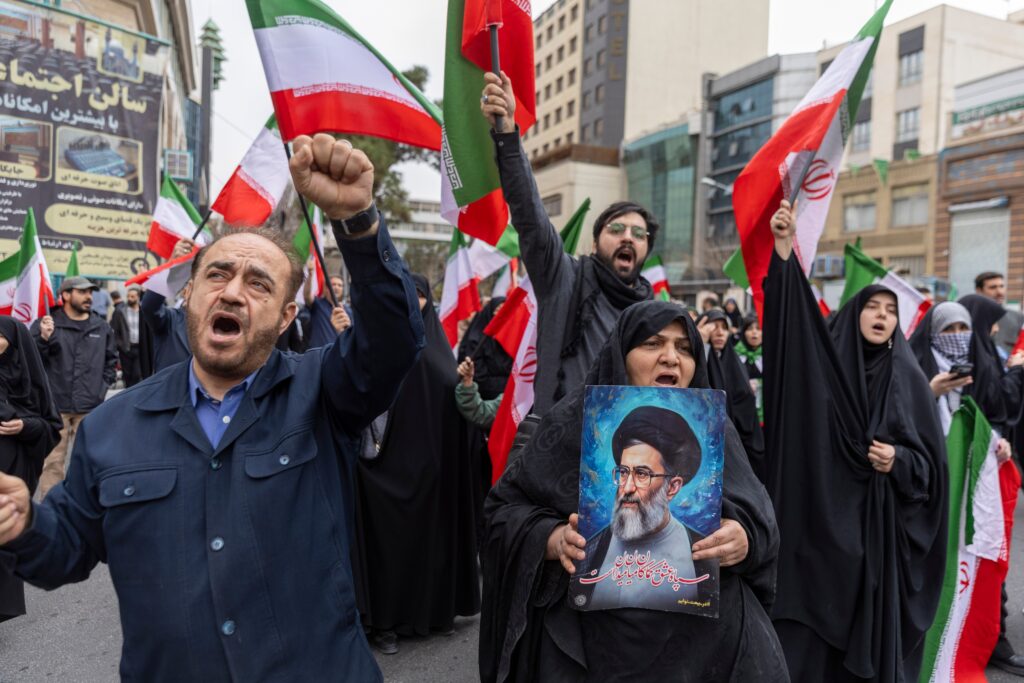
When he learned Saturday about the killing of Iran’s Ayatollah Ali Khamenei, the Israeli-American business executive in New York was excited to cash in.
On the prediction-market site Kalshi, the executive — who spoke on the condition of anonymity due to concern over what his friends would think — had placed two bets, totaling $3,460, that Khamenei would be “out as Supreme Leader” by March or April 1. His Kalshi app placed green check marks next to his bets, indicating he’d won payouts worth more than $63,000.
Minutes later, however, Kalshi froze the $54 million trade for everyone who bet on that scenario, saying the site doesn’t allow transactions “directly tied to death.” The change triggered an online uproar, as Kalshi users flooded social media to argue the site had unfairly robbed them of winning bets.
“I was booking my trip to Courchevel,” the French Alps ski resort, he said jokingly to The Washington Post. “Then they changed the rules … and everybody got screwed.”
The outrage has intensified scrutiny into the explosive rise of prediction markets, which run like traditional sportsbooks but allow people to gamble on elections, international affairs and real-world events.
Supporters of Kalshi and its biggest competitor, Polymarket, have defended the sites as game-like platforms for following and perhaps profiting off the news. But critics like Sen. Chris Murphy (D-Connecticut) have said they are creating a more “dystopian world” by helping people gamble on life-and-death crises and military assaults in a way that could incentivize political violence.
“This is American commercial immorality on steroids,” Murphy said in an interview. “Once events that involve good and evil simply become a financial product, I don’t know how right and wrong matters any longer. … People shouldn’t be rooting for people to die because they placed a bet.”
Kalshi heavily promoted the trade to bettors on its homepage and app and in push notifications before Khamenei’s death was publicized. Kalshi also tweeted the morning of the strike that the odds “Khamenei is out as Supreme Leader have surged to 68%,” along with a disclaimer that Kalshi didn’t broker trades that “settle on death.” In a follow-up, the company said the post was “grammatically ambiguous” and offered to reimburse traders’ lost value.
Murphy said in an interview he is drafting legislation that would broadly ban prediction-market trades related to government actions, saying they could corrupt public decision-making by allowing military or government officials to profit off secret information.
Polymarket said in August that the president’s eldest son, Donald Trump Jr., had joined its advisory board, and a handful of recent bets on the administration’s moves have sparked public accusations of insider trading.
The analytics firm Bubblemaps said it found six “suspected insiders” on Polymarket that had made $1.2 million by betting that the U.S. would hit Iran by Feb. 28, the date that Operation Epic Fury began. All of the accounts were made last month and bet exclusively on Iran-strike timing; some of the bets were made within hours of the first explosions in Tehran. One account bet $60,000 and won $560,000.
Murphy said in an online post that the trades indicated “people around Trump are profiting off war and death.” Davis Ingle, a White House spokesman, said on Monday that “the only special interest guiding the Trump administration’s decision-making is the best interest of the American people.”
Polymarket did not respond to questions about whether it knew or would help investigate whether the account holders had internal knowledge of the military campaign. Trump Jr. did not respond to requests for comment.
A similar debate played out in January when an anonymous Polymarket trader won roughly $400,000 after successfully predicting, within a few hours, the timing of Venezuelan President Nicolás Maduro’s capture. The Defense Department said then that it prohibited personnel from using classified information for personal gain.
In the case of Khamenei, Kalshi has argued that the trade, known as an “event contract,” was not specifically a bet on his demise. The company’s chief executive, Tarek Mansour, said on X that long-standing rules ban people “from profiting from death” but that he believed the trade was still “important because leadership changes in Iran have major impact on the world order,” including on oil prices and geopolitical relations.
“It’s always possible for a ruler to step down or transition power without death, even in autocracies. It just happened in Venezuela,” Mansour said.
Furious Kalshi bettors have since flooded social media arguing that the site’s rules were muddled and that they believed they’d be paid out upon his death. In one video, the cryptocurrency-content creator Gabriel Haines mocked Kalshi by saying, “We meant a peaceful transition or riding off on a unicorn to kiss [Israeli Prime Minister Benjamin] Netanyahu on a cheek.”
Some users have vowed to close their Kalshi accounts and take their money elsewhere, with one saying, “You owe me $2,500+ & you owe many innocent, casual traders millions more.”
Amanda Fischer, a former chief of staff at the Securities and Exchange Commission who now works as a policy director at the financial advocacy group Better Markets, said the trade offered a “really good mini-model of just how problematic this business is.”
“How is an 86-year-old theocratic leader supposed to lose his power other than through death?” Fischer said. “All of the Kalshi users who placed bets on this believed they were voting on a death market, and many are very angry at how Kalshi broke the trades.”
Lawmakers have worried that allowing death-related trades could offer fatal incentives; an assassin, for instance, could plan and then profit off the date of a victim’s death. “There’s a reason we don’t let people take fire insurance policies out on [other people’s homes] — because it would incent arson,” Fischer said.
The Commodity Futures Trading Commission, which regulates prediction markets, bans any bets that involve or reference terrorism, assassination or war, and six Democratic senators sent a letter last month voicing concern about any bet that “resolves upon or closely correlates to an individual’s death.”
Dustin Gouker, a gaming-industry consultant and the publisher of Event Horizon, a newsletter about prediction markets, said Kalshi could have a financial incentive to keep the rules vague. It could have specified that the bet would only pay out in the case of a peaceful regime change, but that might have reduced bettors’ interest — and the ensuing fees Kalshi earns from every transaction.
“They could have easily made the title ‘by way other than death,’ but that’s obviously not as exciting to trade, and that’s why they didn’t do it,” Gouker said.
Kalshi has sought to quiet the firestorm by reimbursing any bets, fees or losses from the trade, which Mansour said led the company to incur “a substantial loss to make users whole.” A person familiar with Kalshi discussions, who spoke on the condition of anonymity to detail internal deliberations, said the payments have cost the company roughly $2.2 million.
Mansour said the company didn’t change the trade rules after the incident but that a disclaimer on the listing noting the company’s “death carveout” exception has been overly confusing and will be revised for future bets. Some bettors have pointed out that, after former president Jimmy Carter died, the company paid users who had bet that Carter would not attend President Donald Trump’s inauguration.
For some in the industry, the episode has triggered a moment of self-reflection. Aaron Courtney, the co-founder of market-tracking firm Kalshinomics, said in an online essay that war-related trades are “simultaneously one of the most important and most uncomfortable things prediction markets have produced” and have raised big questions. “Is it morally acceptable to profit from correctly predicting that bombs will fall on people?” he asked.
Polymarket, however, has trumpeted its war-related bets, saying in a note that prediction markets’ ability to create forecasts for world affairs is “particularly invaluable in gut-wrenching times like today” and can give people “the answers they needed in ways TV news and X could not.”
While Kalshi is regulated in the United States, Polymarket operates under different trade rules overseas, and its users have bet more than $500 million on trades related to the timing of American strikes against Iran, according to platform data. Unlike Kalshi, Polymarket has not frozen trades for bettors wagering that Khamenei would be “out as Supreme Leader” by the end of this month; its trading volume now stands at more than $61 million.
On the first morning of the assault, Polymarket posted a meme image of a man with five screens laying out bets about Khamenei’s ouster and the caption, “Can’t right now babe, I’m monitoring the situation.”
But Polymarket now faces its own questions around potential insider trading. Murphy said in an interview on Monday that he was horrified by the “corrupt and immoral” trades, adding, “It doesn’t smell right to people that these markets are rigged and people inside know the answers … making thousands off whether we send their kids to war.”
Emily Austin, a conservative influencer and sports podcaster who has promoted Polymarket online, said she had friends and siblings who were upset about lost winnings on Kalshi’s Khamenei bet. Despite the scandal, however, she said her love of prediction-market betting remains as strong as ever. She said she sees the bets as a “social community” and a way to keep in touch with friends.
“I’ve been a huge sports bettor since I was allowed to legally bet, but I never thought you’d be able to bet on world leaders being out,” she said. “And if I’m being totally honest, I find it so fun.”
The post Bettors wagered $54 million on Khamenei’s death. Now they’re not getting paid. appeared first on Washington Post.