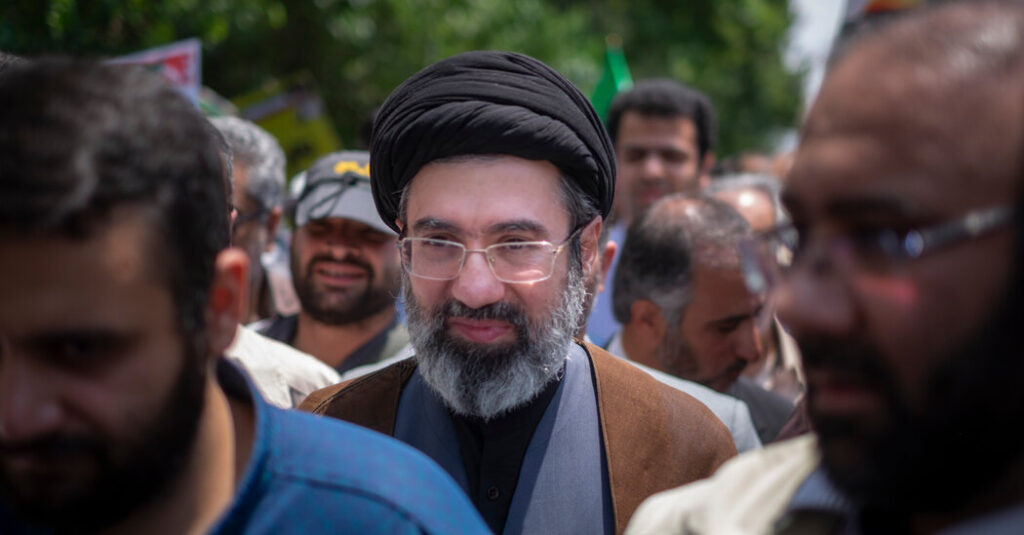
The senior clerics responsible for selecting Iran’s next supreme leader met on Tuesday to deliberate, and the son of the slain former leader, Ayatollah Ali Khamenei, emerged as the clear front-runner, according to three Iranian officials familiar with the deliberations.
The officials said that the clerics were considering announcing that the son, Mojtaba Khamenei, would be his father’s successor as early as Wednesday morning but that some had expressed reservations, fearing that it could expose him as a target for the United States and Israel. They spoke on the condition of anonymity to discuss sensitive internal deliberations.
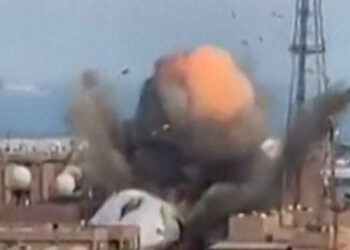
The clerics, known as the Assembly of Experts, held two virtual meetings one in the morning and one in the evening, according to the officials. Israel struck a building in Qum, one of Shia Islam’s main seats of power, where the assembly was scheduled to meet and elect the new supreme leader, but the building was empty, according to the Fars News agency, which is affiliated with the Islamic Revolutionary Guards Corps.
Vali Nasr, an expert of Iran and Shia Islam at Johns Hopkins University, said that Mojatba Khamenei would be a surprising choice — and a potentially telling one.
“He was slated to become the successor for a long time,” Mr. Nasr said, “but for the past two years, it seemed to have dropped off from the radar. If he is elected, it suggests it is a much more hard-line Revolutionary Guard side of the regime that is now in charge.”
Mojatba Khamenei, 56, is an influential if reclusive figure who has operated in the shadows of the empire of his father, who was killed on Saturday in the U.S.-Israeli strikes on Iran.
Mojatba Khamenei is known for having close ties to the Revolutionary Guards. The Guards, according to the three officials, pushed for his appointment, arguing that he had the qualifications needed to steer Iran in this time of crisis.
“Mojtaba is the wisest pick right now because he is intimately familiar with running and coordinating security and military apparatuses,” said Mehdi Rahmati, an analyst in Tehran. “He was in charge of this already.”
Mr. Rahmati said that, nevertheless, not everyone will be pleased.
“A portion of the public will react negatively and forcefully to this decision, and it will have a backlash,” he predicted.
Supporters of the government would see him as a continuation of a ruler whom they view as martyred and will back him swiftly, Mr. Rahmati said. But government opponents, too, will see him as a continuation of the regime, which in recent months killed hundreds of protesters.
Other candidates who have emerged as finalists are Alireza Arafi, a cleric and jurist who is part of the three-person transition council of leadership named after Ayatollah Khamenei was killed, and Seyed Hassan Khomeini, grandson of the Islamic revolution’s founding father, Ayatollah Ruhollah Khomeini.
Both Mr. Arafi and Mr. Khomeini are viewed as moderates, with the latter being close to the sidelined reformist political faction in Iran.
Abdolreza Davari, a politician close to Mojtaba Khamenei, said in public statements and in interviews with The New York Times that if Mr. Khamenei did succeed his father, he could emerge as a figure in the style of the Saudi Arabian leader Mohammed bin Salman.
“He is extremely progressive and will move to sideline the hard-liners,” Mr. Davari said in a text message before the war. “See his appointment as a shedding of skin.”
Earlier on Tuesday, at a news conference in Washington, President Trump said that many of the people his government had viewed as potential leaders of Iran had been killed since Saturday. “Pretty soon we’re not going to know anybody,” he said.
Asked about a worst-case scenario in Iran, he said: “I guess the worst case would be we do this and somebody takes over who’s as bad as the previous person. Right, that could happen. We don’t want that to happen.”
The Assembly of Experts consists of 88 senior Shiite clerics who are picked in public elections and under Iran’s Constitution are responsible for appointing, supervising and discharging the supreme leader. This is the second supreme leader the assembly will pick in the Islamic republic’s 47-year history.
In 1989, the assembly picked Ayatollah Khamenei, handing him the reins of a newly created theocracy. For more than four decades he ruled with absolute power and little flexibility to change.
Mojtaba Khamenei’s wife, Zahra Adel; his mother, Mansoureh Khojasteh Bagherzadeh, and a son were killed alongside his father in strikes on Saturday, the Iranian government said.
Farnaz Fassihi is the United Nations bureau chief for The Times, leading coverage of the organization. She also covers Iran and has written about conflict in the Middle East for 15 years.
The post Ayatollah Ali Khamenei’s Son Emerges as Leading Choice to Be His Successor appeared first on New York Times.