Officials in the United Arab Emirates are working to project a sense of business-as-usual calm after Iranian strikes hit the country in recent days in retaliation for U.S. and Israeli attacks.
The president, Mohammed bin Zayed Al Nahyan, made a personal effort to provide reassurance with a very public outing amid the war — a trip to a mall.
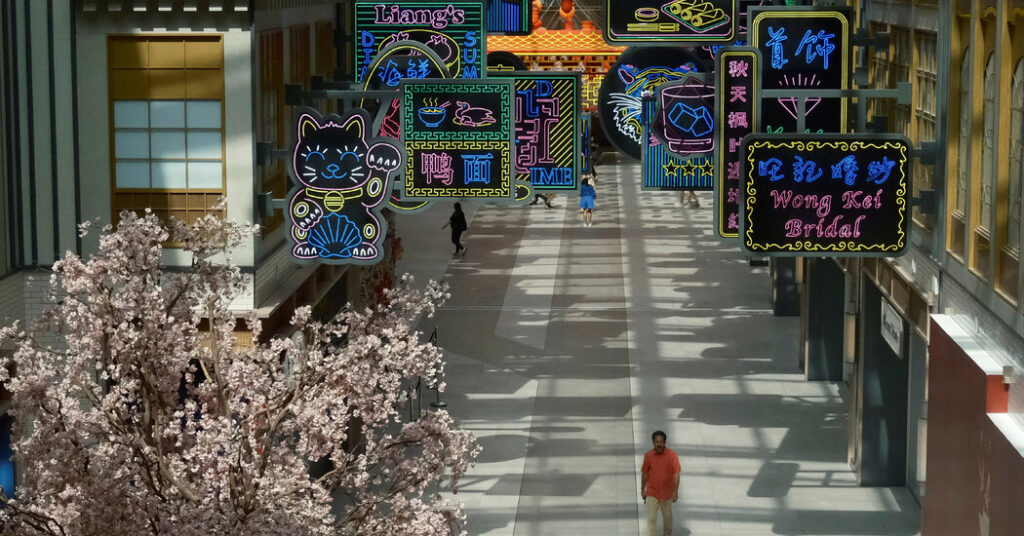
The official media office of Dubai, the capital, shared a video on social media on Monday that showed the president and the crown prince of Dubai, Sheikh Hamdan bin Mohammed Al Maktoum, casually strolling through the Dubai Mall, waving to workers and dining in plain sight as patriotic music played in the background. “Close to the people. Steady in leadership,” the post’s caption read.
The steadying message, and others like it from the country’s authoritarian government, are not entirely unusual. Officials often turn up in public to shake hands and snap selfies with people to connect with the general population.
But this projection of calm and serenity comes after a series of Iranian missile and drone attacks has challenged the Emirates’ carefully cultivated reputation as a safe destination in a volatile area.
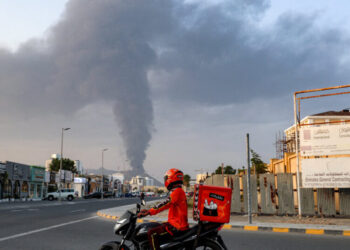
In Dubai in recent days, luxury hotels have caught fire. Explosions have shattered the windows of apartment towers. The international airport has been damaged, injuring four people and disrupting air travel. At least six people have been killed and more than 100 injured in attacks across the United Arab Emirates, Kuwait, Qatar, Bahrain and Oman.
As the violence in the region spirals unpredictably, the message from the Emirati authorities has been focused on relaxed composure.
“When it comes to social media, there’s a lot of content to reassure people and prevent unnecessary panic, to present daily life as continuing normally, and to show that the image of Dubai and the region more generally is not tarnished,” said Omar Al-Ghazzi, an associate professor of media at the London School of Economics who writes about Arabic media.
The official message is also being amplified by influencers, he added, who are “walking around in touristic areas in Dubai and narrating that nothing really is happening and expressing how they feel safe in Dubai.”
At the same time, news organizations in the U.A.E. have been discouraged from sharing some of the more dramatic images of attacks in the region, Professor Al-Ghazzi said.
“There’s also a lot of pressure on people not to post any content of incoming missiles or any damage or fires resulting from missile attacks,” he said. “The leadership of the U.A.E. doesn’t want any of those images to stick in people’s memories, and for Dubai to be associated with any sort of conflict into the future.”
The Emirates is one of the most authoritarian countries in the Middle East; the state severely limits freedom of expression, requires social media influencers to obtain government licenses and criminalizes online content that could damage the country’s “reputation, prestige or dignity.”
The video of the president’s mall trip was telling for what it didn’t include, said Mira Al-Hussein, an associate fellow at the University of Edinburgh’s Alwaleed Centre who writes about the contemporary Gulf.
“If you actually look at the video, there are no Emiratis in the mall,” she said. Many have changed their normal routines or refrained from going out since the new wave of fighting broke out, she added.
Still, she said, for Emiratis who have been shaken by the Iran war, the government’s video was intended to project calm.
“It sends this message of reassurance that they’re so safe and they’re so confident in their country to walk around safely among their people,” she said. “It works.”
Vivian Nereim contributed reporting from Riyadh, Saudi Arabia.
Jonathan Wolfe is a Times reporter based in London, covering breaking news.
The post Emirati Leaders, Seeking to Project Calm, Go to the Mall appeared first on New York Times.