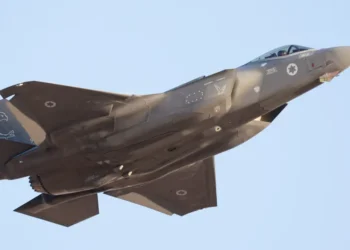
Authoritarian politics and military aggression are a dangerous mix. As Donald Trump announced his war on Iran wearing a baseball cap in a video released in the early hours Saturday morning while he was at Mar-a-Lago, that lesson hung heavily over the proceedings. This was a decision made by one man with no legal basis, little public support and no coherent explanation of an endgame.
Within a few months, Mr. Trump has ordered the military to blow up boats in the Caribbean, abduct the leader of Venezuela and decapitate the government of Iran. The absence of any congressional authorization or campaign to prepare the American people feels intentional. We are not meant to think too much about the basis for action, how much it costs or what happens after the spectacle of bombs falling. Before we digest the last operation, there is the threat of a new one. The dizzying nature of these actions makes them seem routine.
But something has shifted. Mr. Trump now regularly uses the military as an extension of his personal instincts. He may try to keep the operation short. That won’t stave off the consequences. Whatever happens in the coming weeks, the United States has extended its post-9/11 forever war into Iran, an act that will reverberate across the Middle East for years to come.
The immediate questions concern the course of the war. Iran’s Supreme Leader Ayatollah Ali Khamenei was a brutal and repressive force in the lives of Iranians for decades. His demise hardly resolves the matter of who will control a country of more than 90 million people, particularly as the most heavily armed factions tend to be the most hard-line and are faced with a direct threat to their power and wealth.
The Iranian regime is weakened but still capable of inflicting damage. Strikes at U.S. military facilities and civilian targets from the Gulf States to Israel suggest an initial strategy of trying to redistribute the violence and disruption wrought upon Iran to its neighbors. Attacks on energy infrastructure and shipping could bring those costs to the global economy. (Energy prices have already jumped.) Retaliatory cyberoperations, terrorism and proxy strikes could also come in waves.
Mr. Trump’s only stated plan for regime change was a call for the Iranian people to rise up. Then what? Those who do may be massacred. Some version of the regime could still cling to power. Iran could devolve into civil conflict, as Afghanistan, Iraq and Libya did after the initially triumphant toppling of their leaders. Separatist movements among ethnic minorities could fracture the country and draw in neighboring states. Protracted violence or extreme poverty could lead to a surge of refugees into Afghanistan, Pakistan, Turkey and ultimately Europe.
There are, of course, better scenarios. A chastened regime could pursue some form of accommodation with America and evolution at home. Or perhaps Iran could buck the trend of nearly every other country from North Africa to South Asia that has undergone regime change this century and transition peacefully to a democratic form of government.
Mr. Trump will surely declare victory in Iran, just as he did last summer. But wars play out in the lives of people and nations, not news cycles. The 1953 U.S. and British-backed coup that enabled the shah to consolidate power in Iran appeared to be a victory, but it became part of the DNA of the Iranian Revolution of 1979 and the Islamic Republic that has bedeviled the United States ever since.
Even those who welcome the decapitation of the Iranian regime may feel deep unease about America’s behavior. The United States, like Israel, now seems to follow no rules, consult few allies and pay little regard to the destruction it leaves behind, including in the prosperous Arab Gulf States. Like an empire of old, it demands tribute — be it Venezuelan oil or payments to the amorphous Board of Peace. Mr. Trump’s tariff policies, maximum pressure sanctions, episodic threats on Greenland and military action are experienced as a strategy of calculated chaos.
What lessons will nations draw from this new reality? For would-be nuclear powers, it is that North Korea’s arsenal brought security that Iran’s negotiations could not. For Russia and China, it is that might makes right. For our European allies, it is that the United States is an unpredictable force that could again threaten Greenland or meddle in their internal politics at any moment. The old U.S.-led order is dead; the new one feels unstable and ominous, as if a storm could descend at any moment.
Mr. Trump likely would not have become president without his stated opposition to forever wars — it is a feature, not a bug, of MAGA. Yet in his return to the presidency, he has proved to be far more interested in power itself. Setting aside the risks outlined above, this dynamic alone should compel stronger and sustained Democratic opposition to this war.
Rather than representing a break from America’s imperial instincts, Mr. Trump has personalized them. There is no reason to believe he won’t lash out militarily again. (How many Americans even know we bombed Nigeria on Christmas Day?) Cuba is currently being starved by a blockade, despite posing no danger to U.S. national security.
After 25 years of constant war, there is little appetite for this kind of adventurism among the American people. The operations around Venezuela and in Iran are both estimated to cost at least several billion dollars, with more to come. That is not how American taxpayers want their money spent amid a cost-of-living crisis, deep cuts to the social safety net and exploding deficits.
More profoundly, the way Mr. Trump has deployed the newly minted Department of War abroad should raise concerns about what he might do with the military at home. Already he has tried to send troops into American cities, but faced judicial pushback. He has mused about invoking the Insurrection Act, which would grant him emergency powers to deploy the military to enforce laws within the United States. Whether in response to peaceful protests or an election loss, this would put American democracy into dangerous territory.
If these scenarios seem fanciful, consider what has already happened. Mr. Trump addressed general officers and suggested that U.S. cities become military training grounds. He called for the imprisonment of a handful of Democratic members of Congress for suggesting that service members should not follow illegal orders. And last week he ordered the government to stop using the services of the artificial intelligence company Anthropic because it refused to allow the Pentagon to have unfettered access to its technology for the mass surveillance of Americans.
We must not be numbed to the repeated, illegal use of the United States military. Nor should we discount what Mr. Trump’s extension of the forever war is doing to us.
Foundational questions are at stake for Americans. Do we want to continue forever wars financed with borrowed money and fought by service members whose sacrifices stand in stark contrast to the cowardice of our billionaire class? Do we want to regularly bomb other countries while endangering the lives of millions of human beings by dismantling the U.S. Agency for International Development? Do we want to remain in a permanent state of war that migrates from one place to another while rampant inequality and revolutionary technologies remake our communities with little resistance?
Mr. Trump’s authoritarianism is not abstract. There is nothing stopping him from wielding the awesome power of the United States to serve his own interests, not the public’s. War should never be normal. We don’t know where this one will lead, but we do know that it has already killed untold civilians — including dozens of girls who did nothing but go to school. The desensitization of Americans to this kind of violence is part of what is broken in our society.
By aligning themselves with public opinion, the Constitution and a sense of shared humanity at home and abroad, Democrats can offer an alternative vision to the forever war. The just and lasting peace that most Americans seek is one in which government responds to their problems, rather than constantly looking for regimes to change or enemies, whether foreign or domestic, to crush.
Ben Rhodes is a contributing Opinion writer and the author of the forthcoming “All We Say.”
The Times is committed to publishing a diversity of letters to the editor. We’d like to hear what you think about this or any of our articles. Here are some tips. And here’s our email: [email protected].
Follow the New York Times Opinion section on Facebook, Instagram, TikTok, Bluesky, WhatsApp and Threads.
The post Trump May Come to Regret This appeared first on New York Times.