Tim Ziemer served as senior director for global health security and biodefense at the National Security Council and as U.S. global malaria coordinator. Stewart Simonson served as assistant secretary for public health emergency preparedness.
Washington finally agrees on something — and it’s good news for the United States and the world.
Last month, President Donald Trump signed bipartisan legislation that includes $108.8 millionfor the U.S. neglected tropical diseases program in the international assistance budget.
As people of faith who have previously served in senior positions in the U.S. government, we see the U.S. NTD program not as charity, but as a results-oriented, morally sound investment grounded in support from the private sector and faith-based organizations to make America safer, stronger and more prosperous.
NTDs are a group of 21 different conditions, including sleeping sickness, dengue and leprosy, that thrive in tropical poverty. When they do not kill, they maim or marginalize their victims. And they have profound economic consequences for the people they strike and the places where they are endemic, resulting in loss of income, low productivity and increased health expenses.
But there is reason for optimism. Several diseases are close to elimination, and many could be consigned to the dustbin of history with continued U.S. leadership.
NTDs threaten approximately 1.5 billion people worldwide. This is down from almost 2.2 billion in 2010, in no small part because of the U.S. commitment to eliminate NTDs. Indeed, 600 million people around the world — nearly twice the size of the U.S. population — are no longer at risk from these diseases, thanks to the American taxpayer.
U.S. leadership on NTDs isn’t just about improving global health outcomes or caring for “the least of these.” These diseases are in the American homeland, and they strike Americans deployed overseas.
Some will remember troops returning from Iraq in 2004 with leishmaniasis, or “Baghdad boil,” which causes symptoms that include sores, fever and swelling of the liver or spleen. But leishmaniasis isn’t just in the Middle East, it’sendemic in Arizona, Oklahoma and Texas.
Late last year, the first locally acquired case of the mosquito-borne disease chikungunya in New York was reported in Long Island.
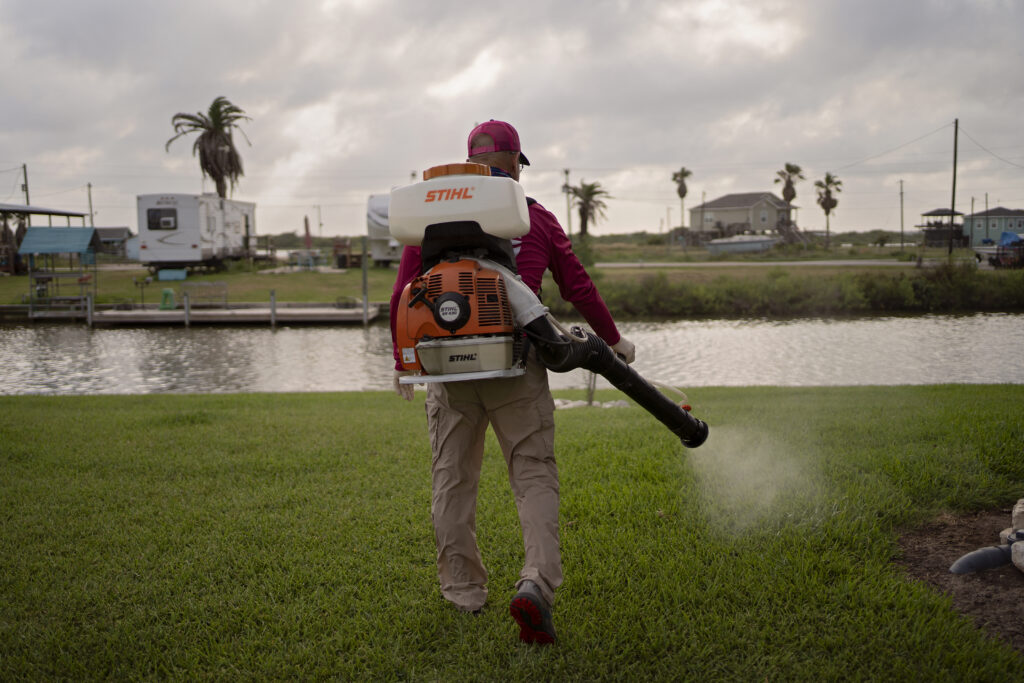
In California, Florida and Texas, dengue cases are increasing, Chagas disease is endemic in several states, and some 200 cases of leprosy are reported in the U.S. every year. Soil-transmitted helminths (parasitic worms) still occur in American farm communities. If we are not careful, more NTDs will follow.
That’s because these diseases don’t have far to travel; many are endemic in Latin America and the Caribbean. They are also a sad, enduring reality in places of strong U.S. strategic interest — such as the Philippines and Indonesia.
Since 2006, the U.S. has invested in country-led distribution of NTD medicines donated by pharmaceutical companies. To date, companies have donated nearly 30 billion treatments.
It’s hard to overstate the impact of these extraordinary corporate donations. They save lives, prevent illness and help America leverage more than $1 billion in donated drugs every year.
Thanks to this collaboration, 60 countries have successfully eliminated at least one of these diseases entirely — a magnificent achievement. And we are on track to reach the global goal of eliminating at least one NTD in 100 countries by 2030. This reflects the deep commitment to fighting NTDs by the countries that are most affected.
There are also economic benefits; half of the world’s 22 fastest-growing economies received help from the U.S. NTD program. Eliminating diseases that sap workforce productivity will result in millions of new consumers for American goods and innovations.
Last month, a broad range of faith leaderswrote a joint letter calling for U.S. leadership on NTDs, crediting America’s historic success on the diseases as a testament to what can be achieved when “faith, science, and compassion converge.”
With support like this from the president and Congress, America can continue to lead in the historic fight to eliminate these ancient scourges.
The post These diseases could be consigned to the dustbin of history — thanks to the U.S. appeared first on Washington Post.