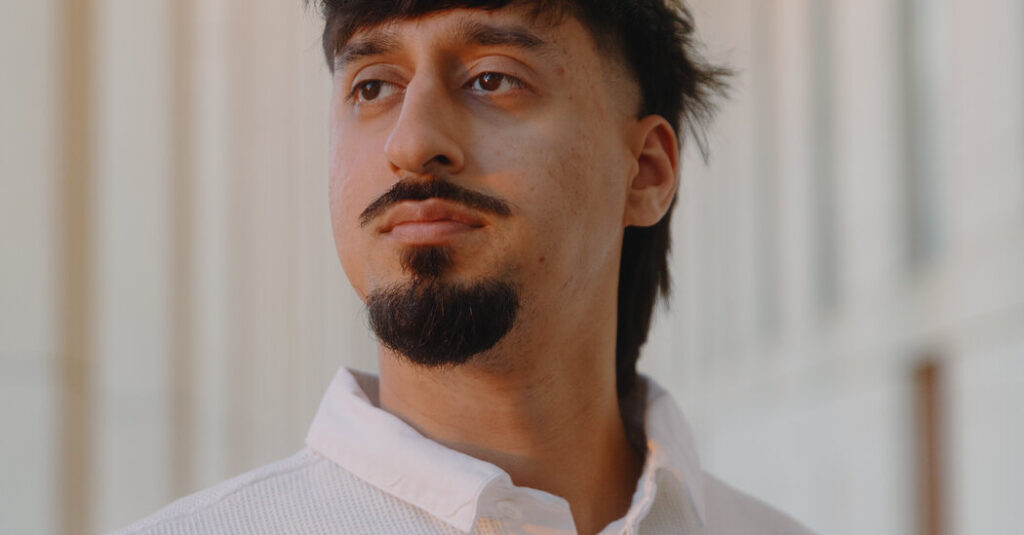
In early August 2022, federal agents arrived at the suburban Texas home of Ali Hemani, a former high school football player whose family had come under scrutiny because of its ties to Iran.
During a search of the family’s house, Mr. Hemani told agents that he kept a handgun locked in a safe. He also told them that he used marijuana “about every other day,” pointing them to about 60 grams of marijuana in the house. Agents also found cocaine in his parents’ closet.
Months later, the F.B.I. arrested Mr. Hemani, accusing him of violating a federal law that bars drug users and addicts from owning or possessing guns.
On Monday, the Supreme Court will hear arguments over whether Mr. Hemani’s arrest violated the Second Amendment. The case, the second major gun rights dispute before the justices this term, has also sparked interest because the law is the same statute used to convict President Joseph R. Biden Jr.’s son Hunter in 2024.
The case may give the court an opportunity to clarify how to apply a test the justices set out in a 2022 landmark Second Amendment ruling. It requires courts to analyze whether gun laws align with the country’s “history and tradition” of firearms regulation to determine if they are constitutional. Lower courts have struggled with how to apply the test.
The question before the justices involves the constitutionality of a section of the Gun Control Act of 1968, legislation enacted as a response to the assassinations of Robert F. Kennedy and Martin Luther King Jr. The law aimed to create a broad framework to keep guns away from people whom Congress deemed irresponsible and dangerous.
The section of the statute used in Mr. Hemani’s case, which was amended in the 1980s, bans gun possession by anyone who “is an unlawful user of or addicted to any controlled substance.”
The case has scrambled typical political alliances. The Trump administration is defending the law. It has been supported in briefs by Everytown for Gun Safety, a group backed by former New York City Mayor Michael R. Bloomberg, a Democrat, along with leaders of several Democratic-led states, including California, Hawaii and Massachusetts.
Mr. Hemani is represented by Erin E. Murphy, a Supreme Court litigator and former law clerk to conservative Chief Justice John G. Roberts Jr. He is backed by an unusual coalition of the American Civil Liberties Union, a law school clinic that specializes in helping Muslims affected by counterterrorism policies, the National Rifle Association and the Drug Policy Alliance, which advocates decriminalizing drug possession. Mr. Biden, who was pardoned by his father, told The New York Times he also supports Mr. Hemani’s bid.
Lawyers for the Trump administration contend that “habitual illegal drug users with firearms present unique dangers to society,” posing a particular risk of “armed, hostile encounters with police officers while impaired.” With a nod to the Supreme Court’s new test, they argued that the law is constitutional because it is “relevantly similar to founding-era laws” that limited the rights of “habitual drunkards,” even when at times when they were not intoxicated.
The prosecution of Mr. Hemani, they say, was rooted in his “habitual use of marijuana.”
Mr. Hemani’s lawyers assert that the law is unconstitutionally vague and unfairly subjects anyone who uses marijuana a few times a week to criminal prosecution “for exercising their Second Amendment rights.”
“Like tens of millions of Americans, respondent Ali Hemani owned a handgun for self-defense, keeping it safely secured at home,” Mr. Hemani’s lawyers wrote in a brief to the justices. “Like many of those same Americans, he also consumed marijuana a few days a week.”
The investigation into Mr. Hemani did not begin with his marijuana use. Instead, the Trump administration says that officials searched Mr. Hemani’s phone at a border crossing in 2019 and they became suspicious. The administration claims the officials found communications showing “he was poised to commit fraud at the direction of suspected affiliates of the Iranian Revolutionary Guard Corps, a designated foreign terrorist organization.”
Law enforcement also flagged Mr. Hemani’s regular contact with his brother, who attended an Iranian university that Trump administration lawyers say the U.S. government has designated as having ties to terrorism. Plus, they assert they discovered that Mr. Hemani was “a drug dealer who uses illegal drugs.”
Three years after searching his phone, the F.B.I. came to Mr. Hemani’s home, where they found the Glock 9-millimeter pistol, marijuana and cocaine. Mr. Hemani told them that he used marijuana and agreed the cocaine was his.
Six months later, federal prosecutors charged Mr. Hemani with one count of possession of a firearm by an “unlawful user” of a controlled substance based on his marijuana use.
Mr. Hemani’s lawyers have strongly disputed the government’s description of events. In briefs to the court, Mr. Hemani’s lawyers describe him as a U.S. citizen, born and raised in Texas, a high school honor student and football player who graduated from the University of Texas at Arlington before going into project management.
The government, they assert, made “‘terrorism’-related insinuations about Mr. Hemani and his family based on their religious and ethnic identities,” but they note that neither Mr. Hemani nor any member of his family was ever charged in connection to those allegations.
His lawyers also told the justices that there was nothing to suggest that he was under the influence of any illegal drugs at the time that law enforcement took his handgun.
A federal trial judge dismissed the case against Mr. Hemani, and an appeals court agreed, finding that the law cannot apply to a person who merely uses drugs and is not actively intoxicated while possessing a gun. That prompted the Trump administration to ask the justices to weigh in and uphold the constitutionality of the statue.
Abbie VanSickle covers the United States Supreme Court for The Times. She is a lawyer and has an extensive background in investigative reporting.
The post Supreme Court Will Hear Arguments Over Law Banning Drug Users From Owning Guns appeared first on New York Times.