When FBI agents raided Ali Hemani’s Texas home in August 2022, they found a Glock 9mm handgun and 60 grams of marijuana. Hemani says he told the agents they could find the pot in a gutter drainpipe and acknowledged he used marijuana “about every other day.”
Six months later, prosecutors charged Hemani with a single crime: being an “unlawful user” of a controlled substance in possession of a gun — though only as it related to his regular marijuana smoking.
Lower courts dismissed the case, saying the law violated Hemani’s Second Amendment right to bear arms. The government appealed to the Supreme Court.
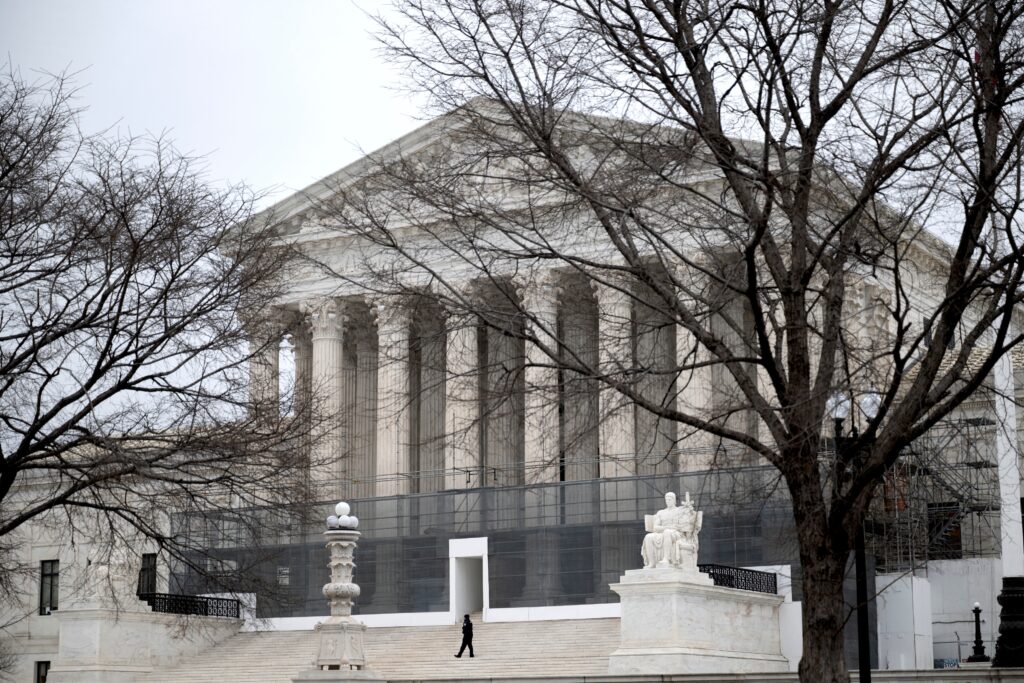
On Monday, justices weighed the constitutionality of Hemani’s charge — under a section of the Gun Control Act of 1968. The law prohibits regular users of controlled substances from possessing firearms. (In 2024, a jury found President Joe Biden’s son Hunter guilty of violating the same law.)
The issue before the court is whether the law meets a strict Second Amendment standard that any gun restriction must be consistent with the “Nation’s historical tradition.” But Monday’s arguments also involved discussion of the drinking habits of the Founding Fathers, the growing use and legalization of marijuana across the country, and even an obscure hallucinogenic drug.
Some justices appeared skeptical of the government’s position that regular marijuana users shouldn’t own guns.
Justice Neil M. Gorsuch said it was an “odd” case for the government to bring as it considers reclassifying marijuana, which remains illegal under federal law, as a less dangerous drug.
The justice asked: If Hemani took a marijuana “gummy bear” every night for sleep, could he be disarmed?
Sarah Harris, who argued for the government, replied that he could.
The case could have an impact on a significant share of the population. In a 2024 government survey, more than 15 percent of Americans age 12 or older reported having used marijuana in the past month. More than 17 million people reported using the drug on a nearly daily basis, a study published in 2024 found. As dozens of states have legalized cannabis in some form, the Trump administration has pushed to loosen federal restrictions on marijuana.
The court will decide if the law meets the requirements it set out in its 2022 decision New York State Rifle & Pistol Association v. Bruen, which says that gun laws must be rooted in U.S. “history and tradition.”
In Hemani’s case, the government argued similar regulations can be found in U.S. history. It cited laws from the 18th and 19th centuries that punished habitual alcohol abusers, or “drunkards,” by throwing them in jail or committing them to “lunatic asylums.”
Hemani’s lawyers contend the law is inconsistent with that tradition. While the laws could disarm people who were intoxicated, they did not do so for people who regularly drank alcohol, his team argued. (Hemani was not charged with using a gun while intoxicated, nor was he intoxicated during the 2022 raid, according to court filings.)
Gorsuch noted that the nation’s founders regularly drank — and that, at the time, the standard for being a “habitual drunkard” meant taking 16 shots of whiskey a day. He noted John Adams had a “tankard of cider” with breakfast; James Madison reportedly drank a pint of whiskey a day; and Thomas Jefferson had three or four glasses of wine each night while claiming he didn’t drink much.
“Are they all habitual drunkards who would be properly disarmed for life under your theory?” Gorsuch asked Harris.
Other justices wondered what about marijuana makes it too dangerous to use while owning a gun.
“What is the government’s evidence that using marijuana a couple times a week makes someone dangerous?” Justice Amy Coney Barrett asked. “What about each kind of drug? Is it the government’s position that if I unlawfully use Ambien or I unlawfully use Xanax, then I become dangerous?”
At times, the courtroom broke out in laughter amid all the talk of drug use and drunkenness. Justice Elena Kagan raised questions about Congress regulating ayahuasca — a powerful hallucinogen that can last for hours and can lead users to have wild, mystical experiences.
“Is that real?” Barrett asked.
The case marks the third time the Supreme Court will examine a gun restriction after the Bruen decision upended how courts test the legality of gun laws.
In 2024, the court upheld a law that restricts people with domestic violence restraining orders from having guns. It also appeared loosen its “historical tradition” test in finding that a gun regulation does not need to “precisely match” a historical precursor.
In January, the court heard arguments in a challenge to a Hawaii law that bans people from carrying guns on private property open to the public without the owner’s consent. They appeared skeptical of the law’s constitutionality.
Justice Ketanji Brown Jackson on Monday appeared frustrated with the “history and tradition” test, saying that it could produce “arbitrary” identifications of historical precursors with “inconsistent results.”
“I don’t understand how this works anymore in any meaningful way,” she said.
The unusual facts in Hemani’s case have created odd alliances, with a coalition of blue states supporting the Trump administration’s bid to uphold the gun restriction. On the other side, advocates of marijuana legalization are supporting Hemani alongside the National Rifle Association, which has long advocated the loosening of gun restrictions. The NRA argued in a friend-of-the-court brief that the government failed to establish that marijuana use is dangerous enough to warrant taking someone’s gun away.
“[T]he assertion that marijuana users are dangerous is belied by the fact that at least 40 states have legalized some form of marijuana use,” the NRA wrote.
The post Supreme Court weighs whether smoking weed can eliminate your right to a gun appeared first on Washington Post.