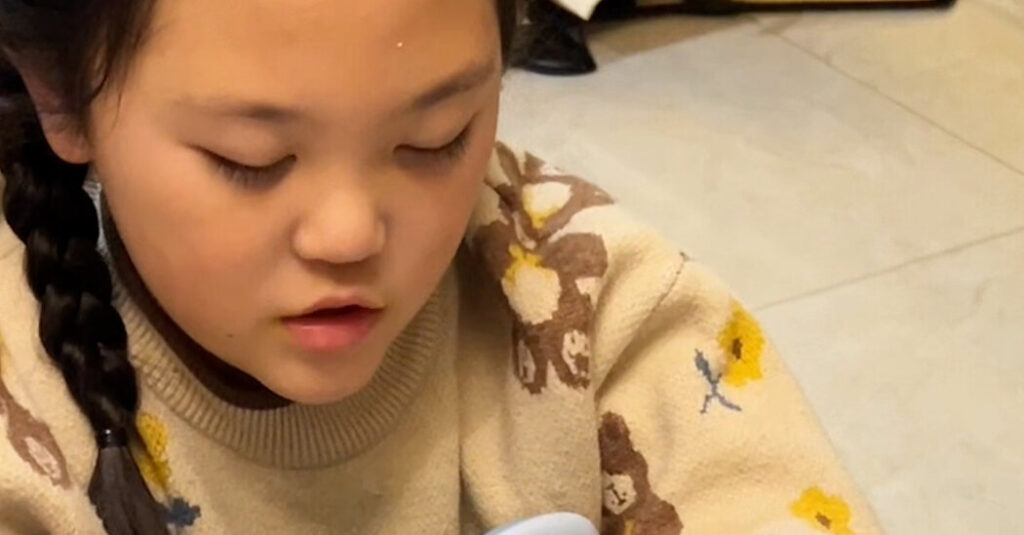
Across China, where education is famously cutthroat, parents are turning to artificial intelligence to gain a competitive edge. Some are making interactive learning games or using chatbots to grade their children’s homework. Others are using A.I.-powered gadgets to get past a language barrier.
Their eagerness to experiment is one example of how Chinese users are embracing A.I. for learning, even as many in the United States worry that it feeds students misinformation or erodes critical thinking. This cultural rift is backed by data: A 2025 global survey led by the services firm KPMG found that more than 90 percent of Chinese said they felt optimistic about the technology, compared to just over 50 percent in the United States.
The enthusiasm in China has fueled a sprawling, often unchecked, marketplace for educational technology that is worth more than $43 billion by some estimates, and where gimmicks and exaggerated marketing are common. Yet for some families, the tools are providing genuine relief. Three parents shared videos of their routines, showing how A.I., while imperfect, has made parenting and teaching their children a little easier.
A.I. Translation Mask
As a mother of two with a full-time public relations job, Zheng Wenqi, 42, had little time to practice English herself, let alone teach her children. She knew her 9-year-old son needed more conversational experience but didn’t know where to turn.
“There just wasn’t an opportunity for him to start talking,” said Ms. Zheng, who lives in northern China’s Heilongjiang Province.
Then she saw a livestream promoting a gadget she could wear to make her conversant in English.
It has two parts: a mask that covers her mouth, and a speaker that hangs around her neck. Ms. Zheng speaks Chinese into the mask, which also muffles her voice. Then, a translation comes out of the speaker. She began wearing it around the house, for 30 to 60 minutes a day.
The roughly $375 device, called Native Language Star, draws on speech and language models developed by several Chinese technology firms, according to the company, based in Shenzhen, that makes the device.
Ms. Zheng said the translations were sometimes stiff. But she said that after about a month, her son was speaking more confidently and initiating conversations.
Ms. Zheng also uses the device with her 5-year-old daughter, who had never learned English before. The child can now describe daily tasks, like getting dressed and putting her shoes on.
“We say, ‘Now is English time, let’s all speak in English,’ and I’ll put that thing on,” Ms. Zheng said. “And then they just say whatever they know.”
A Chatbot With ‘Eyes’
Li Linyun, a stay-at-home mother, used to fight with her 10-year-old daughter, Weixiao, over her studies.
Now Ms. Li has delegated supervision of Weixiao’s schoolwork to an A.I. chatbot.
“It’s a 24-hour online teacher, and it’s knowledgeable and extremely patient,” said Ms. Li, who lives in Hunan Province, in central China.
Ms. Li uses Doubao, China’s most popular A.I. chatbot, which was created by ByteDance, the parent company of TikTok. It has a camera function, which parents refer to as Doubao’s “eyes.” People can use it to learn more about their surroundings, for instance by asking Doubao to identify plants or give more details about museum artifacts. (ChatGPT has a similar function for paying users; Doubao’s is free.)
After more experimentation, Ms. Li learned that Doubao could explain grammar rules better than she ever could.
Weixiao said she liked that she could ask Doubao to repeat explanations as many times as she needed, while her teachers moved on quickly. “It explains in more detail, so I can understand,” she said.
Ms. Li also began asking Doubao to grade completed homework assignments by uploading a photo to the app.
The chatbot identifies wrong answers and corrects them, Ms. Li said, though it sometimes makes mistakes.
The camera can also monitor Weixiao’s posture. But Ms. Li said she rarely used that feature, because her daughter didn’t like the feeling of being watched.
Ms. Li said she wasn’t worried about feeding so much footage of Weixiao to the chatbot. In the social media age, “we don’t have a lot of privacy anyway,” she said.
And the benefits were more than worthwhile. She no longer had to spend hundreds of dollars a month on English tutoring, and Weixiao’s grades had improved. “It makes educational resources more equitable for ordinary people,” Ms. Li said.
Her relationship with Weixiao had improved, too, she said. “To ease tensions in a parent-child relationship, you can’t spend too much time on homework,” she said. “Just encouraging her is enough.”
Creating Learning Games
Yin Xingyu, 37, uses A.I. chatbots like DeepSeek in her job as a marketer in Shenzhen. She started to wonder whether the tool could also help her 6-year-old daughter.
Ms. Yin didn’t know how to code, so she turned to what’s known as “vibecoding” instead: using A.I. models to build software by describing what you want in plain language. She worked with DeepSeek to build an interactive English word game for her daughter. The chatbot wrote the code for her.
She is now sharing the prompts on social media so other parents can input them into their own chatbots and replicate her games.
Ms. Yin has also experimented with other models. She used Google’s A.I. image generator, Nano Banana Pro, to create comic strips that used her daughter’s Chinese vocabulary words, starring her favorite characters from movies like “Zootopia” and “Frozen.”
Ms. Yin said she didn’t think that her daughter would become dependent on A.I., because she designed the games to prioritize active thinking over passive stimulation. She plans to encourage her daughter to use the tools even more as she gets older; for example, by using chatbots to brainstorm ideas for essays.
“Most likely that’s how the future will be, and I want her to get used to it from a young age,” she said.
‘A.I. Self-Study Rooms’
Not every effort to use A.I. for education has been successful. Some companies have rolled out products that critics say are more hype than substance.
So-called “A.I. self-study rooms,” for example, are advertised as physical spaces where students can learn from A.I.-powered tablets that tailor learning plans to individual needs. Fees range from a few dollars an hour to hundreds of dollars a month.
A state media report from 2024 about the trend showed a classroom in Zhejiang Province lined with cubicles, where students sat quietly in front of tablets that assessed their completion of assignments for accuracy and speed.
But some parents and former employees have complained that the “A.I.” is merely a marketing facade for prerecorded lessons or other less advanced technology, and that the tablets are just basic, off-the-shelf devices.
State media outlets have also accused the operators of some of the centers of trying to circumvent a 2021 ban on for-profit tutoring that was meant to shield children from having too much homework and families from spending too heavily. Many tutoring services have continued to operate underground. (The study centers have said that A.I. is doing the teaching, not tutors, so the ban does not apply.)
Many of the study rooms have already shut down, according to media reports. The New York Times twice tried to visit one in Beijing, only to find it locked and empty, with posters purporting to show reviews from satisfied parents still on the walls.
May Zeng, 24, worked at a study room in Jiangxi Province for two months last year, where she was in charge of making sure that students didn’t slack off. She thought that parents didn’t care as much about A.I. as they did about having somewhere to put their children.
Still, A.I. was getting used — by Ms. Zeng herself. As part of her duties, she had to write feedback on each student’s progress.
“When I found I really had nothing to say, I’d just throw it to the A.I.,” she said. “In this A.I. self-study room, I was the one using the most A.I.”
Siyi Zhao contributed research from Beijing.
Vivian Wang is a China correspondent based in Beijing, where she writes about how the country’s global rise and ambitions are shaping the daily lives of its people.
The post China’s Parents Are Outsourcing the Homework Grind to A.I. appeared first on New York Times.