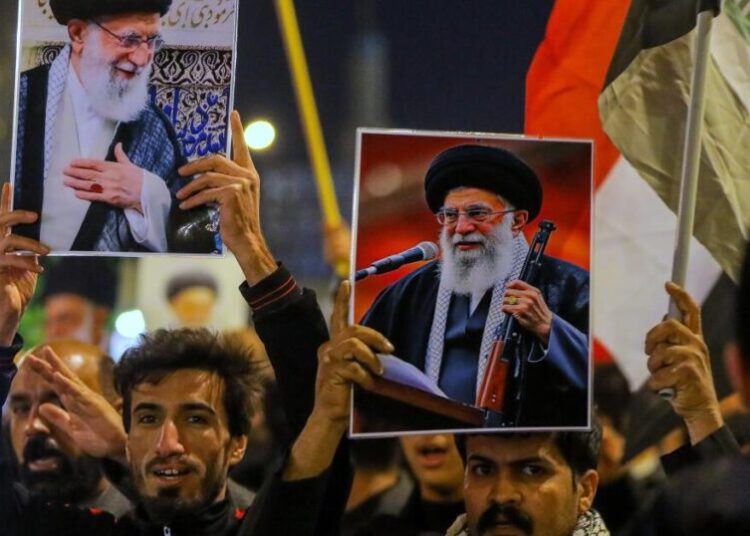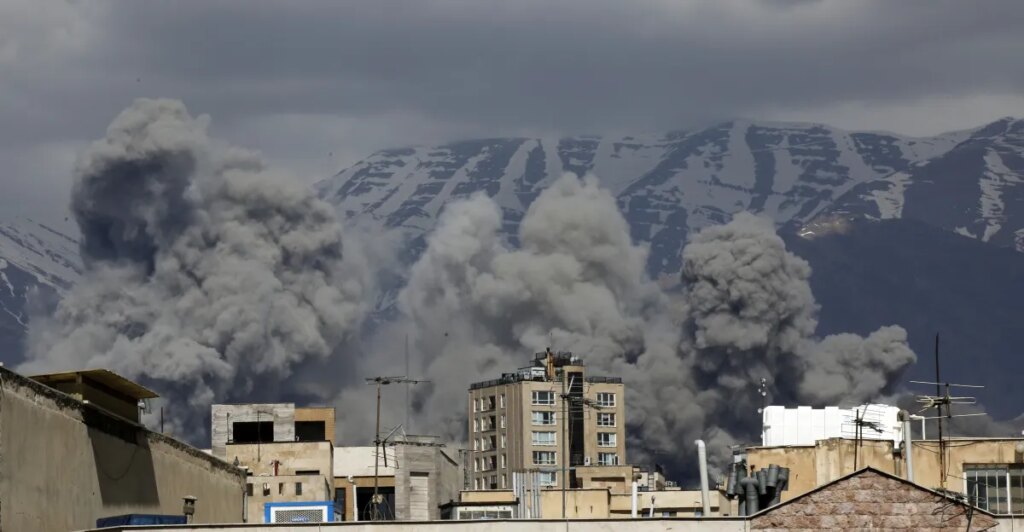
The United States and Israel launched a war against Iran Friday night, killing that nation’s supreme leader, Ayatollah Ali Khamenei, along with many other Iranian officials, and (reportedly) more than 150 people at an elementary school for girls.
In response, Iran has launched attacks against Israel, US bases in the region, and civilian targets in neighboring Arab countries.
This conflict’s consequences will ripple far beyond the Middle East, even as that region bears its gravest effects. If hostilities continue to escalate, President Donald Trump’s war could plunge the global economy into an inflationary crisis. Regardless, Americans’ energy costs will jump in the coming days.
How the war in Iran will raise oil prices
The war will yield higher oil prices. The only question is about the size and duration of the spike.
The danger here isn’t merely a collapse in Iranian oil exports, although that will have some effect. Iran is the world’s fifth-largest oil producer, supplying 5 million of the 107 million barrels that the world pumps daily. Although this oil is heavily sanctioned — and thus barred from the US market — it helps to satisfy China’s energy demand. And every barrel that China purchases from Iran is one that it need not buy from the global market. In this way, Iranian production dampens global oil prices.
Nevertheless, the world could easily adjust to a loss of 5 million daily barrels. The United States and the Gulf countries have plenty of spare fossil fuel capacity. The real hazard is that Iran could close the Strait of Hormuz — a narrow waterway between Iran and Oman, which is one of the global energy trade’s most important chokepoints.
About one-third of the world’s seaborne oil exports and a fifth of global natural gas shipments flow through the strait each day. Were Iranian forces to blockade it — or the war itself to render the strait unsafe for commercial vessels — global energy supplies would abruptly fall. Although Saudi Arabia and the United Arab Emirates can export some of their oil through alternative pipelines, most of the crude can only be routed through the Strait.
This time might be different
The Iranian regime has repeatedly threatened to close the strait in past conflicts with the US. But it has never actually done so. And for good reason; Iran itself can scarcely export oil without use of the waterway. And such a blockade would also harm Iran’s chief patron — China — even more than it would burden the West. As of 2024, 84 percent of crude oil shipped through the strait went to Asian markets, while only about 6 percent goes to Europe and the United States.
Then again, Iran has not launched missiles at Dubai hotels and airports during past conflicts with the United States. And of course, they also did not lose their supreme leader in the US-Iran missile exchanges of 2020 and 2025.
On Saturday, Iran’s Revolutionary Guards reportedly told vessels that passage through the strait was no longer allowed. On Sunday, four oil tankers near the Strait were attacked. Commercial traffic through the waterway has ground to a halt.
Oil prices are already spiking
When futures markets opened Sunday night, oil prices jumped nearly 12 percent to about $75 a barrel. For Americans, this could push gas prices above $3 by sometime next week.
The war’s full economic costs will, of course, depend on its duration. If the Strait of Hormuz remains effectively closed for a sustained period, oil prices could soar well above $100 a barrel.
Costly crude would then fuel inflation across the economy. Oil remains a key input to the transportation, manufacturing, and logistics sectors; when the former gets more expensive, the latter do too. If oil prices hit $100 a barrel — and stay in that vicinity — it would add between 0.6 and 0.7 points to global inflation, according to Capital Economics.
And yet, an oil shock could also simultaneously slow global growth. As former White House energy adviser Bob McNally told CNBC Saturday, “A prolonged closure of the Strait of Hormuz is a guaranteed global recession.”
This would put the world’s central banks in a vexing position. Normally, the Federal Reserve raises interest rates to combat inflation — and lowers them to spur flagging growth. If prices rise and the economy stagnates simultaneously, the Fed will have no good options.
Trump sometimes chickens out
To this point, Trump has generally kept his military adventures short. His bombing of Iran last summer lasted only 12 days, while his invasion of Venezuela ended hours after it began.
The president has also evinced limited tolerance for falling stock markets. If economic conditions sour quickly, Trump may race toward an off-ramp.
Already on Saturday, the president was signaling that he could imminently call off the strikes, telling reporters, “I can go long and take over the whole thing, or end it in two or three days.” And on Sunday, he said that he and Iran’s new leadership were planning to talk.
But war sometimes feeds on itself. On Sunday, the US confirmed that three American service members died amid the operation in Iran. Trump may feel compelled to escalate strikes in retaliation for these deaths.
Even if the president seeks peace, Iran might not. According to some analysts, Tehran believes that it can secure better ceasefire terms by waiting for the economic costs of the war to mount.
In any case, Trump’s strikes have already bought Americans higher energy costs in the immediate term — and an elevated risk of stagflation in the longer run. What it will bring the Iranian people — beyond dead school children and smoking ruins — remains to be seen.
The post Americans will pay for Trump’s war in Iran appeared first on Vox.