

More colon cancer cases are being diagnosed in the rectums of people in their 40s, 50s, and 60s, a clear sign that something in our modern environment is perturbing colon health, and making colon cancer more common in younger generations.
A new report out today from the American Cancer Society shows that colon cancer is becoming a disease of middle age, hitting people in the prime of their life, when they’re buying homes, growing careers, and building families. In particular, rectal cancers, the kind of colon cancer located at the very tail end of the intestinal tract, are skyrocketing, now accounting for one-third of all colon cancers diagnosed.
Scientists aren’t exactly sure why this is happening, but the data is striking: the rate of rectal cancers diagnosed in people under 50 doubled in the 24-year period from 1998 to 2022. That’s an indication that whatever is driving the rise of young colon cancer is having more of an impact specifically on the tissues in people’s rectums, suggesting an environmental trigger, rather than a lack of physical activity, could be to blame for this.
“It’s some either environmental or behavioral exposure that was introduced in the last half of the 20th century,” cancer epidemiologist Rebecca Siegel, first author of the new report, told Business Insider. “Whatever this change in exposure was, it’s having a much larger influence on cancer development in the rectum. It’s a really important clue for researchers.”
This isn’t your grandfather’s colon cancer
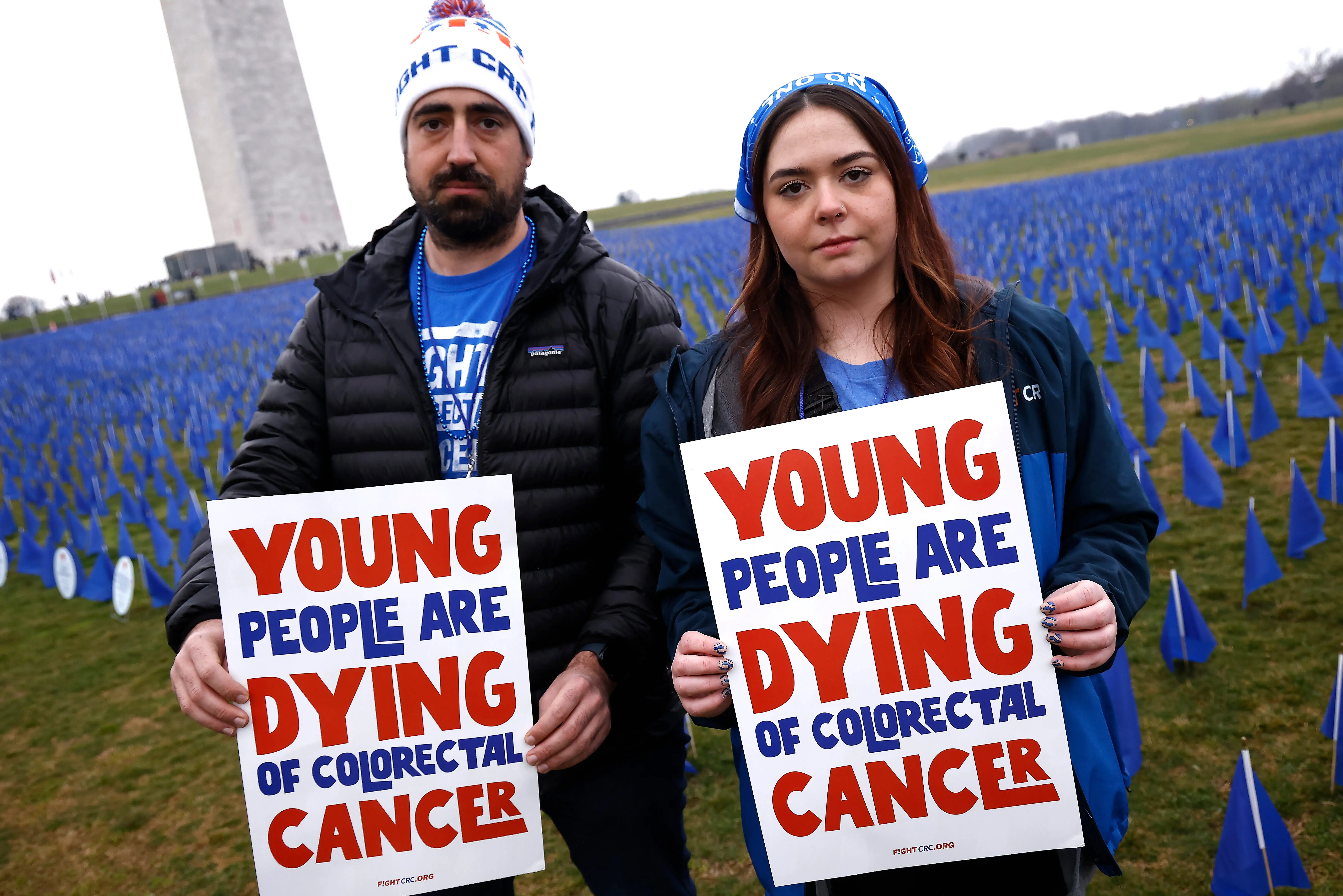
Colon cancer has quickly become the deadliest cancer in people under 50, but researchers don’t yet know why. The news that rectal cancer is driving the trend is useful for researchers because different triggers impact different areas of the gut. Physical inactivity, for example, is a key driver of some colon cancers — but not the rectal kind.
“There’s a lot of thought that it is something, maybe, that we’re eating,” Siegel, who is the senior scientific director of surveillance research at the American Cancer Society, said. “Partly because that’s the big exposure for the colon, but also because that is something that has changed dramatically since 1950.”
Starting with the Baby Boomers, every successive generation now has an increased risk of developing colon cancer. You can see this in the data: Colon cancer rates are rising 3% per year in people under 50, and most of them are being diagnosed at an advanced stage, whereas colon cancer rates are decreasing in people over 65, at a rate of about 2.5% each year.
According to the new report, almost half (45%) of colon cancer diagnoses today are in people under 65. The face of colon cancer is changing, and both experts and patients are clamoring for more recognition and awareness. Though lifestyle moves like eating a healthy, fiber-rich diet, getting regular movement, avoiding ultra-processed meats, and skipping binge drinking can all help lower your risk of developing colon cancer, it’s not a guarantee. Plenty of people with clean diets, healthy habits, and no family history of colon cancer are getting diagnosed.
“It’s really like a slow-moving tsunami where it’s going to continue to affect more and more people,” Siegel said.
The trend is global
This is not just happening in the US, it’s a trend that’s progressively being mirrored across the globe. At least 26 other countries have reported similar trends in young adults under 50 developing colon cancer.
Young colon cancer is getting diagnosed later, and it’s deadlier too. Today, three-quarters of colon cancer diagnoses in patients under 50 are advanced disease, and one-third of the estimated 55,230 colon cancer deaths this year in the US will be in people under 65.
Bloody stool is a warning sign that doctors and patients need to take seriously

More awareness on the part of patients and doctors, as well as more colonoscopies — which can not only detect cancer, but also prevent it through the removal of precancerous growths — are needed to reverse the trend.
“There’s an opportunity for earlier diagnosis, but the problem is, especially for younger people, they’re not aware of the symptoms, and they don’t want to talk about the symptoms,” Siegel said. “And sometimes they even do go to the doctor with these symptoms, and they’re diagnosed with hemorrhoids.”
Laura Behnke, who was diagnosed with late-stage colon cancer at age 42, just a few months after giving birth to her baby girl, is one of those patients who assumed the bloody mucus attached to her stool was probably just pregnancy hemorrhoids.
“Nobody at any point asked me ‘What’s the bleeding like? How often is it happening?'” she told Business Insider. “We all just said, ‘Oh, hemorrhoids, cool.'”
Both Behnke and Siegel emphasized that normalizing talk about symptoms like bloody stool and stomach cramping are critical.
“It’s so important for people to have these conversations with their family at the dinner table,” Siegel said. “Change the topic, normalize this kind of talk, because that’ll help.”
Doctors, too, are slowly gaining recognition that younger patients can get colon cancer.
Everyone over age 45 should be going in for regular colonoscopies. If a colonoscopy feels too inconvenient, start with a simple and cheap home stool test, called a fecal immunochemical test (FIT). The test is very good at detecting rectal cancers. A 2021 study from Germany, which assessed how well nine different brands of home FIT tests work at picking up colon cancer, found that across the board, FIT tests have the highest sensitivity for rectal tumors.
And the number one thing to be aware of is the symptoms: bloody mucus in your stool, severe abdominal cramping, or other changes in your bathroom habits are worth going over with a doctor.
“I think it is pretty clear now, hopefully becoming more clear to everyone that this is not an old man’s disease,” Behnke said. “So if you do have any sort of symptoms, any sort of concerns, anything that doesn’t feel right, you have every right to go ask a doctor about it and to demand some answers.”
Read the original article on Business Insider
The post A new report reveals that a third of colon cancer cases now occur in the rectum. Take these steps to protect yourself at any age. appeared first on Business Insider.