The Trump administration’s diplomacy with Iran to avert a war appeared to be on a near-certain path to failure even before it reached a critical point last week.
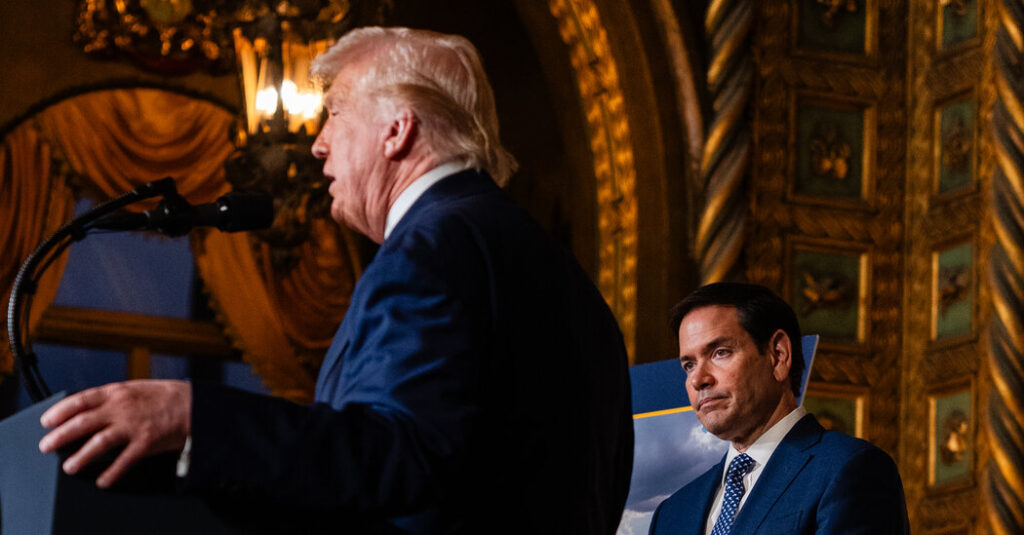
The giveaway came in a fiery phrase that Secretary of State Marco Rubio uttered a couple times this month. The “radical Shia clerics” leading Iran could not be trusted, he said at the Munich Security Conference and later in Hungary.
“We have to understand that Iran ultimately is governed and its decisions are governed by Shia clerics — radical Shia clerics, OK?” he told reporters in Budapest. “These people make policy decisions on the basis of pure theology. That’s how they make their decisions. So, it’s hard to do a deal with Iran.”
His remarks signaled that President Trump and some of his top aides did not believe they could work with the leaders of Iran, on compromises over the country’s nuclear program or anything else.
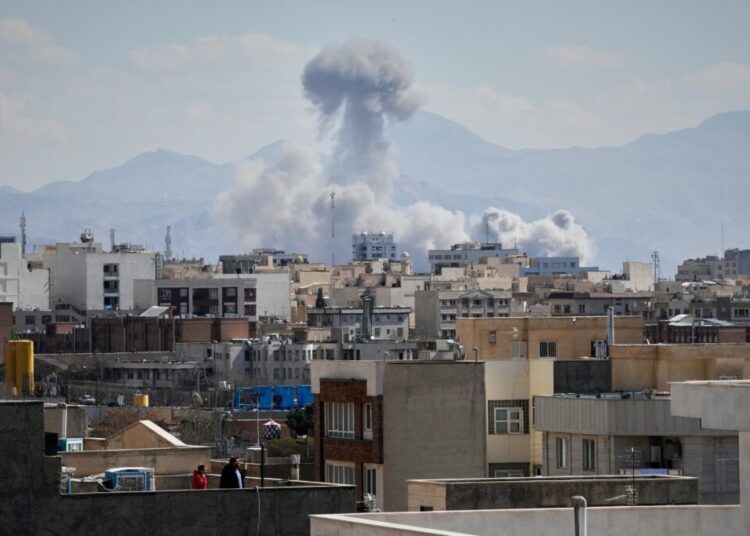
The diplomatic talks that began in Oman on Feb. 6 seemed preordained to fail, and Mr. Trump’s desired path became clear by this weekend: a war of choice carried out with Israel to eviscerate Iran’s leadership and cripple its military.
Mr. Trump laid out those goals on Saturday as he announced the first wave of coordinated U.S.-Israeli airstrikes. Israeli attacks that relied on U.S. intelligence killed Ayatollah Ali Khamenei, the supreme leader, and other top officials. The targets also included launchers for Iran’s 2,000 or so ballistic missiles, which can hit Israel but not the United States.
In a video, Mr. Trump told Iranian citizens, “When we are finished, take over your government. It will be yours to take. This will be probably your only chance for generations.”
Mr. Trump declared on Feb. 13 that regime change was “the best thing that could happen,” after saying earlier this winter that Iran needed new leaders.
Since January, when Mr. Trump began threatening new action against Iran, his administration has presented varying and contradictory statements on what it wanted from the negotiations, a sign that the diplomacy was probably doomed even before it began — perhaps by design, some analysts said.
Both Mr. Rubio and Steve Witkoff, Mr. Trump’s Middle East envoy, said weeks ago that Iran needed to make concessions on four things. There was its nuclear program, which had already been crippled by U.S. attacks last June; its ballistic missile capabilities; its support for militias in the region; and its treatment of its citizens, after the government violently suppressed protests that began late last year.
Mr. Rubio had cited Iran’s ballistic missiles as a main reason to go to war, sometimes using false or unproven assertions. Prime Minister Benjamin Netanyahu of Israel has insisted that destroying those missiles should be a priority.
But by Thursday, when Mr. Witkoff and Jared Kushner, Mr. Trump’s son-in-law, met with Iranian officials in Geneva, the Americans had agreed to focus the talks just on the nuclear program. U.S. officials say the Iranians refused to negotiate over ballistic missiles.
Mr. Trump emphasized different priorities with each public comment, as his focus shifted from Iran’s leaders to its missiles to its nuclear program.
It was that program that he stressed in his State of the Union address last Tuesday, after mentioning, without evidence, that Iran would soon build a long-range missile able to hit the United States.
“They want to make a deal, but we haven’t heard those secret words, ‘We will never have a nuclear weapon,’” Mr. Trump said. “My preference is to solve this problem through diplomacy. But one thing is certain: I will never allow the world’s number one sponsor of terror, which they are by far, to have a nuclear weapon.”
Several U.S. presidents have pursued that goal through negotiations, which Democrats have generally supported as the best alternative to a dangerous war, and which many Republicans have called foolish appeasement of a mortal enemy.
President Barack Obama negotiated a 2015 agreement with Iran that imposed strict limits on its nuclear program to keep Tehran at least one year from being able to make a bomb, in exchange for relief from U.S. economic sanctions.
Although Mr. Trump said in his State of the Union speech that Iran needed to say the “secret words,” the preamble to the 2015 agreement stated that “Iran reaffirms that under no circumstances will Iran ever seek, develop or acquire any nuclear weapons.”
Mr. Trump abandoned that agreement in 2018, calling it inadequate. Iran responded by accelerating its nuclear activity.
Former officials in the Obama and Biden administrations who worked on the 2015 deal said that, given Iran’s weakened state after Israeli and U.S. strikes over the past two years, Mr. Trump could have obtained an even better agreement had he really wanted one.
“If the goal was to ensure that Iran did not acquire a nuclear weapon, that could have been achieved without a war that is risky, unpredictable, dangerous and illegal,” said Robert Malley, who helped lead nuclear negotiations with Tehran during the Obama and Biden administrations.
“Iran was prepared, for reasons one could understand, to go further than they did in 2015, and were willing to in 2021,” when the Biden administration sought to restore the deal, he said. Mr. Malley said his view was based on conversations with diplomats from several countries with knowledge of the recent talks.
The core dispute in the latest round of talks involved Iran’s ability to enrich uranium, the process of refining it into a more potent form suitable for both nuclear energy and atomic bombs. (Iran insists its nuclear program is for peaceful purposes, a claim undermined by evidence of its past military research activities.)
Through the last round of talks on Thursday, Mr. Witkoff insisted that Iran must agree to “zero enrichment.” Iranian officials called that demand a violation of their country’s rights and sovereignty, and refused to budge.
In recent years, Iran appeared to be open to settling for a token enrichment capability.
Last July, former Secretary of State Antony J. Blinken said that Iran had recently been prepared to accept much stricter limits on its uranium processing than those included in the 2015 nuclear deal. The level would be enough for the medical isotopes Iran says it needs, but far from bomb-grade combustibility, Mr. Blinken told the Ex Files podcast, citing conversations with European officials.
Mr. Blinken said the proposal would have kept Iran at least one year away from producing enough nuclear material for a weapon, should it choose to do so. He added that Iran was also “prepared to engage” with the United States on its ballistic missile program, according to his European contacts.
But before Iran could formally offer that position, according to Mr. Blinken, Israel launched its June attack on Iran, which Mr. Trump soon supported with strikes on Iran’s nuclear facilities.
Some former U.S. officials and analysts said they thought that Mr. Trump might have been looking for an excuse to climb down from his threats of war and buildup of military force.
If so, the nuclear talks might have been the vehicle to deliver that.
But Barbara Bodine, a former U.S. ambassador and Middle East specialist who teaches diplomacy at Georgetown University, said that the Trump administration’s stated demands were too broad, going well beyond the nuclear program.
“Diplomacy and credible negotiations are not grounded in maximalist demands and mafioso-like threats tied to unilateral deadlines, even if the Iranians are notorious for running out the clock,” she said.
“The idea of concluding a deal that was ‘better’ than Obama’s,” she added, “was probably sincere.” But she said that “the means by which they sought to get there were not credible and would never have succeeded.”
Mr. Witkoff and Mr. Kushner did not comment publicly after Thursday’s talks, and Mr. Trump said on Friday that he was “not happy” with the course of the negotiations. A senior administration official said on Saturday after the war had begun that the Americans thought Iranian officials were using the talks to stall for time, and that Iran still secretly aimed to make nuclear weapons.
The only official who gave an upbeat assessment of the diplomacy in Geneva was the foreign minister of Oman, Badr Albusaidi, who often mediates between the United States and Iran. He said on Thursday that the talks had resulted in “significant progress.”
But Mr. Albusaidi’s actions belied his words. He rushed to Washington to meet with Vice President JD Vance in what appeared to be a last-ditch effort to prevent a war. And he made a rare appearance on American television, telling CBS News that Iranian officials had agreed not to stockpile enriched uranium in their country, even if they enriched the material, he said.
That fell short of the zero enrichment that U.S. and Israeli officials wanted. But Mr. Albusaidi insisted that technical experts would push forward in talks in Vienna on Monday.
After war broke out, he said in a statement that he was “dismayed.”
“Active and serious negotiations have yet again been undermined,” he said. “Neither the interests of the United States nor the cause of global peace are well served by this. And I pray for the innocents who will suffer. I urge the United States not to get sucked in further.”
Edward Wong reports on global affairs, U.S. foreign policy and the State Department for The Times.
The post Why Diplomacy Was Doomed: Trump’s Issue Was Iran’s Leadership Itself appeared first on New York Times.