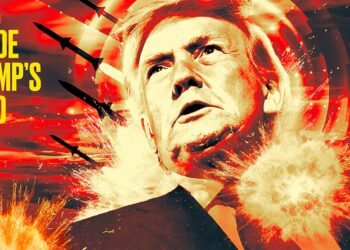
For more than 45 years, U.S. presidents have wanted to destroy the radical, anti-American regime in Tehran. They always concluded that the risks of war were too great — until President Donald Trump’s all-out attack with Israel early Saturday.
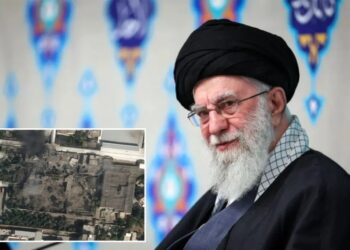
Trump said Saturday that the massive airstrikes had killed Supreme Leader Ali Khamenei. Few outside Iran will mourn the demise of a man who spent his career shouting: “Death to America!” and “Death to Israel!” And by this limited definition, Trump’s decapitation strategy may have worked. But killing Khamenei, who was aging and infirm, isn’t the same thing as regime change. If there’s a plan for what’s next, I haven’t heard any U.S. or Israeli official explain it.
Wars always are easier to start than to finish, especially when you’ve set a political goal of regime change, rather than a clearly defined military objective. President Vladimir Putin thought he would take Kyiv in a week. Israel thought it would throttle Hamas in a few months. But wars to erase a regime don’t work like that.
Once a president launches a war, he feels obligated to finish it successfully. “If you’re in it, win it,” the generals like to say. That’s especially true in this case, where the regime is odious and Trump has urged Iranian citizens to risk their lives to topple it. It may be a war of choice for the United States, but that doesn’t mean there’s an easy exit ramp ahead.
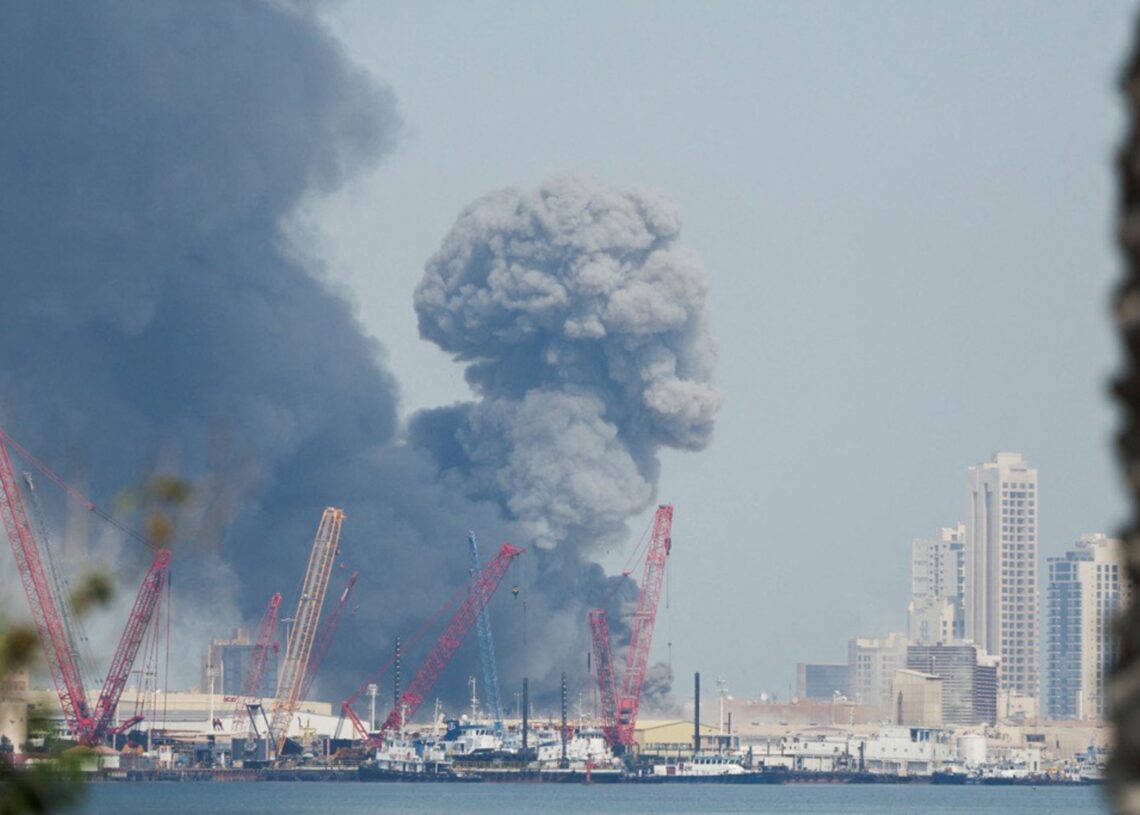
Trump’s preference had seemed, until Saturday, what might be called the “Viking way of war,” in and out quickly, using speed and surprise to bring a rapid capitulation. But this war escalated in the first few hours, and by Saturday night fires were raging from Iranian counterattacks on Bahrain, Dubai, Abu Dhabi and Israel. Iran has also closed the Strait of Hormuz, choking oil supplies. Somebody should have posted a sign at the White House above a map of Iran: “This isn’t Venezuela.”
A Bahraini security adviser told me Saturday afternoon that 14 Iranian drones had struck the port facility that’s home to the U.S. Fifth Fleet. In videos from the scene, you can hear the eerie mosquito buzz of a Shahed UAV and then see the burst of flame as it hit its target. That kind of attack usually strikes the other side in wars that America fights. The security adviser said that Bahrainis were puzzled why U.S. forces seemed powerless to stop the drones.
Make no mistake: Trump has announced maximalist goals for this operation. His statement released early Saturday morning was Trumpian rhetoric on steroids: “To the members of the Islamic Revolutionary Guard, the armed forces and all of the police, I say tonight that you must lay down your weapons and have complete immunity. Or in the alternative, face certain death. So, lay down your arms.”
Trump called on the Iranian people to rise, once again, against a regime that, by Trump’s estimate, slaughtered more than 30,000 protesters in January. “For many years, you have asked for America’s help. But you never got it. … Now you have a president who is giving you what you want. So let’s see how you respond. America is backing you with overwhelming strength and devastating force. … This is the moment for action. Do not let it pass.”
Like Trump and so many Americans, I loathe the Iranian regime. It has spread havoc from one end of the Middle East to the other. One day in April 1983, I missed getting hit by an Iranian car bomb at the American Embassy in Beirut by about 35 minutes. The sooner this regime is gone, the better.
But over the years, I’ve learned not to misjudge the regime’s staying power. When I visited Iran in 2008, I was struck by the fact that police required people in automobiles to wear seat belts. On the road from Tehran to Qom, they had radar guns to catch speeders. This regime spreads chaos, but it’s careful, too.
Talking to key European allies of the U.S. late Saturday, I heard an intense desire for a quick negotiated settlement to the war. Most of our allies had thought the attack was a bad idea. Britain denied use a critical refueling facility at Diego Garcia in the Indian Ocean. The United Arab Emirates and Saudi Arabia were worried and wary. Only Israel seemed a passionate advocate. Now that it’s happened, these allies will hope Trump quickly gets a settlement he can call a win. They won’t want to stay on the firing line.
What worries me most is that the conflict may put more time on the clock of an Iranian regime that was about to expire. The aging supreme leader was unpopular. Iranians had been jockeying for position in the succession process. The one thing that could rehabilitate the hardline clerical team he represents is his martyrdom.
U.S. Central Command tried to emphasize that the United States was focused on military targets. Centcom said its rockets and missiles were seeking to “dismantle the Iranian regime’s security apparatus.” A Western security official told The Post that strikes on the headquarters of Iran’s intelligence service had killed at least four senior commanders. “Everything is falling apart there — we’re seeing it, and feeling it,” the official said.
It’s good news for Iranians if the regime’s apparatus of repression is crumbling. But just as Russia can absorb suffering in warfare, martyrdom is a powerful driver in Iran. I recall a reporting visit to the CIA’s Iran Operation Center nearly 20 years ago, when the United States had embraced an earlier vision of regime change. On the wall was a poster of the beloved martyr Imam Hussein — a touchstone for IRGC members and a reminder to CIA officers of the passionate commitment of their adversary.
Mark Fowler, a retired CIA officer who worked on Iran for years, messaged me Saturday: “If the United States has learned anything from its past mistakes, it should use these hard-earned lessons by crafting a smart, bold post-war strategy worthy of the Iranian people’s sacrifice, one that supports their pursuit of lasting change.”
It would be nice to imagine, with Trump, that this will be a short war. But now that the United States has embarked in earnest on a campaign of regime change, we should understand that it’s likely to be a protracted conflict, with many dangerous moments ahead.
In a conflict like this, with such big stakes and unknowable risks, Trump has a special responsibility to explain what he’s doing to the American people — and ensure that the United States can stay the course. This is the opposite of “one and done.” It may be a worthy fight, but it’s likely to be an arduous one.
The post Trump’s Iran operation is the opposite of a ‘one and done’ appeared first on Washington Post.