The police in Britain have arrested a former ambassador and a member of the royal family. French prosecutors are investigating the country’s culture minister. The former prime minister of Norway has been charged with “gross corruption.” And authorities in Latvia and Lithuania are looking into possible human trafficking.
The Epstein files, released by the United States Department of Justice, have yielded legal action in several countries as the police and prosecutors examine whether the files reveal that criminal laws have been broken.
Since the biggest tranche of files was made public less than a month ago, the search for criminal accountability is going on just about everywhere overseas that Jeffrey Epstein, the convicted sex offender, is known to have befriended the world’s wealthy and elite.
The Epstein scandal is genuinely American in origin, the story of a rich New Yorker accused of trafficking young women for sex. Ghislaine Maxwell, Mr. Epstein’s longtime associate, was a British socialite. But many of the people caught up in his web are Americans, including the current president, a past president and boldfaced names from Wall Street, Hollywood and Silicon Valley. And it is Congress, under pressure from Mr. Epstein’s victims, that demanded the files be released.
Yet it is Europe where police and prosecutors seem particularly eager to examine the American documents as part of criminal investigations into potential wrongdoing.
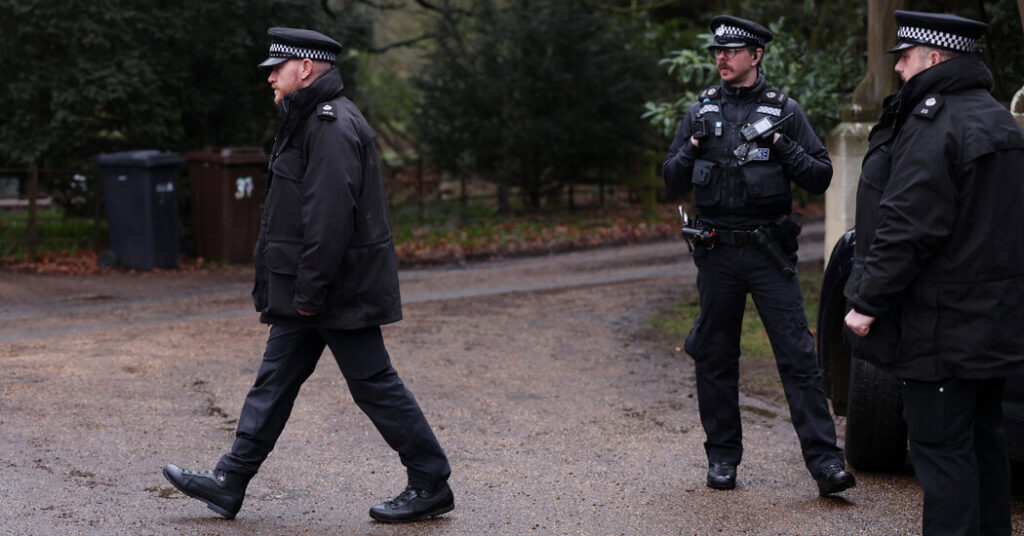
In Britain, two arrests have taken place, of Andrew Mountbatten-Windsor, the former prince, and of Peter Mandelson, a former ambassador to Washington. Both were arrested on suspicion of the same offense: misconduct in public office. It’s a broad, centuries-old common law offense that makes it a crime to act with “wilfull abuse or neglect of the power or responsibilities of the public office.”
“We don’t have those sort of generic, open-ended kinds of crimes in the United States,” said Paul G. Cassell, a professor of law at the University of Utah. For a decade, he represented Virginia Giuffre, who accused Mr. Epstein of trafficking her to his friends, including Mr. Mountbatten-Windsor, in the early 2000s.
As in the United States, the Epstein files have forced some firings or resignations outside of the criminal justice system.
In Britain, the prime minister’s chief of staff, Morgan McSweeney, and his communications director, Tim Allan, stepped down amid ongoing questions about how much they were aware of connections between Mr. Epstein and Mr. Mandelson, the man they pushed to be Britain’s ambassador to the United States. Neither Mr. McSweeney nor Mr. Allan has any known ties to Mr. Epstein.
Despite the flurry of legal activity across Europe, few people are yet being held to account for crimes related to the longstanding accusations of sexual abuse and human trafficking leveled against Mr. Epstein.
Instead, the focus of investigations has been on documents from the Epstein files that appear to show corruption, misconduct in office or misuse of public funds. And while European authorities have moved quickly to open investigations, they are based on the U.S. documents, not on the strength of their own, independent casework.
Mr. Mandelson was arrested and released on bail after documents appeared to show that he forwarded confidential government information to Mr. Epstein. Mr. Mountbatten-Windsor, formerly known as Prince Andrew, was arrested on suspicion of the same offense. Both men deny any criminal wrongdoing and neither has been charged.
Thorbjørn Jagland, the former prime minister of Norway, has been charged with “gross corruption” in connection with his ties to Mr. Epstein. Investigators have said they are looking into “whether gifts, travel and loans were received in connection with his position.” Mr. Jagland has denied criminal liability and is cooperating with authorities.
In France, authorities announced they were investigating reports that Jack Lang, who once served as France’s culture minister, had financial links to Mr. Epstein. Mr. Lang later resigned as head of the Arab World Institute, a prestigious cultural institution in Paris. In a post on social media, Mr. Lang wrote: “The accusations against me are unfounded, and I will prove this, despite the noise and fury of the media and digital courts.”
Latvia is one place where officials are now actively looking into the possibility of sex crimes committed by Mr. Epstein.
In February, the authorities there launched a criminal investigation into whether young women from that country were trafficked by Mr. Epstein. The police said the nation’s organized crime bureau would focus their inquiry on “the possible recruitment of Latvian nationals for sexual exploitation in the United States.”
Legal experts say it is not clear whether the cases in Europe will make their way to trial.
Mr. Cassell, the lawyer who represented Ms. Giuffre, said that despite the more aggressive actions of British police in recent days, the country’s criminal justice system proved to be a roadblock when he presented his client’s accusations against Mr. Mountbatten-Windsor to police in 2016.
“We were told essentially that it was an American problem, not a U.K. problem,” he recalled, adding that the case could have turned out differently if the police in Britain had acted when Ms. Guiffre asked them to.
At the time, the Metropolitan Police explained their decision not to investigate Ms. Giuffre’s accusations by saying that the case was being handled in the United States.
“It just seemed,” Mr. Cassell said, “like a convenient excuse to to avoid pursuing someone that had power and influence.”
Michael D. Shear is the chief U.K. correspondent for The New York Times, covering British politics and culture and diplomacy around the world.
The post The U.S. Released the Epstein Files. The Arrests Are Overseas. appeared first on New York Times.