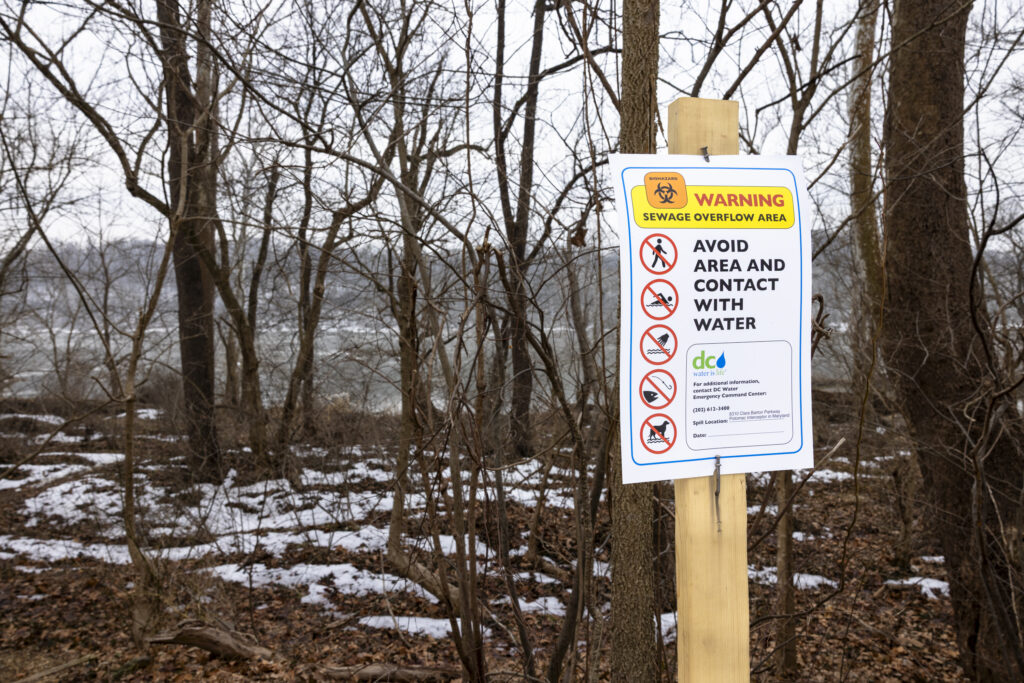
There was an astounding sentence in the Feb. 23 Metro article “An island unto itself” about Minnie’s Island: “In a normal year, about 600 million gallons of sewage are dumped into the Potomac River.”
As devastating as the recent Potomac sewage spill is, the more painful truth is that it is common. Hundreds of millions of gallons of sewage routinely flow into our region’s rivers, the cumulative total of frequent smaller incidents. And sewage is just a fraction of the problem. Every time it rains and snows, bacteria, waste, trash and toxic chemicals wash off our streets and farms into our water.
Water pollution has become normal. The Potomac sewage spill reminds us that it shouldn’t be.
The Chesapeake Bay Foundation and many partner organizations have for decades called for more investment to modernize wastewater systems and address water pollution across the region. That includes essential programs such as the federal Clean Water State Revolving Fund, and continued state investments in programs that protect waterways. This spill is rightly being treated as a public health emergency by leaders from the local level all the way up to the president and Congress. We need the same urgency and concern all the time.
Hilary Harp Falk, Annapolis
The writer is president and CEO of the Chesapeake Bay Foundation.
Gratitude for D.C.’s firefighters
I am almost happy to pay my taxes this year, because they go to funding the professional and courteous officers in Fire Station 1, which serves D.C.’s West End neighborhood.
When our carbon monoxide alarm went off on Feb. 24, my 911 call was answered promptly. Much to our embarrassment, the problem was a result of batteries that needed replacement. I was mortified that we had wasted their time and equipment, but they kept assuring us senior citizens that it was part of their job and they were happy to respond.
I am grateful for their kindness and proud of their professionalism in spite of such a minor issue.
Ellen S. Shafer, Washington
Can nuclear fuel reprocessing deliver?
The Feb. 23 editorial “Fixing America’s broken nuclear fuel supply” argued that nuclear fuel reprocessing, and subsequent “recycling,” would be a boon for nuclear energy in the United States. It would not.
Reprocessing is commercially untenable because it’s expensive, dangerous and it doesn’t work as advertised. The process involves chemically separating spent fuel into its core components (heavy metals and highly radioactive elements) with the aim of discarding the most toxic parts and recycling the rest as new fuel. Proponents allege that reprocessing enables 90 percent of spent fuel to be reused — but in reality, major technical hurdles mean it’s closer to 1 to 2 percent.
In addition to the technical problems, economic analysis consistently shows that reprocessing is prohibitively expensive. Despite ample opportunity, it hasn’t been able to survive in a free market.
Reprocessing also brings serious security and proliferation concerns, as it creates a purified form of plutonium directly usable in a nuclear weapon. This increases the risk that malicious actors can get their hands on the key ingredients for an atomic bomb.
The editorial cited France as a paragon of recycling — but it is actually a textbook example of expensive reprocessing with very little recycling. After spending billions of taxpayer euros on this dubious technology, all France has to show for it is paltry recycling rates and the liability of an ever-growing stockpile of weapons-usable plutonium.
This is not the path we ought to take in the United States. Instead, we should pursue a uranium-based fuel cycle, with direct disposal of spent fuel. This practical and affordable option will catalyze nuclear energy growth. Reprocessing is not the answer.
Ross Matzkin-Bridger, Alexandria
The writer is senior adviser at the Nuclear Scaling Initiative.
Nuclear start-up Oklo is not building “the first private nuclear recycling plant” in the United States.
In the early 1960s, I was counsel to the New York State Office of Atomic Development, which was created to encourage nuclear development within the state. We acquired a site in West Valley, New York, that was then leased to Nuclear Fuel Services Inc. That company proceeded to build and operate the first facility in the U.S. to recycle spent nuclear fuel.
If President Jimmy Carter had not terminated federal support for commercial nuclear fuel reprocessing, we would be in the fortunate position of France, which not only generates most of its electricity from nuclear plants but also has minimized its spent-fuel disposal problem by recycling all of its fuel. Instead, we have the ever-increasing problem of the forced storage of all of our nuclear power plants’ spent fuel.
Maurice Axelrad, Bethesda
Following Neal Katyal’s Feb. 25 op-ed, “Tariffs were illegal. Now Trump wants to delay refunds.,” Post Opinions wants to know: If you run a business, what opportunities did your company lose because capital was redirected to tariffs? Send us your response, and it might be published as a letter to the editor. wapo.st/tariff_costs
The post The Potomac sewage spill is devastating — it’s also disturbingly common appeared first on Washington Post.