TEHRAN — In January 1979, the Shah of Iran, Mohammad Reza Pahlavi, left a nation that erupted in celebration at the end of his rule, ushering in the era of the Islamic Republic under Ayatollah Ruhollah Khomeini.
More than 47 years later, the death of Khomeini’s successor, Iran’s 86-year-old Supreme Leader Ali Khamenei, elicited similar scenes of joy, with crowds in some areas openly cheering and dancing in the streets to mark the killing of a leader more feared than loved.
But the celebrations in one Tehran neighborhood were also furtive and short lived to avoid riot police or members of the Basij, a voluntary auxiliary force with the Revolutionary Guards. Hundreds of people gathered, shouting and honking horns, and then quickly moved to another neighborhood.
There were reports of similar displays across the capital. But in rural areas — where the Basij and police have less of a presence — thousands deluged the streets, chanting and dancing in jubilation.
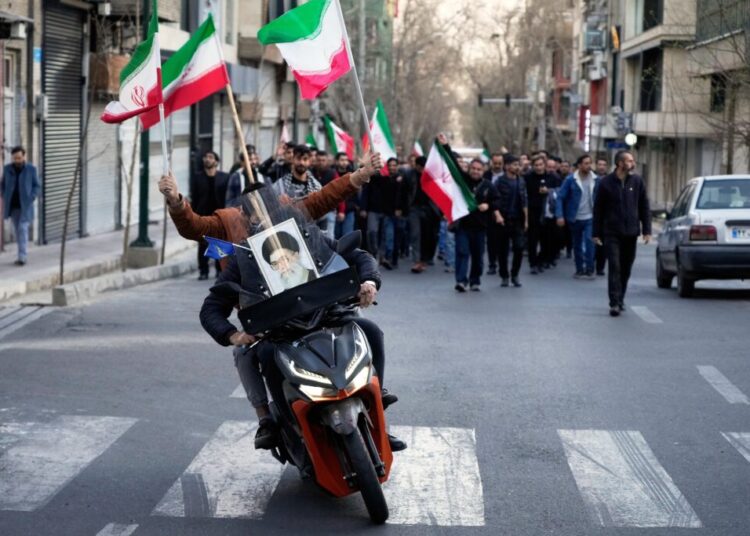
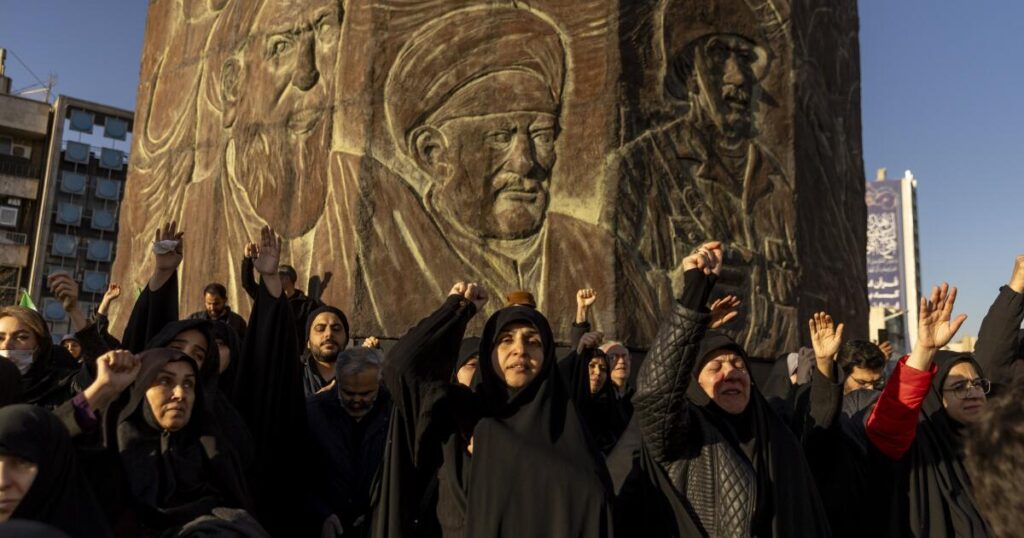
Those gatherings contrasted with more organized, massive rallies that have long been the forte of the Iran’s authorities. At such rallies this weekend, Khamenei supporters mourned his death.
In the hours after Khamenei was pronounced dead Saturday, thousands gathered in main squares across the country, hoisting pictures of the Supreme Leader, waving Iranian flags and chanting “We sacrifice ourselves for you, O Hussein” — a reference to a martyred Shiite figure. Many openly cried.
But despite the divergent views on Khamenei, both sides shared a sense of uncertainty, with fears that Iran was at a crossroads, facing fateful questions over its political and economic future and a sense that it could easily go down a dangerous and chaotic path.
“It’s a mixed feeling. On the one hand, yes, we’re happy about the decapitation strikes and Khamenei’s death. But the surviving officials and commanders aren’t just going to raise their hands and give up,” said Hassan, a barber in Tehran who, like many interviewed, did not want to be named to avoid reprisals.
“They’ll fight back, and therefore the collapse of the regime will take a long time, and it won’t be easy,” he said.
Ziba, a 60-year old retire nurse reached by phone, said she was driving with her husband to fill up gas near Tehran’s Arayia Shahr Square around midnight, right after a Basij base near their home was struck, right when rumors of Khamenei’s death were gathering force.
“We started honking to celebrate,” she said. When they went back to their apartment, they cheered with joy from their window.
But they were too afraid to do more. They live in a neighborhood with a number of high-ranking officials and were worried it would lead to reprisals.
She added that her family was happy, but that they expected the collapse of the theocracy to take a longer time. And it would involve the destruction of a lot of the country’s military infrastructure, which she considered to be “the country’s assets.”
In the meantime, she was concerned with protecting her family. Both her son and daughter were at home after authorities declared a seven-day public holiday.
“I begged them to not go outside and to leave the house with us to another area of Tehran,” she said.
“I hope the regime will collapse quickly. Inshallah [God willing] it will.”
Others were divided within the same household.
Rahman, an electrical engineer who would shed no tears for Khamenei, was driving his elderly father — and avid Khamenei supporter — to a mosque where he would be participating in a mourning event.
Rahman was hoping that within 10 days, protesters would take to the streets once more and impose their will on the now-decapitated theocratic regime.
“But the more realistic situation is that U.S. and Israeli strikes will continue until the top officials sit for negotiations and accept a deal that keeps them in power,” he said.
Amir, a 20-year-old barista, wasn’t letting thoughts of the future ruin his mood now. He had taken part in the protests in January, and also in the 2022 demonstrations protesting the death in police custody of Mahsa Amini, a 22-year-old woman accused of violating the law forcing women to cover their heads.
“I’m telling you, I’m laughing and happy for the first time in years,” he said.
“I don’t know or care what happens next. All I can tell you is that this regime has no genuine devotees, only mercenaries. I hope they give up soon.”
For Iranian diaspora communities outside the country and which are in large part anti-government, Khamenei’s death sparked unadulterated happiness. In Los Angeles, London and others cities, people showed up in what were essentially street parties before Iranian diplomatic missions.
In the Middle East, reactions too were divided; a reflection of Khamenei’s long shadow on the region. In Syria, Khamenei’s death was seen as vengeance for his support with arms, men and materiel for former Syrian President Bashar Assad, who was deposed in December of 2024.
In Lebanon, the Shiite group Hezbollah held a thousands-strong rally in the Beirut suburb where it holds sway.
And in Iraq, a Shiite majority nation whose deep ties with Iran’s rulers were kickstarted by the 2003 U.S. invasion, the government declared three days of mourning. In the meantime, hundreds attempted to storm the Green Zone, where the U.S. embassy is located, before being pushed back by police forces.
The post Tehran after Khamenei’s death: Rallies of mourning but also dancing in the streets appeared first on Los Angeles Times.