Ayatollah Ali Khamenei is dead, and the regime he ran will very likely transform. But no one should imagine that its nature or future will come down to a single person.
The country’s 13-man National Security Council essentially sidelined Khamenei after the 12-day war last June. It has effectively run the country since the summer and will likely continue to do so, even after a new supreme leader is appointed.
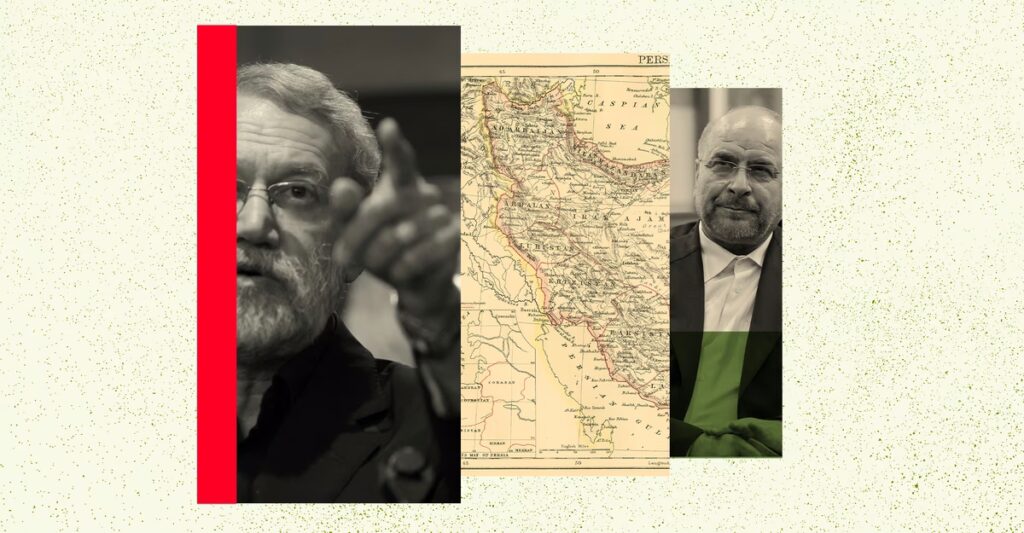
At the moment, a temporary three-person leadership committee has officially taken charge, but real power continues to rest with the security council, which is dominated by military and political insiders. Among them are the council’s powerful convener, Ali Larijani, and the current speaker of Parliament, Mohammad Baqer Qalibaf, a wily former air force general popular with the Islamic Revolutionary Guard Corps.
The first task of the country’s rulers, whether through the three-man leadership committee or the security council, will be to manage the current war with the United States and Israel. They will face relentless pressure to abandon Iran’s decades-long hostility and find a different path forward. Iran’s two major adversaries have thoroughly humiliated it; the regime was not able to hide its reclusive leader for even a few hours.
Mostly to save face, Iran’s new leaders will likely continue to hit at American and Israeli targets in the region for a little while. But in time, those in charge will probably be willing to strike a new bargain if it extends the regime’s lease on life. Donald Trump and Benjamin Netanyahu might be receptive to such a deal as an alternative to open-ended conflict.
“This atmosphere, and loud speeches by Iran’s leaders against America, will change in a matter of months,” a source close to Qalibaf told me by phone. He asked that we withhold his name because of the sensitivity of wartime conditions. “The Islamic Republic has no way but to end the conflict with the U.S. and focus on economic development. Our resources are done. That’s the only way forward.”
The source envisaged that Iran would establish diplomatic ties with the United States and take a position on Israel similar to that of Saudi Arabia and the other Gulf states. This would mean giving up Khamenei’s quixotic quest to destroy Israel and instead conditioning recognition on a diplomatic solution to the conflict with the Palestinians. The source also pictured the relaxation of socially repressive domestic laws, such as the mandatory hijab, and perhaps even a slight political opening.
If the future of the country depends on a new clerical leader, however, the composition of the three-man interim leadership committee doesn’t inspire much hope. It includes President Masoud Pezeshkian, who is a reformist, but also Gholam-Hossein Mohseni-Ejei, an ultra-hard-line former minister of intelligence and the current head of the country’s brutal judiciary. The third member is Alireza Arafi, a hard-line cleric who serves on the Guardian Council and has long been seen as a continuity candidate to succeed Khamenei. The Assembly of Experts, the body tasked with the job of selecting the new supreme leader, could anoint one of the two clerics on the three-man committee. Or it could pick somebody else.
There are many reasons to believe, however, that the succession to Khamenei will not be the decisive factor in determining Iran’s course, and that the country will take the path described by my source, regardless of the clerical leadership. Arafi has spent most of his life in the seminary and will be no match for the military power players in the regime. Ejei is a murderous extremist, but he has also historically been open to wheeling and dealing with the likes of Qalibaf. The Guards, and other parastatal institutions, control not just the guns but most of the Iranian economy.
Larijani and Qalibaf have made plenty of harsh statements of their own about Israel and America, but they both incline toward pragmatism. They know full well how little ammunition (real and metaphorical) Iran has for fighting a prolonged war. Larijani is also close with former president Hassan Rouhani, who can be brought in from the cold as the doyen of the regime’s West-facing faction. If men like these call the shots, the regime’s policies will be transformed, however cynically. The 1979 revolution will have finally reached its thermidor and abandoned its founding zealotry.
Such an outcome would fall far short of what so many Iranians, myself included, have fought for—what thousands have only recently died for. It would not bring Iran democracy. It would not vindicate the brave civil-society leaders who fill Iran’s prisons on spurious convictions because they demanded an end to the Islamic Republic’s authoritarian rule. These figures and many others call for elections for a fresh constituent assembly that could draw up a new social contract for Iran.
[Read: What Iran’s dead loved and fought for]
Yesterday, in an effort to galvanize democratic forces, oppositionists announced the foundation of the Strategic Council of Republicans Inside Iran. The group’s name emphasizes what it is, but also what it is not: That it is “republican” means it is not monarchist, and is therefore distinct from the movement behind former Crown Prince Reza Pahlavi. That it is “inside Iran” sets it apart from the activist diaspora. The council is formed of 70 political figures inside the country whose names have not been declared publicly but have been sent to the U.S. and European governments.
The success of this group is to be fervently desired, but for now it remains unlikely. Even if American and Israeli airstrikes eliminate yet more of Iran’s top leaders, the country’s democrats will have a hard time taking power, because they lack organized networks. This doesn’t mean that they—we—should give up. Only that we should get organized. Iranians have striven for democracy at least since 1906, when the Constitutional Revolution led to the establishment of our Parliament. That fight shouldn’t stop now, just as one of its greatest adversaries has been removed from the scene.
Even in the not-quite-best-case scenario, Khamenei’s demise will likely allow Iran to abandon some of his most destructive core policies in the short-to-medium term—not least, his insistence on sacrificing Iran on the altar of a failed ideology. To that extent, even if the Islamic Republic lives on a little longer, Khameneism will be buried alongside Khamenei. That’s almost enough to make me hopeful for the future of Iran.
The post Iran’s Likeliest Near Future appeared first on The Atlantic.