For decades, Iran managed to bluff American presidents. It deterred attacks from a superpower and carried out proxy campaigns against its neighbors and Israel. Our strikes on Iran on Saturday are evidence that this long-term strategy of negotiating in bad faith is bankrupt. The military campaign underway is the direct result of Iranian leaders’ foot-dragging, obfuscation and delay tactics.
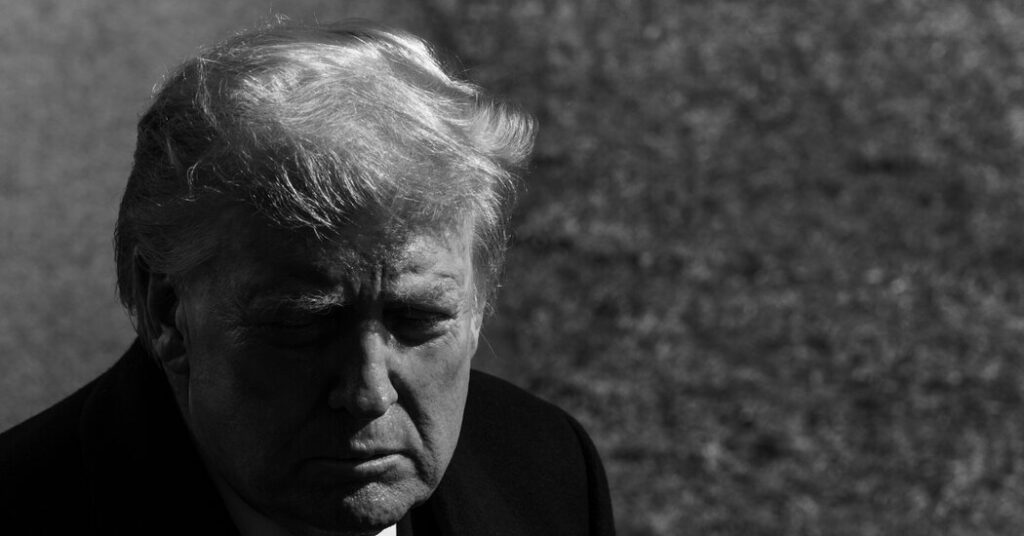
This time, they misjudged the president.
The path to today began in 2020, when President Trump made the decision to strike then Maj. Gen. Qassim Suleimani, an Iranian military leader who masterminded attacks against American people and facilities in the Middle East. Since his death, Iran has been unable to recover the coherence and purpose of General Suleimani’s proxy operations. Equally important, the strike established Mr. Trump’s credentials as someone who would not be in thrall to Iran. The president is the unique advantage we have in the region. For the first time in decades, American military power in the Middle East deployed against Iran is coupled with a commander in chief who isn’t afraid to use it.
For decades, the primary goal of Iranian statecraft has been regime preservation. The generation of the 1970s, though aging, still aims to pass the torch at home and export it abroad in the form of militant Shia Islam. Iran’s leaders seem to believe that keeping the revolutionary fire alive is their biggest priority, and they respond only to direct and unambiguous pressure on the regime. During the Iran-Iraq war of the 1980s, for instance, Ayatollah Ruhollah Khomeini, then the supreme leader, “drank from the poisoned chalice,” as he put it, and accepted a truce with Iraq under adverse circumstances to preserve the clerical regime in Iran.
This weekend’s American and Israeli strikes apply more direct pressure than the regime has faced at almost any time in its history. The death of the supreme leader, Ayatollah Ali Khamenei, is a profoundly significant event. Our forces will continue to hit regime targets inside Iran and simultaneously reduce its ability to respond. The military does this by striking leadership nodes and by seeking out and destroying Iranian missile storage areas, transporters and launch sites. We have practiced these missions for years.
The early Iranian responses against our bases and cities in the region were almost certainly prearranged, with local commanders given the authority to open fire in the event of an attack. It will almost certainly get increasingly hard for the Iranian military to continue this pressure, particularly as condemnation of Iran continues to flow in from Saudi Arabia, the United Arab Emirates, Bahrain, Qatar, Jordan and other states.
On the so-called escalation ladder — the concept war planners have used for decades to evaluate how a conflict might evolve — Iran still has options, but they are all at the low end. At the high end of the escalation ladder, all of the options are ours.
Iran can use asymmetric tactics to fight back. Among the most radical would be to mine the Strait of Hormuz, which it has the capability to do. This would block global energy traffic and spike oil prices, and would take some time to fix. Tehran could also unleash its global terror network, which, while depleted since Oct. 7, 2023, still exists and can reach well beyond the region, including into the United States.
These are real risks to the global economy and America’s national security. So what are our goals?
It’s become a platitude in Washington to say that regime change in Iran is impossible because the current leadership has removed all possible alternatives in the most brutal ways imaginable. There may be some truth in this observation, but we should be humble when it comes to our ability to predict the longevity of totalitarian regimes under pressure. Few saw the Syrian collapse coming. Sustained, lethal pressure on the regime may provide an avenue for alternatives to emerge. Or it might survive.
One thing is certain: Without pressure, nothing will change. There is opportunity in the death of the supreme leader. We should not squander this moment, when Iran is uniquely weak and vulnerable and we hold all of the advantages — literally.
We can also seek to return to negotiations. If we do so, it should not be a dialogue of equals. It should be between the victor and the vanquished. We should require Tehran to accept an end to its nuclear program; limitations on ballistic, cruise and land-attack missiles; limits on proxy forces; and, lastly, a declaratory policy that recognizes Israel’s right to exist. I would prioritize Iranian political reform below any of these objectives, but it may not be possible to attain them without reordering the Iranian leadership. This may be easier now that Ayatollah Khamenei is no longer in charge.
Opting for war is never an easy decision, and I know from personal observation that Mr. Trump does not seek a prolonged conflict with Iran. I do believe that there are worse things than war, though — continued Iranian exportation of terror across the region and maltreatment of Iran’s own people, to name a few. This military campaign may allow us to find a path forward to long-lasting peace in the region, and with the death of the supreme leader, an opportunity for representative government in Iran.
Gen. Kenneth F. McKenzie Jr. is a retired Marine. He was the 14th commander of U.S. Central Command.
The Times is committed to publishing a diversity of letters to the editor. We’d like to hear what you think about this or any of our articles. Here are some tips. And here’s our email: [email protected].
Follow the New York Times Opinion section on Facebook, Instagram, TikTok, Bluesky, WhatsApp and Threads.
The post Iran Got Trump All Wrong appeared first on New York Times.