America’s continuing economic prosperity depends on stability in Asia, underwritten by the U.S. Navy protecting the freedom of navigation, but that’s coming under threat as a rising China eyes domination of the Pacific Ocean. With America stretched thin by its commitments across the world, including the war that began this weekend in Iran, the Japanese are getting serious about sharing more of the security burden in the region. This is great for both countries.
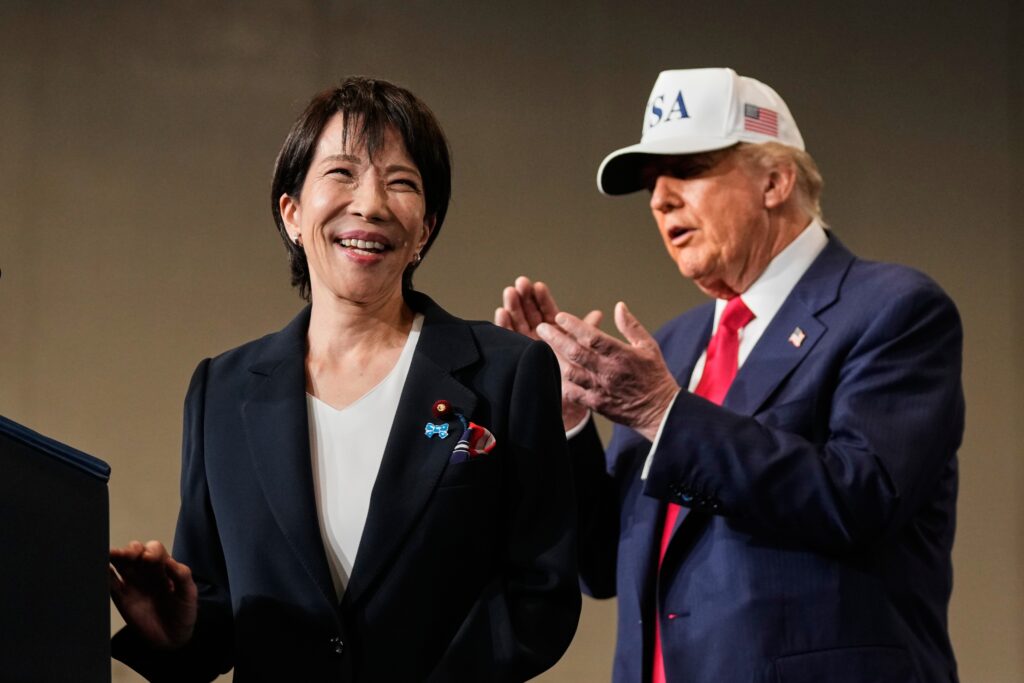
Japanese Prime Minister Sanae Takaichi hasn’t wasted any time since her party’s landslide election victory last month to start formalizing a new defense posture that promises to make the Pacific more secure. Out with Japan’s postwar pacifism and self-restraint. In with a modern worldview that recognizes an aggressive China as the region’s greatest threat and takes concrete steps to deter it.
The Japanese say their strategic shift aligns with President Donald Trump’s “Donroe Doctrine,” as outlined in the National Security Strategy, which puts the onus on each region to take primary responsibility for its own security.
Hudson Institute research fellow Zineb Riboua argues that Japan stands to benefit as much from the fall of the Iranian regime as any other country because of how much it threatens to weaken China’s access to oil and ability to evade sanctions. “The railway network that promised to free Beijing from dependence on the very maritime chokepoints Japan and the United States dominate is now indefinitely deferred,” writes Riboua. “Every month that corridor remains inoperable is another month the Malacca Strait retains its strategic centrality, and another month Japan’s geographic position astride the Western Pacific sea lanes appreciates in value.”
Takaichi is accelerating an earlier pledge to spend 2 percent of Japan’s gross domestic product on defense and will hit that target in the coming weeks. She just announced the formation of a National Intelligence Bureau to more efficiently assess threats, an anti-espionage law and a new vetting process for foreign investment similar to what the U.S. has with CFIUS, the Committee on Foreign Investment in the United States. All of this will help counter Beijing.
The prime minister also announced plans to amend Japan’s pacifist constitution and officially recognize the Self-Defense Forces as what it really is: a military. (She’ll need a referendum for that.) Takaichi plans to lift long-standing export bans to allow Japan to start sending lethal military equipment to allies. With a new supermajority in parliament, all these actions are expected soon.
She’s also shoring up Japan’s military alliances. Japan is looking to send retired destroyers and surface-to-air missiles to the Philippines, combat-capable drones to Fiji and small arms and coastal defense systems to Papua New Guinea.
China is the biggest loser from all this cooperation. Ironically, it was Beijing’s belligerence and bullying that helped Takaichi solidify her domestic standing. After she acknowledged a Chinese attack on Taiwan would amount to an existential crisis for Japan, implying Tokyo might assist Taipei, China reacted furiously with crude threats, economic boycotts and warning Chinese tourists not to visit. The bullying backfired, and voters rewarded her Liberal Democratic Party with one of its largest majorities in postwar history. The electoral mandate is significant because it shows that the people of Japan are bought in and ready to lead.
The post China’s bullying has Japan up in arms appeared first on Washington Post.