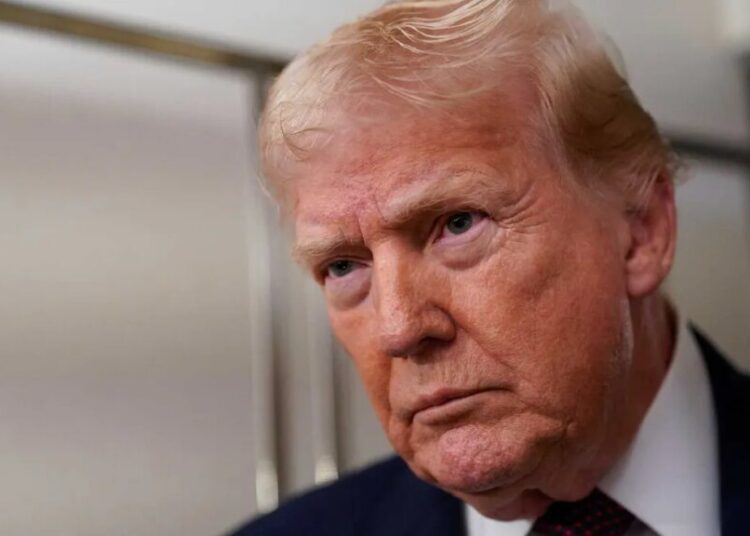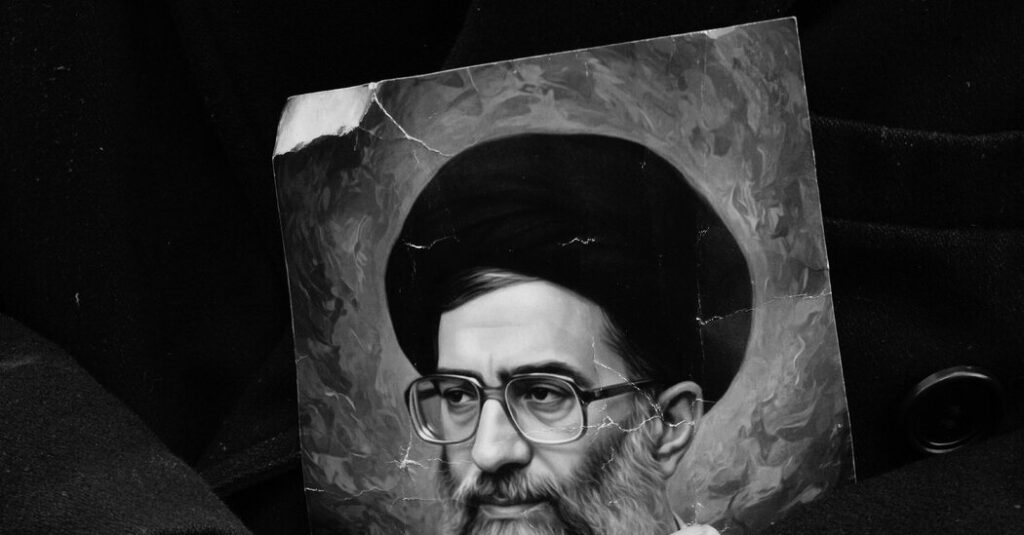
Ayatollah Ali Khamenei governed Iran with the vigilance and brutality of an autocrat convinced that his own people and the world’s superpower sought to unseat him — and in the end, they did. With President Trump’s announcement that Ayatollah Khamenei, the 86-year-old supreme leader, was killed in joint American and Israeli airstrikes on Saturday, his reign has come to a close, cementing a lost half-century for his nation. As the Middle East confronts an unpredictable void, let us be clear: No one should mourn the death of a dictator who spent decades inflicting misery and bloodshed.
Ascending to power in 1989, Ayatollah Khamenei organized his existence around an obsession with the West. As a ruler, he squelched dissent, labeling demands for reforms as Western “sedition,” and expanded the intelligence apparatus of the Islamic Revolutionary Guards Corps to repress his own people. He impoverished his citizens to bankroll foreign interventions and a nuclear program that brought Iran only isolation. When faced with citizens’ protests, he answered with force, including the slaughter of thousands earlier this year. Abroad, his legacy is one of destabilization, having constructed a so-called axis of resistance across Gaza, Iraq, Lebanon, Syria and Yemen.
It is natural to hope that the decapitation of this regime could lead to the end of Iran’s theocracy. Yet it is also important to consider the context — and the long-term risks that it creates for both Iran and the United States.
The regime that Mr. Trump seeks to topple has its own roots in American intervention in Iran. It rose to power in 1979 with assistance from widespread anger over a 1953 coup that the C.I.A. helped organize with the corrupt U.S.-backed shah who subsequently consolidated his power. Now Mr. Trump, working with Israel, Iran’s most bitter enemy, has overseen the assassination of the country’s leader. He has done so without explaining his strategy for the future and without the support of almost any other ally. And there are reasons to worry about what comes next.
There exists no Iranian opposition group of any stature, which creates deep uncertainty about what comes next. Ayatollah Khamenei had a succession plan that favored clerics, but U.S. intelligence officials have assessed that the power vacuum could result in hard-line factions of the Revolutionary Guards seizing control. The risks of civil war, internal slaughter and regional instability are profound.
Mr. Trump’s approach to foreign policy offers little reason to believe he will prioritize Iran’s stability. So far in his second term, he has ordered military attacks in seven nations. Only two months ago he removed Venezuela’s dictator, Nicolás Maduro, but left Mr. Maduro’s deputies in power while abandoning an opposition party with widespread public support. Mr. Trump’s approach to Iran has been similarly impulsive. Announcing a military campaign in a video at 2:30 a.m. on Saturday, he claimed that Iran presented “imminent threats” without offering evidence.
The president still has not offered an explanation for why this campaign will end any better than the 21st-century regime change efforts in Iraq and Afghanistan did. Those wars also toppled governments. Yet their disappointing, bloody legacies left Americans understandably skeptical of open-ended military operations.
Amid the chaos this strike will cause in Iran, Americans should brace for the possibility of retaliation. True, Iran has failed to exact almost any meaningful damage on the United States in recent years, and its military has been degraded. But it maintains an arsenal of missiles capable of overwhelming defense systems, and this weekend it hit a U.S. Navy base in Bahrain, among other targets in the region. Iran may also be capable of launching cyberattacks and proxy strikes against American forces and allies.
The bigger risks may lie in the future. The president of the United States has just helped assassinate a foreign leader without the approval of Congress, the support of most allies or a plan for the future. History suggests that unilateral American involvement along these lines often has consequences that are not immediately apparent. When American officials helped orchestrate the 1953 coup, they surely did not imagine that they were planting the seeds for the Middle East’s most radical anti-American government.
Managing the future in Iran will require thoughtfulness, attention and international cooperation. We urge Mr. Trump to work with Congress, but at this point we have little expectation that he will. Given this reality, Congress should play a leadership role; lawmakers from both parties are right to demand briefings and force a debate on war powers to ensure the president is constrained and held accountable.
Finally, the United States cannot navigate the uncertainty alone. The Trump administration, which has frequently treated our allies with scorn, should bring international partners into the fold, too. Confronting a post-Khamenei Iran requires strategic clarity and a global coalition, not isolated decision-making.
For decades, the Iranian people have sacrificed greatly for the prospect of a more open society. After enduring years of autocracy and international isolation, they deserve the opportunity to chart a freer, more stable future.
The Times is committed to publishing a diversity of letters to the editor. We’d like to hear what you think about this or any of our articles. Here are some tips. And here’s our email: [email protected].
Follow the New York Times Opinion section on Facebook, Instagram, TikTok, Bluesky, WhatsApp and Threads.
The post A Tyrant Falls. Dangerous Uncertainty Begins. appeared first on New York Times.