U.S. intelligence agencies produced multiple scenarios in recent weeks of what could happen in Iran after a joint U.S. and Israeli strike designed to kill senior leaders and weaken the current government.
But one of those scenarios suggested that a complete change in government was unlikely. Instead, it said, members of Iran’s Islamic Revolutionary Guards Corps were likely to assert a larger degree of control but might be willing to curb the country’s nuclear program or take a more conciliatory stance to the United States.
In striking Iran on Saturday and urging its citizens to rise up and replace its government, President Trump was judging that he could engineer an outcome that would be beneficial in the long run to the security of the United States and Israel. But in doing so, he set in motion events that could be hard to control and that could leave Iran in chaos for some time.
In a video released after the U.S.-Israeli strike, Mr. Trump said the current attack was the best chance for the Iranian people to take over their government.
Many questions remain about how much effort the United States will put into changing the Iranian government. Without any troops in Iran — which the Trump administration has said it wants to avoid — the U.S. ability to influence what comes next is limited, according to people briefed on the intelligence and planning for the strikes.
The intelligence assessments ahead of the strike considered the likelihood of multiple scenarios playing out after a strike designed to weaken the current leadership. And U.S. officials stressed that the joint strike on leadership targets and military sites in Iran had created a high degree of uncertainty around all of the potential scenarios.
But intelligence agencies believe the organized opposition in and outside Iran remains relatively weak.
People briefed on the intelligence said that if Iran’s supreme leader, Ayatollah Ali Khamenei, was killed in the operation, whatever religious leader formally takes over would be a hard-liner. But it is unclear how much influence that person would have. Late Saturday afternoon, Mr. Trump announced the ayatollah’s death.
Some American officials believe that leaders outside the religious chain of succession would take a more tempered approach to the United States and Israel in the wake of a massive strike — and be willing to give up Iran’s nuclear program. In this scenario, real power would lie with the remaining Revolutionary Guards leaders, who could be more likely to take a compliant stance, focused on maintaining their economic interests and control of the country, and less focused on attacking the United States or Israel.
But Mr. Trump’s comments to Iranians on Saturday went far beyond predictions of a more compliant theocratic leadership.
“Bombs will be dropping everywhere,” Mr. Trump said. “When we are finished, take over your government. It will be yours to take. This will be probably your only chance for generations.”
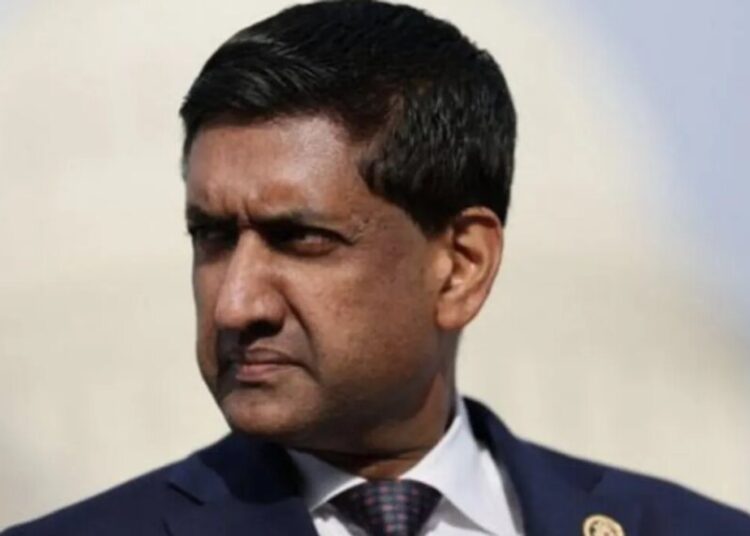
Senator Mark Warner of Virginia, the top Democrat on the Senate Intelligence Committee, said the U.S. government had poor visibility into Iranian opposition groups and their strength.
“I have seen no new intelligence that changes the fact of how complicated regime change would be,” Mr. Warner said in an interview.
Mr. Warner said he thought any potential successor to Ayatollah Khamenei would probably be a hard-liner. And while the ayatollah has been unwilling to give up his nuclear enrichment program, Mr. Warner noted he had not decided to build a nuclear weapon, a decision a successor could change.
“Khamenei was invested in the nuclear program, but held the line against full weaponization,” Mr. Warner said.
Mr. Warner also said he did not understand why Mr. Trump was pushing for regime change at this moment.
“Do we want to see the Iranian regime change?” Mr. Warner said. “Yes, but why now versus January, versus May? Other than the fact that the president created this quasi red line of calling on the Iranian people, saying, ‘Don’t worry we will be there.’ Then it took him two months to get his armada there.”
In late January, Mr. Trump said that a “massive Armada” was heading toward Iran as he intensified threats against the country.
Mick Mulroy, a former Pentagon official who oversaw Middle Eastern defense policy in the first Trump administration, said the president was taking a big risk in calling for Iranians to rise up against their government.
“This is by definition an existential threat and the regime will brutally repress it,” Mr. Mulroy said. “More brutal than before.”
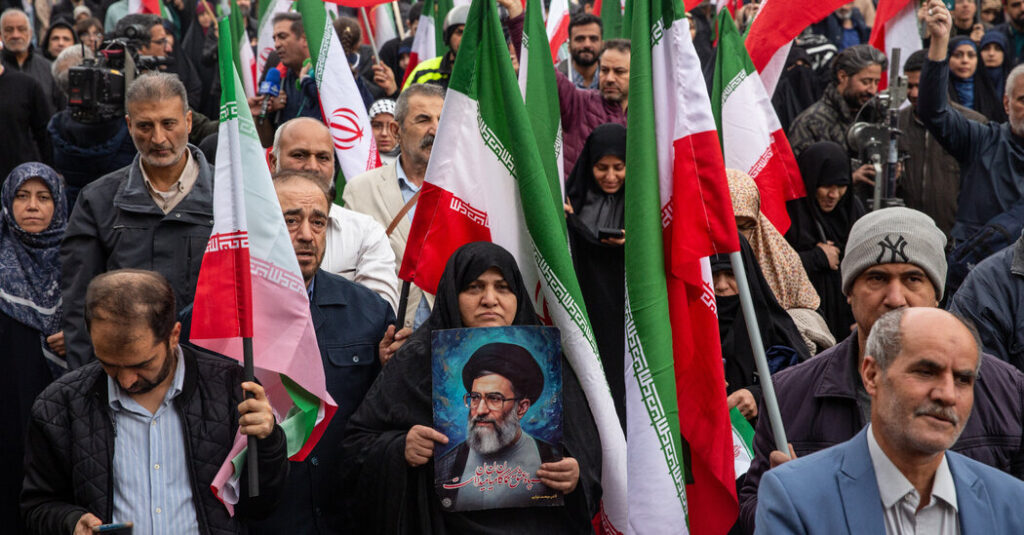
For now there is little public evidence the attack will lead to an immediate uprising.
Jonathan Teubner, the chief executive of FilterLabs, which uses social media and internet postings to study shifts in attitudes, said the attack on Iran was creating a “textbook rally-around-the-flag effect.”
Studying Iranian posts on the social media platform Telegram and Gap, an Iranian messaging app, FilterLabs saw promises of retaliation and threats against American regional bases and Israeli population centers. While such sentiments align with Iranian government messaging, they were amplified across a wide array of social media postings.
“The key question is whether this rally-around-the-flag effect bleeds off,” Mr. Teubner said. “The gap between defiant promises and lived reality could become a political liability for the current Iranian regime. But right now, Washington and Jerusalem should not expect an immediate uprising.”
Other experts agreed, and said the Tehran government has staying power.
“Something tells me that this won’t be the easy regime-overthrow war Trump & Bibi have promised,” Alireza Nader, a former researcher at Rand and the Foundation for the Defense of Democracies, wrote on social media. “I hope I’m wrong, the sooner this regime goes the better. But I wonder if US-Israel war planners are underestimating the regime’s resilience and its ability to inflict major pain on all sides involved.”
Julian E. Barnes covers the U.S. intelligence agencies and international security matters for The Times. He has written about security issues for more than two decades.
The post U.S. Ability to Determine What Comes Next in Iran Might Be Limited appeared first on New York Times.