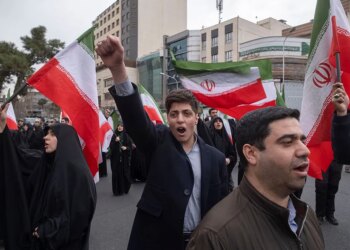
Even for a man with such a tenuous hold on the truth, Donald Trump may come to regret his justification for going to war with Iran.
More than anything else, the president is consumed with his legacy.
But history may well remember Trump very differently than he hopes. Not for his Big War but for his Big Lie.
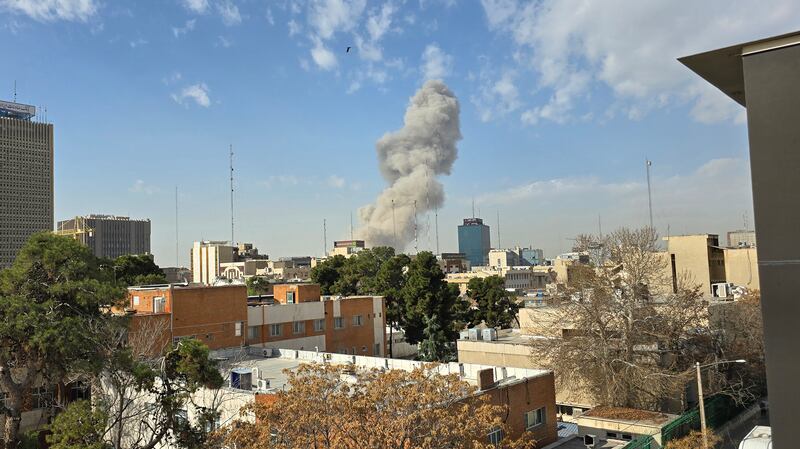
Trump’s suck-up MAGA cheerleader Lindsey Graham has suggested the attacks on Tehran will be Trump’s “Cold War Moment,” comparing him to Ronald Reagan.
But the president he will likely be compared to is George W. Bush, who waged war on Saddam Hussein on the basis of another whopper—that Iraq had a hidden stash of weapons of mass destruction.
That war would claim more than 4,500 American service members’ lives, with another 31,000 injured. All based on a lie.

Trump went to war with Iran on Saturday based on not one lie, but two.
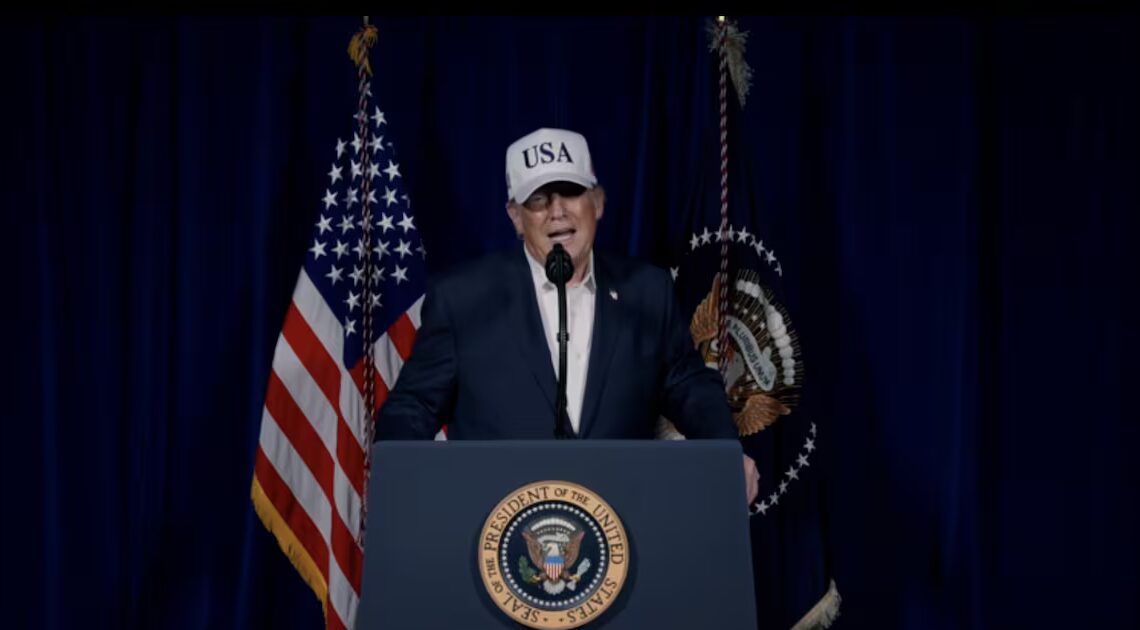
Announcing the strikes in an early morning video from Palm Beach, Florida, on Saturday, the president said his motive in attacking a foreign power—without any authorization from Congress—was to eliminate “imminent threats” to the United States and its allies from Tehran.
The only clue to these threats was Trump’s doomsday warning about the possibility of nuclear strikes. He accused the regime of “developing long range missiles that can now threaten our very good friends and allies in Europe, our troops stationed overseas, and could soon reach the American homeland.”
In June last year, Trump was insistent—vitriolically so—that a joint Israeli-U.S. strike on Iran’s nuclear capabilities had “obliterated” its enrichment efforts.
The White House declared the world was “much safer” after the strikes.
“Bullseye!” the president celebrated, saying that “monumental damage” had been done. “Obliteration is an accurate term!” he boasted.
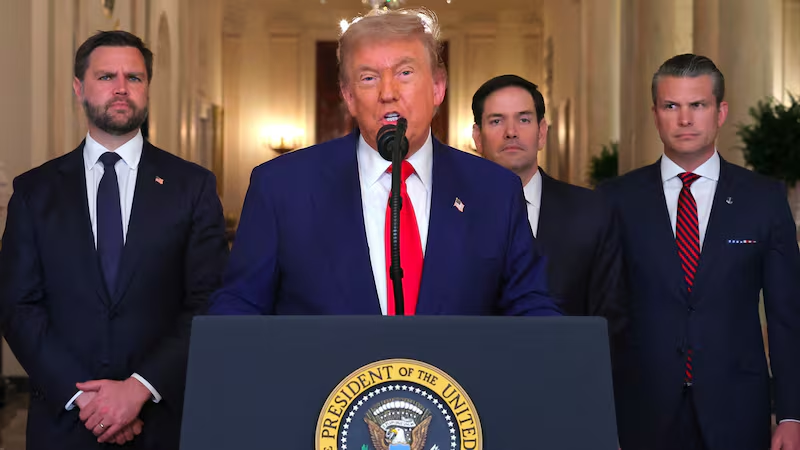
“I can say to the American people with great confidence that they are much further away from a nuclear program today than they were 24 hours ago,” added Vice President JD Vance.
When the veracity of the president’s claim was questioned, Trump threatened to sue CNN and The New York Times over reports that intelligence suggested some of the nuclear material was saved.
He also tried to get one of the CNN reporters fired. He was adamant. The danger was over. The world was safe. All thanks to Donald J. Trump.
Doubling down, as ever, Defense Secretary Pete Hegseth barked back at the time: “Based on everything we have seen—and I’ve seen it all—our bombing campaign obliterated Iran’s ability to create nuclear weapons. Our massive bombs hit exactly the right spot at each target and worked perfectly. The impact of those bombs is buried under a mountain of rubble in Iran; so anyone who says the bombs were not devastating is just trying to undermine the President and the successful mission.”

“Overall, it may possibly take years for Iran to reconstitute the capabilities it lost at these facilities,” the White House quoted Institute for Science and International Security senior research fellow Spencer Faragasso.
Eight short months later, Trump is using Tehran’s nuclear threat as his reasoning to go to war.
Bush, an honorable man, could at least claim he was misled.
Experts say there is no “imminent threat” if the damage last June was anything close to what Trump has claimed.
“It is clear that the U.S. cannot claim to have acted in its own defense,” said professor Marc Weller, director of the international law program at the independent policy institute Chatham House.
“It is alleged that Iran may derive an intercontinental ballistic missile capacity from its ongoing space program within a decade. However, it does not at present have the capacity to mount an intercontinental attack against the U.S. There were also no imminent threats of Iranian offensive action against US assets in the Middle East.
“After the strikes against Iran of last June, President Trump confirmed that Tehran has lost its capacity to pose a nuclear threat, at least in the mid-term. Even if Iran had the ability to reconstitute its nuclear program over time, there was no imminent threat requiring a military response at this time.”
“There’s a huge gap, I think, between where they are now and their ability to have anything that reaches the United States,” Rosemary Kelanic of the foreign policy think tank Defense Priorities told The Wall Street Journal.
There may be a legitimate case for military action against Iran. They are, indeed, the world’s number one sponsor of terrorism, and the ayatollah’s regime does represent a danger to the West.
But Trump hasn’t offered one.
Let’s not forget that the Islamic Revolution in 1979 was fueled by the corrupt and autocratic rule of the Shah years. It’s a complicated region with a very long history of conflict that I doubt Trump has truly considered.
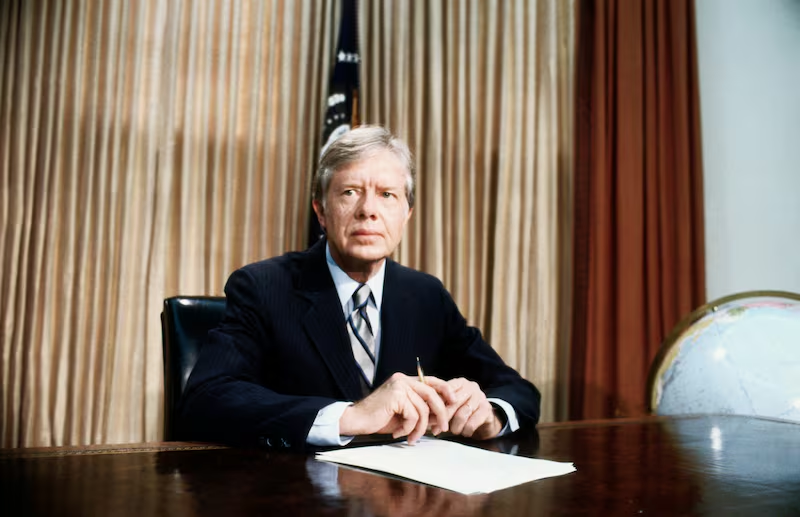
Jimmy Carter was widely believed to have been too patient in dealing with the Iranian hostage crisis in 1979, when 66 Americans were taken hostage in Tehran. Carter’s diplomatic approach probably cost him a second term.
Trump could never be accused of that.
His military action in Iran may even be successful. He does, after all, have America’s military might at his disposal, and he appears to have no qualms in using it, unlike some of his predecessors.
But it will be based on not one lie, but two.
He, may, indeed, win the war.
But he has already lost the trust of many Americans, and he is using falsehoods to justify a war on a foreign power.
And that may lose the trust of his core support.
We may be not just be seeing the end of Iran’s regime.
We may be seeing the end of MAGA.
The post Opinion: Why Donald Trump’s Iran War Is One Big Lie on Top of Another appeared first on The Daily Beast.