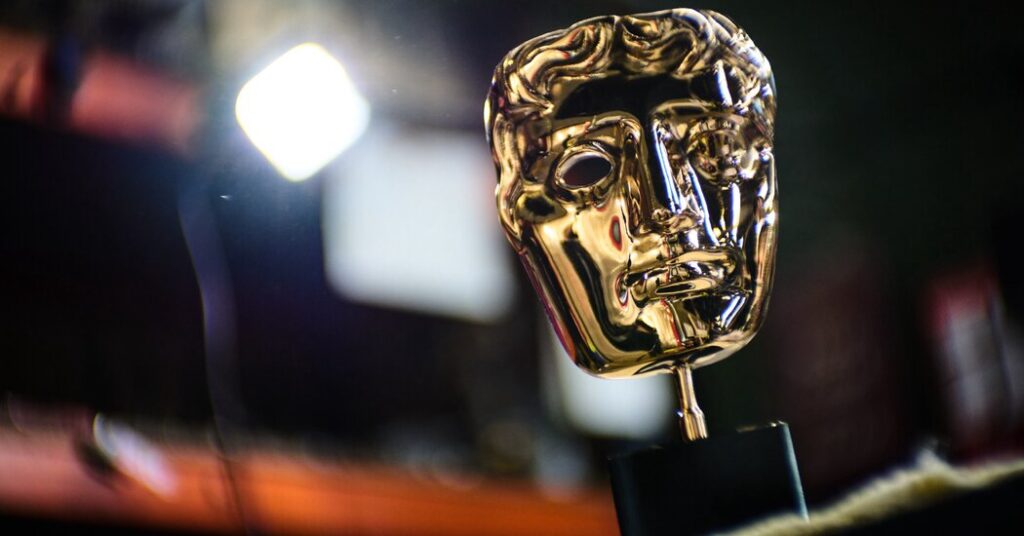
As the BAFTA movie awards were about to begin this past Sunday in London, the floor manager gave a special preshow announcement to the celebrity audience. Among the guests at the event, Britain’s version of the Oscars, was John Davidson, the inspiration behind the movie “I Swear,” which had been nominated for numerous awards.
“John has Tourette’s syndrome,” the official said, “so please be aware you might hear some involuntary noises or movements during the ceremony.”
The announcement did not explain more about Tourette’s, including that it can cause Davidson to shout racist, sexist and other offensive remarks involuntarily.
Already backstage were Michael B. Jordan and Delroy Lindo, two of the stars of “Sinners,” a vampire movie set in the Jim Crow South. Minutes later, as Lindo and Jordan, who are Black, presented the night’s first award, Davidson, who is white, shouted a racist slur.
Lindo briefly paused, his eyes wide. About two hours later, the BBC broadcast the moment — with the audible slur — to a global audience.
The failure of the British Academy of Film and Television Arts, which organizes the awards, to explain Davidson’s condition fully to the show’s audience and its presenters — and of the BBC in broadcasting the racist slur — has cast a shadow over the awards ceremony. In particular, Black people and people with Tourette’s have been grappling with the ugly language and the fallout from a night that was supposed to be a celebration.
Other opportunities to explain Davidson’s condition to the presenters were not taken. According to two people who work with some of the ceremony’s three dozen presenters, Davidson and Tourette’s were not raised at all in their planning discussions before the awards, or during backstage preparations that night.
The British Academy of Film and Television Arts and the BBC declined interview requests.
During the ceremony, the host Alan Cumming apologized twice to the audience for the “strong language” from Davidson. On Tuesday, BAFTA, as the academy is known, sent a letter to its members saying that it had informed the audience of his tics.
“We take the duty of care to all our guests very seriously and prepared extensively in order for John to be able to be present,” the letter said.
The furor has tarnished the reputations of BAFTA and the BBC, with British lawmakers demanding an explanation for why the slur was aired. It has also left people surprised at how Sunday’s ceremony unfolded despite years of promises by BAFTA that diversity was more than a watchword.
Clive Chijioke Nwonka, who studies diversity in British moviemaking at University College London, said the incident showed that Black people might be visible in the country’s film industry but were not really “being recognized.”
Jess Thom, a performer who has Tourette’s, said that “an institutional lack of care” had been shown toward Jordan, Lindo, Davidson and “and other people that were impacted not onscreen.”
“We live in a world that wants our stories but doesn’t want to accommodate the reality of our bodies or our lived experiences,” Thom added.
Tourette’s syndrome is a neurological condition that starts in childhood and causes involuntary tics, including movements and vocalizations. About a fifth of people with the condition also have coprolalia, meaning that they make obscene and offensive remarks.
Davidson, who has a severe form of the condition, detailed in his autobiography, “I Swear: My Life With Tourette’s,” how debilitating the condition can be, increasing the risk of arrest, bullying and social isolation.
During the BAFTAs, his shouts included about 10 different offensive words, including an anti-gay slur when Cumming was talking about Paddington Bear.
“When socially unacceptable words come out, the guilt and shame on the part of the person with the condition is often unbearable and causes enormous distress,” Davidson told Variety after the ceremony, from which he left of his own accord.
Nick Bullen, the executive producer of this year’s awards show for Penny Lane TV, said in an interview that the team editing the broadcast did not hear Davidson’s racist slur when Jordan and Lindo were onstage.
But about seven minutes later, Bullen said, the team heard Davidson shout the same slur around the time when Wunmi Mosaku, who is Black, was receiving her best supporting actress prize for “Sinners.” The team edited that slur out of the broadcast.
A few minutes later, Bullen recalled, a member of the BAFTA team sent a message to a WhatsApp group noting that Davidson had used the racist term. The editing team assumed it had already dealt with the problem.
BAFTA has hosted people with Tourette’s at its ceremonies before. Thom said she had numerous discussions with the organization before she attended its 2023 television awards as a nominee, asking that the audience and presenters be told about her condition in advance.
Kirk Jones, the writer and director of “I Swear,” said in an interview that he knew “a lot of preparation went into the evening” to make sure that Davidson could attend the ceremony and that he and the other guests could feel as comfortable as possible. “There were meetings, there were Zooms,” Jones said.
The final agreements with BAFTA, Jones said, included letting Davidson sit near an exit far from the stage, with two seats to his right left empty to eliminate the risk that he would involuntarily hit someone. Jones said the organization also agreed, with Davidson’s permission, to announce his condition to everyone before the event.
In the Variety interview, Davidson questioned why there was a microphone near his seat. But Bullen said the microphone had not been used to amplify sound but to monitor the loudness in the room.
Jones said it perhaps would have been a good idea for BAFTA to have given written information about Davidson’s condition to every nominee, and to have asked presenters if they were comfortable being in a situation where no one knew what he might shout.
“Hindsight is an incredible thing,” Jones said.
BAFTA has had controversies involving race before, especially in 2020 when every nominee for the main acting awards was white. “I think that we send a very clear message to people of color that you’re not welcome here,” Joaquin Phoenix said onstage while accepting his best actor award that night. Shortly afterward, the organization introduced reforms to improve diversity.
The BBC has called the broadcast of the racist slur “a serious mistake” and announced an internal investigation. Kate Phillips, its chief content officer, sent an email to staff members apologizing for the incident.
For the people who have been hurt, the damage is already done.
Thom said the uproar had also distracted from a night of breakthroughs at the BAFTAs, where “I Swear” won two awards, including the best actor prize for Robert Aramayo’s portrayal of Davidson. “Sinners” became the most decorated movie by a Black director, with three awards, including original screenplay for the writer and director Ryan Coogler.
“We’re all talking about this,” Thom said, “and not the historical achievement of ‘Sinners’ and all the other creatives in that room.”
Esther Zuckerman contributed reporting.
Alex Marshall is a Times reporter covering European culture. He is based in London.
The post How the BAFTAs Bungled Its Big Awards Night appeared first on New York Times.