It was a Hollywood battle royal, one filled with feints, bruised egos, strategic leaks, boardroom intrigue and old guard vs. new guard tension. And when a winner finally emerged — David Ellison, the young tech heir, wrested Warner Bros. Discovery from Netflix on Thursday — it was not the outcome that many people in the entertainment capital were hoping for.
It certainly didn’t prompt celebration in the ranks of the Warner Bros. movie and television studio.
There were a lot of grim faces, one senior Warner Bros. film executive said on Friday, speaking on the condition of anonymity to avoid conflict with Mr. Ellison. The executive said employees were now bracing for what Mr. Ellison has called $6 billion in “synergies” between his company, Paramount Skydance, and Warner Bros. Discovery, in other words cutting duplicate departments. Even the guards at the Warner gates seemed sad, the executive said.
“Merging with Paramount Skydance is like a shotgun wedding with your dumb cousin: I fear for the health of the kids,” Gregory Orr, a film and TV producer, told a Hollywood trade publication. Mr. Orr, who is the stepgrandson of Jack Warner, a co-founder of Warner Bros. in 1923, added that Netflix had its drawbacks yet offered the studio “the strongest opportunity to thrive.”
But wait: Didn’t Hollywood loathe the notion of Netflix’s getting its hands on Warner, the greatest of the old-line studios?
Yes. And then no.
In December, when Netflix made an $83 billion offer for the studio and HBO, moviedom had a meltdown. Such a deal would surely be a death blow to the film business, the thinking went, because Netflix would almost certainly reroute Warner films to streaming. At the very least, Netflix would shorten theatrical “windows,” the exclusive period given to theaters to play movies, weakening the consumer incentive that props up the traditional movie business.
Ted Sarandos, Netflix’s co-chief executive, instantly embarked on a whistle-stop tour to ease those fears — and largely succeeded, especially inside Warner. For months, Mr. Sarandos told anyone who would listen that his past disdain for theaters (“an outmoded idea for most people”) was misunderstood. And he repeatedly promised to protect Warner’s theatrical business.
“We will run that business largely like it is today, with 45-day windows,” Mr. Sarandos told The New York Times in January.
By mid-February, sentiment inside Warner had cemented: We don’t want to be bought by anyone, but we’d rather work for Netflix than Mr. Ellison.
Netflix, at least, had a winning brand. Mr. Ellison was pursuing Warner Bros. Discovery as part of an attempt to resuscitate a battered Paramount, which he purchased for $8 billion in August.
Netflix, at least, would not emerge with a staggering amount of debt. Paramount Skydance will carry an estimated $90 billion in debt if its deal for Warner Bros. Discovery closes.
Netflix had vowed to leave HBO alone, with Casey Bloys, HBO’s powerful chairman, reporting directly to Mr. Sarandos. Paramount has not said whom Mr. Bloys might report to — or whether HBO and Paramount+ would combine or remain separate apps. Cindy Holland is Paramount Skydance’s “direct to consumer” chair, running Paramount+ and another streaming service, Pluto. (Mr. Bloys could have some leverage on this: He has a five-year contract that expires next year.)
Importantly, Netflix did not already own a movie studio, meaning that many more people would probably keep their jobs in a merger. Mr. Ellison has publicly pledged to keep both Warner and Paramount as distinct movie operations, with each releasing 15 films annually. But he has also estimated $6 billion in cost savings, which almost certainly means widespread layoffs. (Netflix had argued that Paramount would need to find closer to $16 billion in savings to manage its debt load.)
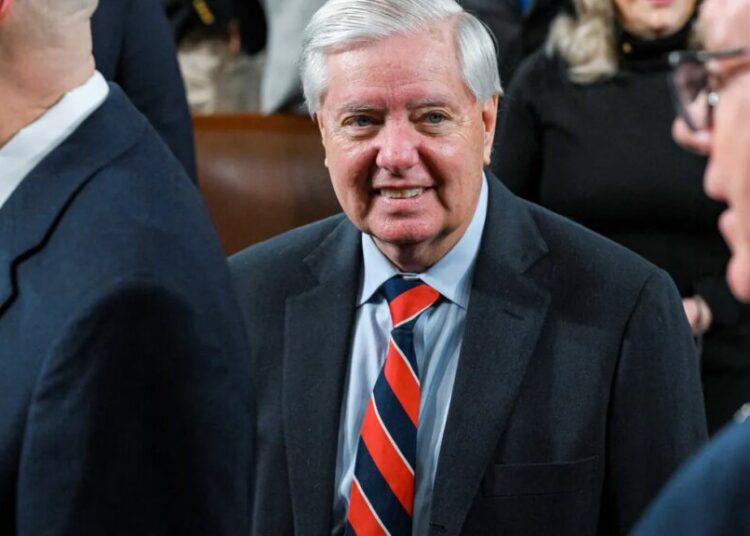
And Netflix had not cozied up to President Trump to quite the same degree that Mr. Ellison had. Senator Lindsey Graham of South Carolina, a key Trump ally, boasted on social media this week that Mr. Ellison was his guest at the president’s State of the Union address, prompting some liberal Warner executives to exchange scathing text messages about Mr. Ellison.
At least one person at Warner was smiling on Friday, however: David Zaslav, the company’s chief executive.
After years of being a punchline in some corners of Hollywood, Mr. Zaslav managed to sell the company for $111 billion, a feat that would have been unthinkable even six months ago. The sale to Paramount values Mr. Zaslav’s shares and his other outstanding equity in Warner Bros. Discovery at roughly $790.5 million, according to an analysis from Equilar.
Yet even he acknowledged on Friday morning that Paramount’s sudden victory was an “abrupt ending.”
“Even for us, the speed, it feels a little whiplash-y,” he said at a virtual meeting with employees, according to a recording of his remarks reviewed by The Times. Mr. Zaslav sought to reassure the employees, telling them to take the weekend to “take a deep breath and try to absorb this fast pivot.”
He said the deal would take six to 18 months to close. (Paramount Skydance believes it can close by the end of September.) Mr. Zaslav offered no specifics about what the sale would mean for various Warner divisions, though he said Paramount executives had “great excitement” about their plans.
Indeed, the happiest place in Hollywood on Thursday and Friday was unquestionably the senior executive suites at Paramount Pictures. As the news broke that Netflix had dropped its bid for Warner Bros. Discovery, paving the way for Paramount Skydance, “euphoria and adrenaline” swept through Mr. Ellison’s leadership team, according to one employee who was there. Someone opened a dusty bottle of Champagne that had been sitting on a bookcase and poured warm sips into paper cups.
Mr. Ellison, who was working from Skydance offices in Santa Monica, Calif., gave a brief speech via speakerphone, expressing appreciation for their work. (The celebration lasted only about 15 minutes, the person who was there said, with executives immediately turning to planning the next steps.)
The mood in the Paramount ranks was mixed. Some employees worried about yet another round of layoffs. (Mr. Ellison has already made deep cuts.) Others were encouraged that a period of uncertainty about the future of the company was over.
In the coming months, Mr. Ellison must sort through many personnel decisions, some of which could be awkward. Warner fired its movie marketing chief, Josh Goldstine, a year ago; Paramount hired him in October. Mr. Ellison jettisoned Mike Ireland as a senior Paramount film executive in August; a week ago, Warner hired him as president of production.
Brooks Barnes is the chief Hollywood correspondent for The Times. He has reported on the entertainment industry for 25 years.
The post Abrupt Change for Warner Bros. Prompts Many Grim Faces appeared first on New York Times.