Vanguard confirmed a $29.5 million settlement on Thursday with a coalition of Republican-led states that had accused the financial giant of conspiring with BlackRock and State Street to drive the coal industry out of business.
The agreement blocks Vanguard from supporting efforts to fight climate change. Vanguard agreed not to advocate that any company it invests in “take any particular course of conduct to reduce carbon emissions.” It also vowed not to join climate-action networks, such as Principles for Responsible Investment, which is supported by the United Nations and bills itself as “the world’s catalyst of responsible investment.”
The coal industry has been declining for years, edged out by far cheaper natural gas. But the burning of coal is still one of the top producers globally of carbon dioxide, the main greenhouse gas that is dangerously warming the planet. U.S. emissions increased last year amid a rebound in the coal sector, according to estimates by the research firm Rhodium Group. Rising demand for electricity for data centers has helped coal.
Vanguard’s settlement, in which it did not admit to any wrongdoing, concerns its U.S. index funds. A spokesman for Vanguard, Netanel Spero, said the company’s decision to resolve the matter “allows us to put this distraction behind us and focus on what matters — giving our investors the best chance for investment success.”
BlackRock declined to comment. A spokesperson for State Street said that the lawsuit remained baseless and that there had been no collusion.
The lawsuit, filed in 2024 in the U.S. District Court for the Eastern District of Texas, accused the investment firms of creating a “cartel” to buy up shares of coal companies, only to force them to drive down production. The aim, the complaint said, was to push what it called a climate agenda. The companies denied the accusations.
In a federal court in Texas in June, a lawyer for BlackRock, speaking on behalf of all three firms, told a judge that the claims in the lawsuit “defy economic reality.”
“The complaint ignores that the coal market has been declining for decades for a host of reasons well before this alleged conspiracy,” said Gregg Costa, a lawyer with the firm Gibson Dunn.
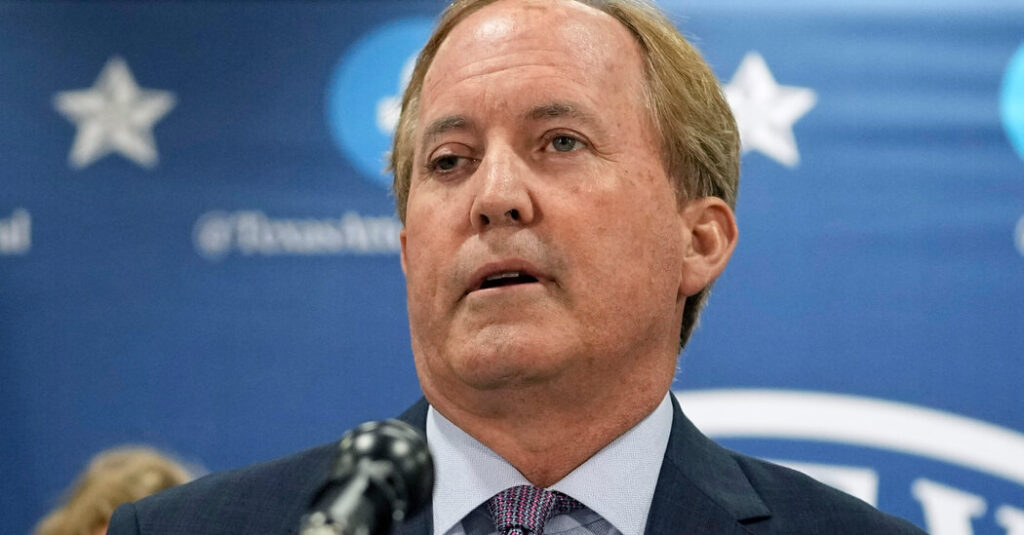
Ken Paxton, the attorney general of Texas who brought the lawsuit in 2024, said, “Coal is an essential industry to support America’s ever-growing energy demands, and my office will continue to uproot and destroy any attempt by investment giants to push a woke agenda that puts American energy at risk.”
The Justice Department and the Federal Trade Commission had filed a statement in support of the states’ lawsuit in May. “This case is about alleged anticompetitive conduct that increased energy prices for ordinary American consumers and businesses,” it said.
One of the possible solutions sought by Mr. Paxton and the other states was for the firms to divest from coal entirely, which had provoked concern, since cutting the coal sector off from the world’s biggest financial firms could hurt the industry.
Rick Perry, the former governor of Texas, called the lawsuit “misguided” in an op-ed in The Washington Times in August. “If successful, this lawsuit could force an estimated $18 billion in coal-related holdings off the books of these major asset managers,” he wrote.
There was no divestment provision in the Vanguard settlement, apart from a clause in which Vanguard said it wouldn’t use threats of divestment as a way to coerce company behavior.
In its announcement on Thursday, Vanguard highlighted its new “Investor Choice” program, which aims to give investors a more direct voice in proxy votes during corporate meetings. That allows an investor to choose, for example, whether or not to endorse E.S.G., or environmental, social and governance principles.
Mr. Paxton said that he was “glad to see that Vanguard has chosen to protect investors and become the industry leader when it comes to empowering investors with proxy voting choice.”
Karen Zraick covers legal affairs for the Climate desk and the courtroom clashes playing out over climate and environmental policy.
The post Vanguard Settles Case Claiming It Tried to Kill the Coal Industry appeared first on New York Times.