Iran and the United States concluded a six-hour round of negotiations in Geneva on Thursday with neither a diplomatic breakthrough nor an impasse on American demands that Tehran completely dismantle its nuclear program. Iranian officials and Omani mediators said the two sides had agreed to continue talking next week in an effort to avert war.
The officials described the marathon negotiations that were held in separate morning and evening sessions as positive and progressing. But it was notable that the two American negotiators, Steve Witkoff and Jared Kushner, remained silent about the current status of negotiations, with the White House declining to comment.
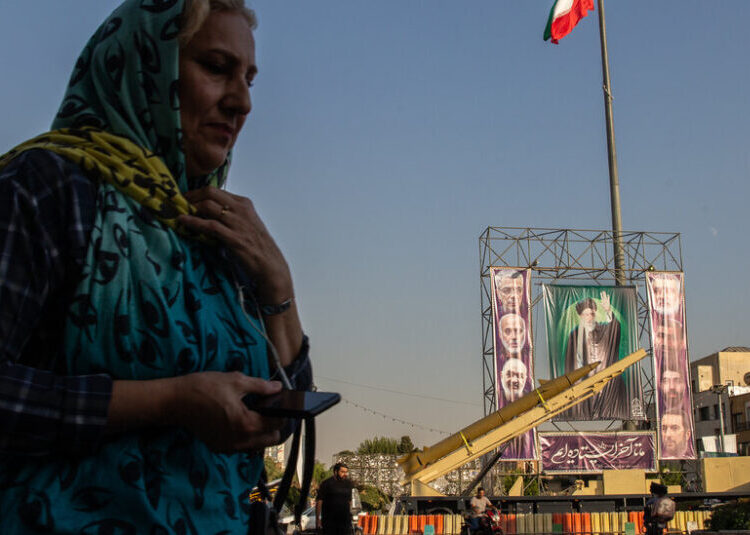
The talks came at a fraught moment, with a huge American naval force and hundreds of fighter jets, refuelers and antimissile batteries surrounding Iran, clearly ready for combat. Going into the talks, it appeared as if Tehran and Washington were teetering on the brink of war, with their publicly stated positions still far apart.
President Trump declared again during his State of the Union address on Tuesday that Iran cannot possess the ability to produce a nuclear weapon and must shut down its enrichment program. But he also cited its killing of thousands of protesters, its missile capability and its support for proxy forces like Hezbollah and Hamas to justify possible military action. None of those topics were under negotiation on Thursday.
Iran, in turn, has maintained that it has no intention of weaponizing its nuclear program but insists that, under the Nuclear Non-Proliferation Treaty, it has the right to enrich uranium for civilian purposes. It has said it would not give up that right, and so the negotiations focused on whether it might be able to retain a token nuclear enrichment capacity, designed entirely for medical uses at an aging nuclear reactor that the United States provided to the country nearly 60 years ago.
Oman’s foreign minister, Badr Albusaidi, said on social media that significant progress had taken place on Thursday, without offering further details. He added that technical teams would be part of the upcoming round of negotiations scheduled for Vienna and that the negotiating teams would meet after consultations with their capitals.
The inclusion of the technical teams — typically groups of experts on nuclear issues, banking and sanctions — suggested the talks had advanced. But it did not foreclose the possibility that Israel or the United States might proceed with an attack on some of Iran’s facilities.
Iran’s foreign minister, Abbas Araghchi, who leads Tehran’s negotiating team, said he, Mr. Witkoff, who is Mr. Trump’s special envoy, and Mr. Kushner, Mr. Trump’s son-in-law, had made “good progress,” reaching an understanding on some issues. He said differences remained on other matters, without elaborating.
“More than ever there is seriousness on both sides to reach a deal,” said Mr. Araghchi confirming that technical teams would meet in Vienna at the headquarters of the United Nations’ Atomic Energy Agency on Monday. “It was one of our best negotiating sessions,” he added.
It was unclear what Mr. Trump’s next step would be. He has veered between insisting he preferred a diplomatic solution and threatening military action.
According to two Iranian diplomats and a Western diplomat familiar with the details of the talks on Thursday who spoke on the condition they not be named because they were not authorized to talk about the negotiations, the United States demanded that Iran permanently shut down its three underground nuclear facilities — Fordo, Natanz and Isfahan — which are capable of producing industrial-scale enriched uranium.
The United States bombed and badly damaged the three facilities in June during the 12-day war between Iran and Israel, bringing Iran’s nuclear program to a halt. Mr. Trump has said the bunker bombs dropped in that operation “obliterated” Iran’s nuclear program and destroyed the facilities. But others in the U.S. government have been more cautious, saying the operation set back the nuclear program, perhaps for years.
But Mr. Trump argued on Tuesday that Iran was seeking to revive its program, at new sites, and that it was seeking to build an intercontinental ballistic missile that could reach the United States. Both of those statements, experts said, were not grounded in facts or made the Iranian progress since June sound far more imminent than it really is.
During the talks, the American negotiators said they were open to the idea that Iran might still use Tehran’s aging reactor facility, which is above the ground and can be easily monitored, for research purposes, according to the Western diplomat. Washington was willing to give only gradual and modest sanctions relief to Iran, a potentially deal-breaking position, Iranian officials and the Western diplomat said. Iranian officials have said that they want significant sanctions relief on international banking and oil sales in exchange for concessions.
The United States also told Iran that it wanted to see a permanent ban on all nuclear production, with no enrichment taking place on Iranian soil, according to the diplomats. Iran has, in turn, proposed suspending all enrichment for a number of years to build trust, with the exception of minimal levels of enrichment for medical research purposes that would also supply Tehran’s reactor.
If Iran’s proposal were accepted — which seems unlikely — it would amount to a stronger and longer version of the 2015 nuclear agreement that Tehran reached with the Obama administration. Mr. Trump declared that accord was one of the worst- ever negotiated in American history and abandoned it in 2018, setting the stage for the current crisis. Iran was in full compliance with the deal when he pulled out the United States and reimposed sanctions on Tehran, according to the U.N. atomic agency.
Another sticking point is the fate of a 440-kilogram stockpile of highly enriched uranium that Iranian and American officials say is buried under the rubble of one of the facilities bombed by the United States in June. Iran wants to dilute the stockpile, which would mean it would require far more time and enrichment to be used for a weapon. The United States want it shipped out of the country, according to the diplomats.
Both sides have shown some flexibility, said Ali Vaez, the Iran director for International Crisis Group, an organization focused on resolving conflicts. Iran said it was willing to shut down its underground facilities if allowed to enrich at civilian low-grade levels at a site that could be monitored, Mr. Vaez said. The United States, in the meantime, has stayed at the negotiating table.
“There are some very good signs,” Mr. Vaez said. “I think they have bridged some gaps, but they are not yet at a point to cross the finish line, and that is concerning because time is running out.”
He added that, with Congress set to vote on Tuesday on a resolution that could block the White House from going to war with Iran without authorization, this weekend could be a window for Mr. Trump to resort to force.
Iran has threatened to retaliate forcefully. Gen. Abolfazl Shekarchi, the spokesman for Iran’s Armed Forces, said on Thursday that “any unwise action will ignite a fire in the region.”
American officials have said that among the options Mr. Trump was considering were initial targeted strikes on military and nuclear sites to force Iran into giving more concessions for a deal, and if that failed, more widespread strikes, including creating conditions for regime change.
Erika Solomon and Kiana Hayeri contributed reporting.
Farnaz Fassihi is the United Nations bureau chief for The Times, leading coverage of the organization. She also covers Iran and has written about conflict in the Middle East for 15 years.
The post U.S. and Iranian Officials Wrap Up Latest Round of Talks appeared first on New York Times.