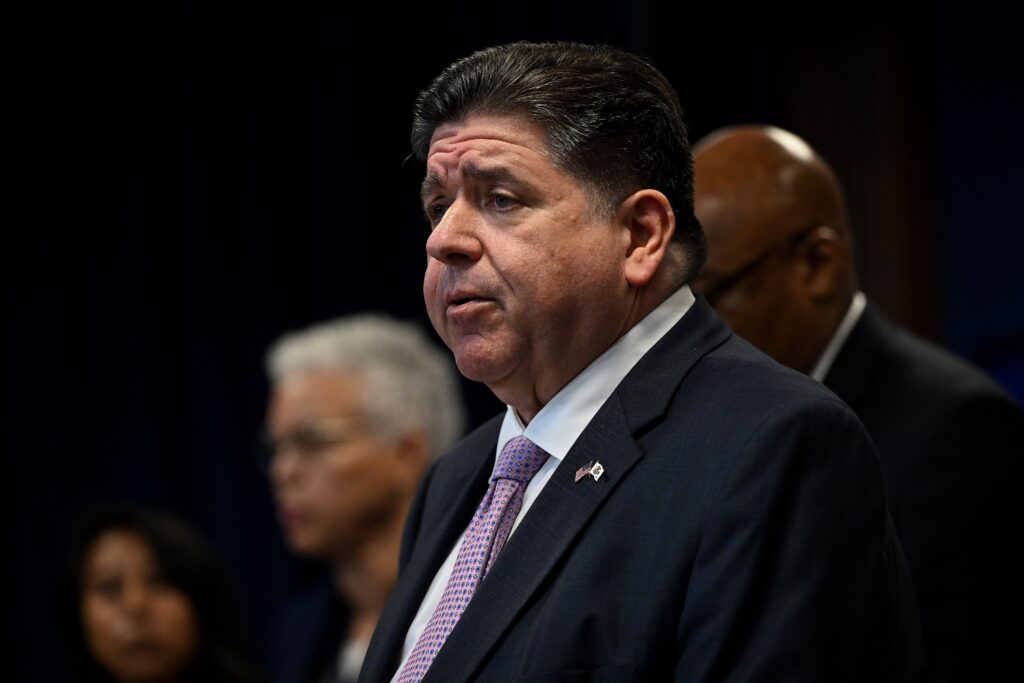
The archetypical politician who perennially keeps his finger in the wind so he can follow the currents of public opinion, rather than shape them, is racing to oppose new data center construction by preying on public anxieties about artificial intelligence. It’s the usual shameless suspects, such as Illinois Gov. JB Pritzker (D), who is running for reelection as he lays the groundwork for a 2028 presidential campaign.
Trying to appeal to the Bernie Sanders wing of his party, the billionaire heir used his State of the State address last week to express hostility toward the construction of new data centers and demand those that already exist pay more for their electricity. He’s pandering to NIMBY activists like those in the Chicago suburb of Naperville, who just scuttled a proposed data center, and last year pressed nearby Aurora to issue a six-month moratorium.
Denver Mayor Mike Johnston (D) announced this week that he will seek to impose a moratorium on the construction of new data centers “to put clear and consistent guardrails in place.” In GOP-controlled Florida, a state House committee advanced legislation on Tuesday restricting data centers from being constructed within five miles of any residential property or schools without unanimous support from local governments.
Other politicians have introduced bills to halt construction in several other states, including Maryland and Virginia, despite data centers generating massive tax revenue.
This opposition is partly motivated by legitimate concerns that data centers will drive up electricity bills. But that’s a manageable logistical issue, not a reason to block development. Many data centers are already largely providing for their own power needs or have agreed to pay premium energy prices. In fact, multiple major tech companies — including OpenAI, Microsoft and Amazon, founded by Post owner Jeff Bezos — will trek to the White House next week to sign a pledge to buy their own electricity supplies.
Other complaints are overblown. For instance, the water used by data centers caused a stir in Arizona’s drought-prone Maricopa County. But while they used about 905 million gallons there last year, that’s a small fraction of the 29 billion gallons devoted to the county’s golf courses. Plus, most of the water used by data centers returns to its source unchanged.
Some Democrats, such as Pennsylvania’s Josh Shapiro and Virginia’s Abigail Spanberger, have tried to thread a delicate needle — presenting themselves as supportive of data centers, so long as tech companies pay their own way and adhere to rules, such as hiring locals and mitigating environmental harms.
What’s needed now are leaders willing to make the affirmative case for American leadership on innovation. Mississippi Gov. Tate Reeves (R) offered a rousing defense of data centers this week as essential to winning the AI race against China. “I do not understand the impulse to prevent our country from advancing technologically — except as civilizational suicide,” he wrote on social media. “I am tempted to sit back and let other states fritter away the generational chance to build. To laugh at their shortsightedness. But the best path for all of us would be to see America dominate.”
Reeves articulated the fundamental problem with the movement to stall AI: Even if the U.S. could halt the technology, authoritarians elsewhere will march forward unabated. Why would America cede this golden ticket to its biggest adversary, especially with the specter of artificial general intelligence on the horizon?
The post The fundamental problem with data center alarmism appeared first on Washington Post.