In 2020, Elon Musk announced he was moving to Texas from California and embarking on a personal austerity campaign to strip his life of belongings.
“I am selling almost all physical possessions,” he posted on social media. “Will own no house.”
But in the years since, Mr. Musk, 54, has quietly built an empire of more than 90 companies and other legal entities in Texas, which have amassed a vast collection of assets, according to an examination by The New York Times.
The secretive network offers a glimpse into just how central one of the world’s richest men, who has a net worth of more than $650 billion, has made Texas to his operations and ambitions. More than 50 of his at least 90 companies there are subsidiaries or other entities affiliated with his business empire, such as the rocket company SpaceX and the electric vehicle maker Tesla, as well as his nonprofit Musk Foundation.
But The Times identified at least 37 companies that appeared to be largely for Mr. Musk’s personal use. Among them was one that owns two multimillion-dollar condominiums totaling more than 7,000 square feet in the Austin Proper Hotel, with sweeping views of downtown. Other companies managed planes that Mr. Musk uses for private travel and a portfolio of more than 1,000 acres of land, which when combined is bigger than Central Park in New York. The lines between Mr. Musk’s business and personal interests are often blurry, and some of the companies most likely served both purposes.
The Times’s examination also offers a window into how Mr. Musk used private companies to support Donald J. Trump during the 2024 election. Tapping these companies to cover the expenses of a super PAC is highly unusual, campaign finance experts said, and ended up obscuring how money was being spent because they are not subject to the disclosure requirements of super PACs.
The vehicle that Mr. Musk frequently turned to is one that many of the ultrarich use: limited liability companies, which are designed to shield owners from legal and financial risks, as well as public scrutiny. Whatever Mr. Musk’s intent, the effect of using these companies has been to disguise how he is spending his money.
When fellow billionaires Larry Page and Sergey Brin, the founders of Google, recently reduced their presence in California ahead of a proposed wealth tax there, Mr. Page moved more than 45 limited liability companies out of the state, while Mr. Brin moved or terminated at least 15 — including those that managed one of his superyachts.
Mr. Musk’s companies that The Times identified most likely represent a small fraction of his overall empire. He also has ties to limited liability companies outside Texas in states like California, Delaware and Nevada.
The ultrawealthy’s use of limited liability companies is legal and often used to ensure privacy. But they are now used so frequently and for so many investments that some billionaires cannot keep track of how many they operate, said Mitchell Gans, a law professor at Hofstra University.
“Most people of normal means probably have none,” he said.
The Times obtained and analyzed millions of business, land and property records to identify the companies that Mr. Musk has in Texas. He started with five limited liability companies that he had used in California before his 2020 move. Of the 37 personal companies that are tied to Mr. Musk in Texas, nearly half were formed in the first two years of him moving there. Three later became inactive.
Some of Mr. Musk’s limited liability companies were publicly known, but many were not. The Times mapped the network of companies and many of their purchases for the first time. The purpose of some of the companies remains unclear and the full extent of their holdings could not be learned.
Mr. Musk, whose voter registration lists a modest ranch house on a road called Memes Street near SpaceX’s headquarters in Southern Texas, did not respond to requests for comment.
Some Texans who worked at the addresses associated with Mr. Musk’s personal companies seemed perplexed that they were working in locations linked to the billionaire.
At least 15 of his companies — including his family office, Excession LLC, and another, Red Planet Ventures I LLC — list as their main addresses the same post office box in the Austin suburbs. Mr. Musk’s voter registration has listed the same post office box as a mailing address.
Rob Berry owns a high-end auto body shop outside Austin at an address once tied to Bushwhacker LLC, a limited liability company connected to Mr. Musk. Mr. Berry, whose previous shop was in the same office park, said he did not know the prior tenants.
“They really kept to themselves,” Mr. Berry said.
Keeping Purchases Veiled
On 110 acres in Del Valle, Texas, near Austin, a large building was recently under construction along a country road. When a Times reporter visited, the site’s security guards asked her to leave.
The land is owned by River Bottoms Ranch LLC, which Mr. Musk’s money manager, Jared Birchall, established in 2021. It is one of at least 12 private entities that The Times found Mr. Musk has used to amass more than 1,000 acres of land in Bastrop and Travis Counties. That may be a sliver of Mr. Musk’s personal land holdings. SpaceX and Tesla also own thousands of additional acres in Texas.
Mr. Musk’s use of limited liability companies to accumulate the land suggests that he and his inner circle took steps to keep the purchases veiled.
Some of the 12 companies are linked to Mr. Musk’s higher-profile businesses, or are attached to his lieutenants or friends rather than himself. It was unclear if Mr. Musk was using some of the companies for personal interests, business or a mix.
River Bottoms Ranch, for example, names Mr. Birchall as its president, and business filings also tie it to Mr. Musk’s brain implant company, Neuralink. In a separate filing, River Bottoms Ranch listed another limited liability company, Three Little Pigs LLC, as a parent company. The purpose of Three Little Pigs was unclear. (In 2020, Mr. Musk gave a presentation of Neuralink’s technology involving three pigs, which he called his “three little pigs demonstration.”)
The largest tract of land owned by one of Mr. Musk’s limited liability companies is about 530 acres just outside Austin and across from a Tesla factory. The company that owns that land, Horse Ranch LLC, was formed in 2021, and its incorporation documents name Mr. Birchall as its manager. Most of the land is vacant, but a Times reporter recently saw construction crews on the site.
Much of Mr. Musk’s land buying has been in Bastrop County, about 45 minutes east of Austin.
There, another limited liability company BSP 2023 LLC, also tied to Mr. Birchall, bought roughly 40 acres in April 2023. Mr. Musk has put a school, Ad Astra, which aims to have children learn at their own pace, on the property.
Steve Davis, another Musk lieutenant, used a separate company, Earhardt Manor LLC, to buy a ranch house in 2022 that Ad Astra is using. He also formed Gapped Bass LLC, which bought about 215 acres roughly a five-minute drive from the school.
Mr. Birchall and Mr. Davis did not respond to requests for comment.
Gapped Bass’s land houses facilities for The Boring Company, Mr. Musk’s tunneling venture. It is also where Mr. Musk is trying to build a town, Snailbrook. The area consists of tract houses, a pool and a tennis court. Across the road, SpaceX owns about 230 acres. (Records show Gapped Bass recently sold some land to SpaceX.)
Friends and acquaintances of Mr. Musk’s also have land in Bastrop County.
The University of Austin, which says it is focused on free expression and was spearheaded by Bari Weiss, editor in chief of CBS News, and Joe Lonsdale, a founder of the data analytics company Palantir, is building an applied engineering lab near Mr. Musk’s land. And Randy Glein, a SpaceX investor who helped fund Mr. Musk’s 2022 acquisition of Twitter, bought more than 21 acres nearby via a limited liability company, Bastrop1. They did not respond to requests for comment.
Homes Galore
More than a decade ago, Mr. Musk used several limited liability companies to buy property in Los Angeles, including one called Duck Duck Goose 100 LLC for a 3,000-square-foot-house. Either Mr. Musk or Mr. Birchall were often named officers of those companies. When Mr. Musk moved to Texas, he sold several of those California properties.
But in his new home state, Mr. Musk appears to have taken steps to disguise his activity. At least four limited liability companies with no trace of Mr. Musk are tied to properties that he has lived in or used.
Those properties include the two luxury units at the Proper Hotel, a trendy Austin venue where Mr. Musk and his friends have partied. He and his partner, Shivon Zilis, moved into one of the condos for a time around 2022, according to three people with knowledge of the move who were not authorized to speak publicly.
The units are owned by AJG Growth Fund LLC, which is registered in Delaware and managed by Antonio Gracias, one of Mr. Musk’s longtime friends. The company also owns Tesla stock. It was unclear whether Mr. Gracias was simply letting Mr. Musk use the condos, or if he had bought them on behalf of the billionaire. Mr. Gracias and Ms. Zilis did not respond to requests for comment.
Both condos are on high floors. Hotel staff were told to keep the floor numbers secret for privacy, two people said. Others said Mr. Musk has separately bought “decoy” properties around Texas to keep people guessing where he is living. For example, he bought at least one home in the exclusive, gated community of Spanish Oaks, outside Austin, they said.
Starting in 2022, Mr. Musk used limited liability companies with generic names to buy three houses totaling about 31,000 square feet for some mothers of his children. (He has at least 14 children, including at least four with Ms. Zilis). One company was Stratford House LLC, which owns a property valued at about $6 million in the wealthy enclave of West Lake Hills. Mr. Musk lived in the house with Claire Boucher, the singer known as Grimes, and their children.
Another house is owned by Z Fox Holdings Texas LLC, while the third was owned by SHL Property LLC. The house owned by SHL Property was recently sold to another limited liability company.
Funding Trump
Mr. Musk used several Texas entities to support Mr. Trump’s 2024 campaign.
That year, he created two companies, United States of America Inc. and Group America LLC. He also tapped Europa 100 LLC, one of his oldest limited liability companies that he once used to pay his nannies, and his family office, Excession.
The four companies provided almost $80 million in services to Mr. Musk’s America PAC, a political action committee devoted to re-electing Mr. Trump. The companies, rather than the political action committee, took on the job of paying expenses, which campaign finance experts said was highly unusual.
For example, United States of America Inc. issued $47 checks to voters who signed a petition pledging their support for the First and Second Amendments, according to its website — a controversial effort by Mr. Musk to help mobilize Trump voters. It also paid for political consulting, travel and food.
Brendan Fischer, a director at Campaign Legal Center, a nonprofit focused on U.S. elections, who examined the transactions for The Times, said Mr. Musk was able to mask where the money was going by using private companies to cover America PAC’s expenses. While political action committees are required to publicly disclose each individual payment, expenses that are covered by private companies are not subject to the same rules.
The practice is legal but “undermines the spirit of the law,” which favors transparency, Mr. Fischer said, adding that it “had the effect of disguising where tens of millions of dollars ultimately went.”
Europa 100 also paid America PAC’s treasurer, Chris Young, a salary as high as $1 million, according to a campaign finance filing, though it was unclear what work Mr. Young did for the company. Mr. Young, who could not be reached for comment, also contributed to a retirement plan at Excession, Mr. Musk’s family office.
Other companies were associated with Mr. Musk’s travel and security. Falcon Landing LLC, a SpaceX subsidiary, owns two planes that he sometimes uses for private travel, according to corporate documents and people familiar with the planes. One plane, a Gulfstream, was appraised at about $15 million last year, Travis County records show, though its resale value is much higher.
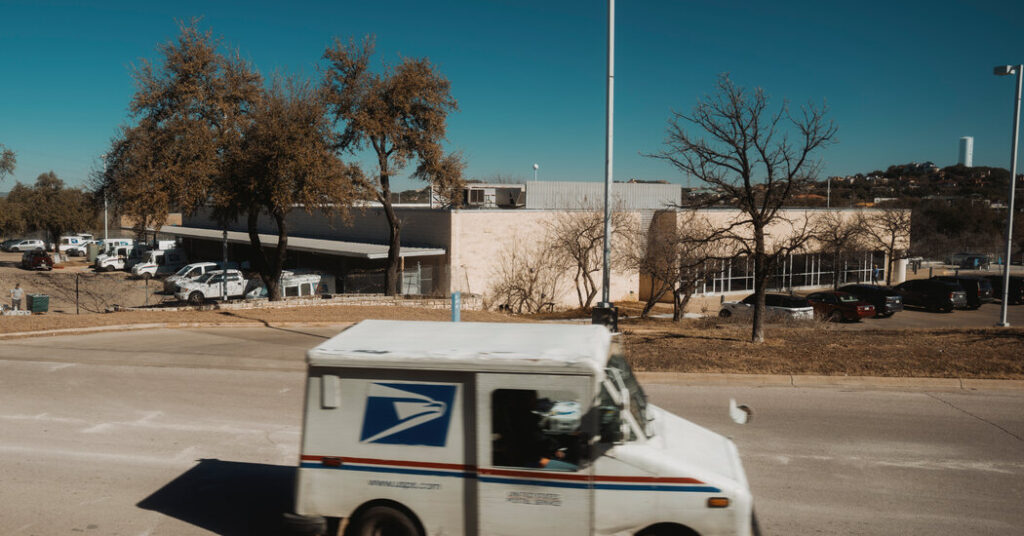
And Foundation Security Inc. provides Mr. Musk with personal protection. It owns commercial property at an address in a strip mall outside Austin, according to county records.
On a recent afternoon, no one answered the door at that address, and employees of neighboring businesses said they did not know the tenant.
Methodology
To identify Elon Musk’s network of companies in Texas and trace their connections to real estate, The New York Times obtained millions of business filings from the Texas secretary of state’s office, as well as property records from Travis and Bastrop Counties.
The Times searched the business records for the names of Mr. Musk and his close associates. It found several businesses tied to these people. Then The Times took the addresses associated with these businesses and found additional companies registered to the same addresses.
The Times reviewed each company, classifying entities based on whether they appeared to be affiliated with Mr. Musk’s major businesses or his personal interests. In some cases, The Times relied on additional reporting to understand the purpose of the companies and how they were tied to Mr. Musk.
Then The Times searched property records for parcels owned by those companies. After identifying properties owned by the companies, The Times examined records for nearby parcels of land and found other properties tied to Mr. Musk or people in his orbit.
The analysis relied on business and property records obtained in mid-to-late 2025. The Times supplemented those records with subsequent business filings and property transactions.
Robert Gebeloff contributed reporting. Kitty Bennett contributed research.
Kirsten Grind is an investigative business reporter for The Times, writing stories about companies, chief executives and billionaires across Silicon Valley and the technology industry.
The post Elon Musk’s Secret Web of Companies in Texas appeared first on New York Times.