Nearly five years after the Maine Board of Pesticides Control found that a New York couple had killed a neighbor’s trees in Rockport to improve their waterfront view, the state on Friday approved a settlement that included a $3,000 fine but no admission of guilt.
A lawyer for the couple — Stephen Antonson and Kathleen Hackett of Brooklyn — released a statement from Mr. Antonson saying he was “glad’’ that the board and Maine’s attorney general approved the agreement. But he did not acknowledge responsibility for the death of the trees.
Instead, the chairman and a member of the pesticides board apologized to the neighbor’s son that the board could not do more to hold the couple to account.
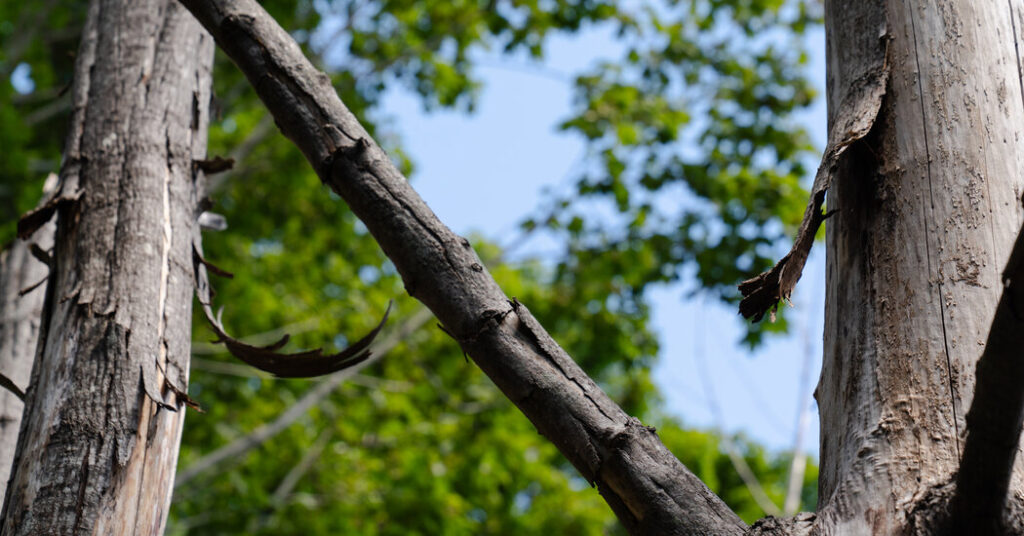
The New York Times reported on the tree saga last September. In 2017, Mr. Antonson and Ms. Hackett, Brooklyn-based creatives who met while working for Martha Stewart, bought a summer house in Rockport, a scenic Penobscot Bay town. They asked their neighbor, Ruth Graham, if they could remove trees from her land outside their rear windows to give them a better view. Mrs. Graham said no.
Then the trees began dying, and the pesticides board determined that Mr. Antonson and Ms. Hackett were to blame. Laws at the time permitted a maximum fine of only $3,000. In a proposed settlement, Mr. Antonson agreed to pay it without admitting guilt. The board rejected the proposal last March, and legal wrangling continued.
This month, the board released a new proposal nearly identical to the rejected one. In it, Mr. Antonson would still pay $3,000 and deny poisoning the trees, but would acknowledge “that a court could find that he committed the violations.” The agreement also would not shield the couple, should Mrs. Graham’s family or neighbors sue them.
Still, this is Maine, where trees enjoy near-mythic status and out-of-towners and their lawyers do not. Mrs. Graham died in 2024, but her two sons, her neighbors in Rockport and the state board itself felt the agreement lacked a crucial element. Mr. Antonson and Ms. Hackett, self-described preservationists, did not say they were sorry.
A few days ago, one of Mrs. Graham’s sons, Eric Grubman, wrote to the board.
“We prefer that people own up to their mistakes. We prefer second chances. And we value civic responsibility,” he wrote. Noting that “no one has apologized,” he proposed that Mr. Antonson and Ms. Hackett “gift an additional sum of their choice” to Maine coastal preservation, in Mrs. Graham’s name. And he asked that they address the offense “in their own words” in a local newspaper.
Then, he wrote, “Bygones can be bygones for everyone, and trees will grow back.”
In his statement, Mr. Antonson said he appreciated Mr. Grubman’s “thoughtfulness.” He praised Mr. Grubman’s mother as a good neighbor. He said he wanted closure, too, but did not address Mr. Grubman’s proposal for the donation and newspaper article.
In the end, it was the pesticides board that expressed regret.
“I wish we could do as you ask,” Dave Adams, the board’s chairman, told Mr. Grubman, who was watching the vote online.
In a brief interview, Mr. Grubman said he was surprised by the board’s apology, and grateful for its years of work. “We have a sense of sadness,” he said, pausing to find the right words, “that neighbors could act this way.”
Kitty Bennett contributed research.
Elizabeth Williamson is a feature writer for The Times, based in Washington. She has been a journalist for three decades, on three continents.
The post An Update: Did a Brooklyn Couple Kill a Neighbor’s Trees for a Better View in Maine? appeared first on New York Times.