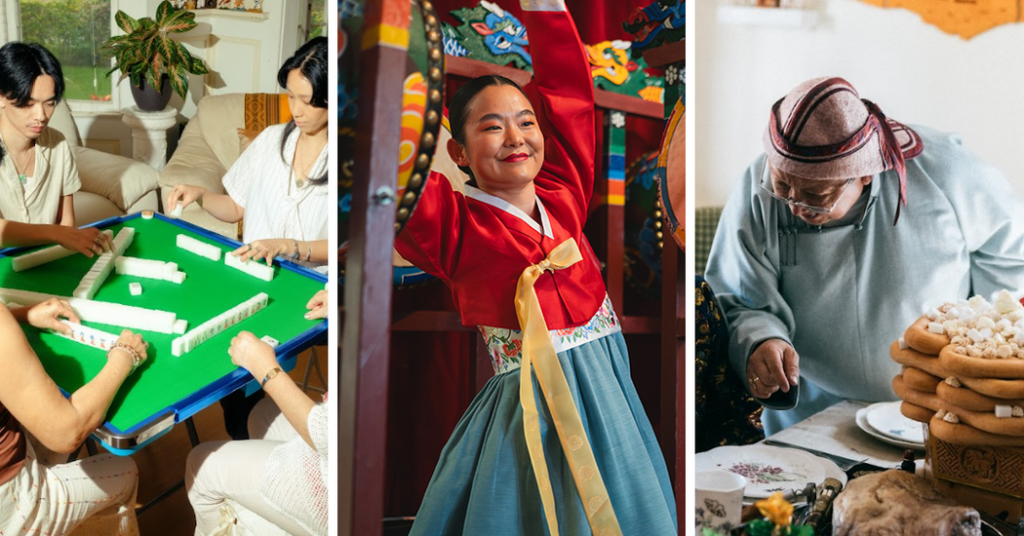
Many Asian cultures around the world are currently celebrating the Lunar New Year. The holiday — which began with the new moon on Feb. 17 and, for many, ends with the full moon on March 3 — is observed by more than a billion people throughout East Asia, Southeast Asia and their diaspora.
Do you celebrate? If so, how do you and your family or community welcome the new year?
If you don’t celebrate Lunar New Year, think of another holiday, milestone or ritual you observe that is important to you and your culture. How do you honor it?
In “Lunar New Year Across America,” Chevaz Clarke, Miya Lee and Emily Wolfe visited five cities around the country to find out how different communities make the holiday their own. The article begins:
With Tuesday’s arrival of the new moon, Asian Americans gathered to celebrate the Lunar New Year, a holiday that lasts several days to weeks, depending on the culture, and generally culminates on the full moon, which this year lands on March 3.
Celebrated by more than a billion people, it is one of the most important holidays throughout East Asia, Southeast Asia and their diaspora. Although traditions and calendars vary, the festivities share commonalities, such as preparing elaborate meals and performing rituals to call in good luck and honor ancestors.
In an effort to understand how different Asian American groups observe the new year, reporters visited five communities in the United States: Korean American adoptees in Minneapolis, a pan-Asian Mardi Gras krewe in New Orleans, a musical Mongolian American family in Los Angeles, a multigenerational home in Honolulu and a Tibetan American artist at his studio in Queens.
As the transformative Year of the Fire Horse gallops into view, these diverse groups are releasing the bad and the bygone and ushering in spring’s hope and renewal.
For example, in New Orleans, a Mardi Gras krewe celebrates Vietnamese Tết Nguyên Đán:
Tap Bui, a member of the bedazzled Mardi Gras “Krewe of PhantAsia,” which began informally with a group of Vietnamese American friends, likes to say that her family moved from one southern delta to another.
Like many of the New Orleans metropolitan area’s roughly 18,000 people with Vietnamese ancestry, Bui’s parents fled Vietnam for the city after the fall of Saigon in 1975. Bui, 39, explained that the archbishop of New Orleans had invited refugees to resettle in the city, encouraged by the two regions’ similar climates, access to fishing industries and shared Catholic presence after French colonization.
Many Vietnamese Americans in New Orleans grew up celebrating both Tết and Mardi Gras, which often fall around the same time. However, it is rare that Fat Tuesday and the beginning of Tết directly coincide — as they did this year.
And in Minneapolis, Korean American adoptees celebrate Seollal:
In southeast Minneapolis, a group of Korean American adoptees gathered at Arbeiter Brewing Company to celebrate Seollal. After the Korean War ended in 1953, Minnesota became home to the largest community of Korean adoptees in the United States, many of whom still live there today.
Many adoptees who did not grow up celebrating Seollal know firsthand that traditions are inherited, not inherent. To reconnect with traditions that were not passed down, many seek cultural camps, community centers and events like the all-day celebration at the brewery.
Students, explore each of the five communities featured in the article — New Orleans, Minneapolis, Los Angeles, Honolulu and Queens — or watch this two-minute video. Then tell us:
-
Do you celebrate Lunar New Year? If so, do any of the celebrations in the article remind you of your own? Do you and your family have any special customs for honoring the holiday?
-
If you do not celebrate Lunar New Year, what is another tradition you and your community participate in that is important to you? What does it involve? Why is it meaningful to you?
-
The article discusses how Asian American groups across the United States have blended new and old customs to make Lunar New Year rituals their own. Do you and your family have any unique or blended traditions for a holiday you celebrate? Where did these customs come from and how have they changed over time?
-
How does tradition help you feel connected to your culture, heritage or family history? Do you feel like you have a strong cultural identity? Why or why not?
-
If your family doesn’t have many traditions, what is one you would like to invent or introduce? In what ways do you think it could bring your family closer together or honor your roots?
Students 13 and older in the United States and Britain, and 16 and older elsewhere, are invited to comment. All comments are moderated by the Learning Network staff, but please keep in mind that once your comment is accepted, it will be made public and may appear in print.
Find more Student Opinion questions here. Teachers, check out this guide to learn how you can incorporate these prompts into your classroom.
Natalie Proulx is an editor at The Learning Network, a Times free teaching resource.
The post What Cultural or Family Traditions Are Important to You? appeared first on New York Times.