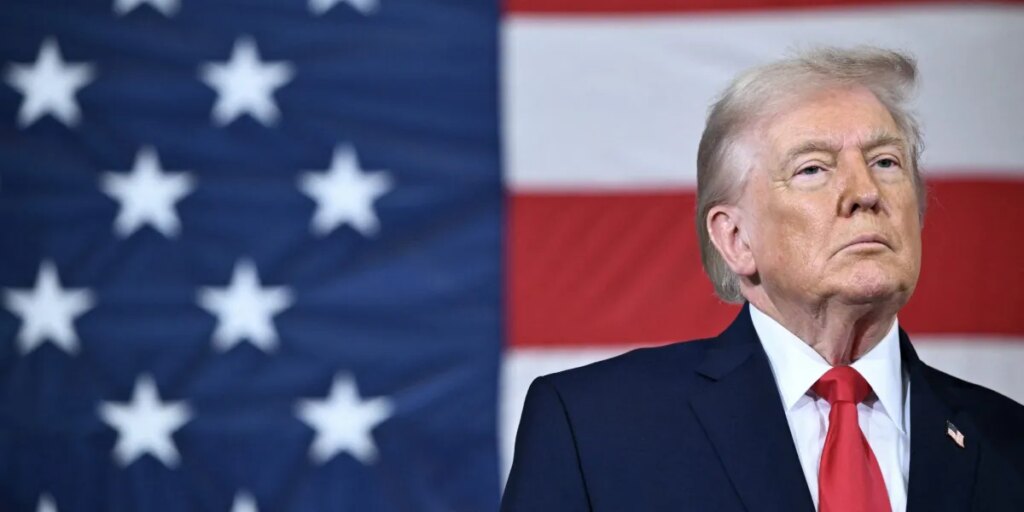
President Donald Trump made history on Tuesday night with the longest State of the Union address in history. Running an hour and 47 minutes, and some 10,887 words, it included newsmaking announcements on national 401(k) accounts, the Trump Accounts available to American children, potshots at Democrats and a cameo by the gold-medal winning men’s hockey team. It didn’t include two words that most voters are fixated on: “national debt.”
As the first primary elections of 2026 loom, an overwhelming majority of Americans are fixated on the nation’s fiscal health. A new bipartisan poll by the Peter G. Peterson Foundation, reviewed by Fortune, reveals a whopping 90% of voters are deeply concerned that the national debt—now nearing $38.8 trillion—is driving up inflation and driving up the cost of living, including prices for groceries, energy, housing, and transportation.
At a time when voters are struggling to afford basic needs, they are explicitly connecting macroeconomic policy to their personal finances, according to the foundation. The survey found 85% of voters are worried the debt’s impact on interest rates is hiking up borrowing costs, directly affecting their ability to afford car loans, mortgages, and credit card payments.
“Kitchen table cost-of-living issues are taking center stage this election year, and voters see that America’s rising national debt is making their own lives more costly,” said Michael A. Peterson, CEO of the Peterson Foundation. “Whether it’s their car loans or grocery bills, Americans are rightly concerned about inflation, and the growing federal deficit is only making things worse”. Peterson added stabilizing the debt should be a core issue for any leader who wants to improve affordability and economic growth, noting voters are demanding solutions this campaign season.
Trump did touch on the budget, claiming implausibly that correcting the amount of fraud on government services could balance the nation’s books when estimates indicate it could only cover a fraction of the $1.78 trillion deficit. He also vowed to “always protect” Social Security, Medicare and Medicaid, but the Peterson Foundation, the Congressional Budget Office and other budget-focused think tanks such as the Penn Wharton Budget Model, Yale Budget Lab and Committee for a Responsible Federal Budget, have all concluded that Trump has hastened their insolvency instead. The One Big Beautiful Bill Act gives a tax cut today, while shortening the lifespan of these programs to as near as the 2030s.
The Peterson foundation’s poll, conducted jointly by the Democratic polling firm Global Strategy Group and the Republican firm North Star Opinion Research, highlights a rare moment of profound bipartisan consensus. Voters across the spectrum are increasingly concerned about the nation’s finances.
What the polling says
The poll’s headline finding that 90% of voters are concerned about the debt driving up inflation includes 96% of Democrats, 87% of Republicans, and 85% of independents. While affordability concerns are spread evenly across all geographic regions, Democratic voters notably expressed an even higher intensity of concern than Republicans regarding the debt’s role in exacerbating inflation and borrowing costs, echoing the polarization around the economy when an opposing party holds the White House. (The online poll surveyed 1,004 registered voters nationwide between Feb. 17 and Feb. 18, 2026, and carries a margin of error of +/- 3.1%.)
For political candidates, this economic anxiety poses a massive electoral threat. A striking 83% of voters consider a candidate’s plan for the national debt to be a “deciding factor” at the ballot box. Even more critically for campaign strategists, 72% of voters say they would consider crossing party lines to support a candidate they do not typically align with if that candidate had a clear strategy to tackle the debt.
This willingness to abandon party loyalty is most pronounced among younger demographics, with 79% of voters aged 18 to 44 open to switching parties, compared to 65% of those aged 65 and older. Of course, the debt is growing the way it is because the aging baby boomer generation is essentially voting themselves cushy benefits into their retirements, past the point when the U.S. economy can generate enough revenue to pay for them each year.
Voters are also fiercely protective of the nation’s safety net amid these fiscal woes. A near-unanimous 95% of voters demand that candidates clearly explain their plans to avert a projected 23% automatic annual cut to Social Security benefits, which is slated to occur in 2032. While this demand transcends age, older Americans are the most adamant: 87% of voters aged 65 and older say candidates should “definitely” address the impending cuts, compared to 56% of voters under 30.
This widespread pessimism is reflected in the U.S. Fiscal Confidence Index, which dipped to 48 in February 2026, down from 50 in January and 51 in December 2025. Measured on a scale where 100 is neutral, the index highlights a deeply negative national outlook. The sub-index score for “concern” sits at a deeply pessimistic 45, while the “priority” score has plummeted to 26, indicating intense demand for elected leaders to make the long-term debt a top legislative focus.
Broad agreement exists that addressing the debt should be a top-three priority for lawmakers, a sentiment shared by 79% of voters overall, including 85% of Republicans and 75% of Democrats. Furthermore, a growing majority of 59% now believe the country is on the wrong track regarding the debt.
With 70% of voters eager to hear more from candidates over the next month about how they will tackle the debt’s impact on the cost of living, politicians face a clear mandate: Fix the nation’s finances to protect the family budget.
The post Trump didn’t mention the $38.8 trillion national debt once in his State of the Union, but 90% of voters are worried appeared first on Fortune.